

The Chronic Illness Therapist Podcast Episodes
A place where people with chronic illnesses can come to feel heard, seen, and safe while listening to mental health therapists and other medical professionals talk about the realities of treating complex medical conditions.
What Athletes and Chronically Ill People Have in Common
If you've ever wondered why losing your old life to chronic illness feels so much like grief, this episode puts language to it. I sit down with Kelsey Ruffing, MA, MS, LCPC, a therapist specializing in sport and health psychology, to talk about the surprising overlap between career-ending sports injuries and chronic illness diagnoses. We get into why "defeat" deserves to be felt instead of reframed, how brainspotting helps people reconnect with a sense of purpose, and why being dismissed by a doctor does the same damage as being ignored by a coach who's supposed to have your back.

Why Slow Movement Might Be the Thing That Actually Works
If you've ever been told to push through the pain, or worried that going slower means giving up, this one's going to feel like permission to stop. Movement therapist Jeannie Di Bon opens up about why nervous system regulation, not exercise, is often the missing first step to actually getting stronger, and why so many of us confuse self-care with self-compassion until it's almost too late to tell the difference.

When Your Body Becomes a Problem to Solve: Navigating Endometriosis, Medical Trauma, and Identity
A conversation with Candice Craft, LMFT on navigating endometriosis, medical gaslighting, and the layered grief that comes with chronic illness. We talk about why "I believe you" can be the start of real healing, how to prepare somatically for surgery, the link between endometriosis and trauma, and how to keep your identity intact when your body becomes the center of everything.

"Just Move Differently" Is the Physical Therapy Version of "Just Think Positively"
If you've ever left a physical therapy appointment feeling like you got handed a printout of exercises and sent on your way, you're not alone — and you're not the problem. The truth is, chronic pain lives at the intersection of biology, psychology, and the relationships we have with our own bodies and our providers. Eighty-five percent of people with low back pain have no identifiable cause on imaging. That doesn't mean the pain isn't real. It means we haven't developed the tools to test for it yet. And 'just move better' is the physical therapy equivalent of 'just think positively' — technically well-meaning, and almost completely unhelpful on its own. Dr. Megan Steele joined me to talk about what good care actually looks like, why your nervous system needs proof before it changes, and how the relationship with your provider might be doing more than the treatment itself.

When Your Illness Has a History: Medical Gaslighting, Invisible Illness, and Why You're Not Imagining It
If you've ever left a doctor's office feeling more dismissed than when you walked in, this one is for you. Dr. Emily Mendenhall — medical anthropologist, Guggenheim Fellow, and author of Invisible Illness: A History from Hysteria to Long COVID — joins me to talk about the long history behind medical gaslighting, why patients with complex chronic conditions are still being dismissed today, and a concept called structural silencing that might finally put language to an experience you've been carrying for a long time.

When Your Nervous System Shows the Problem and Has Part of the Solution: MCAS & Mast Cell Disorders
If you're living with MCAS or any kind of mast cell or histamine-related condition, you already know the exhaustion of not having clear answers. Licensed psychologist Dr. Amanda Whitehouse joins the podcast to talk about what's actually happening in the nervous system when you're living in constant uncertainty — and what it looks like to start healing without pretending that's a simple process.

If Eating Is So Good for You, Why Does It Feel So Bad?
When you have a chronic illness, eating can stop feeling like something your body just knows how to do. Add an eating disorder into the picture, and suddenly nourishing yourself becomes one of the most complicated things you'll face. Registered dietitian Tiffany Pecoraro talks about what happens when eating disorder recovery and chronic illness collide — why elimination diets can quietly fuel restriction, why "listen to your body" doesn't always work when your nervous system has been in survival mode, and why so many people complete treatment and still find themselves struggling. This conversation is honest, nuanced, and exactly the kind of thing nobody warned you about.
What Your Kidney Disease Diet Actually Needs (And What the Internet Got Wrong)
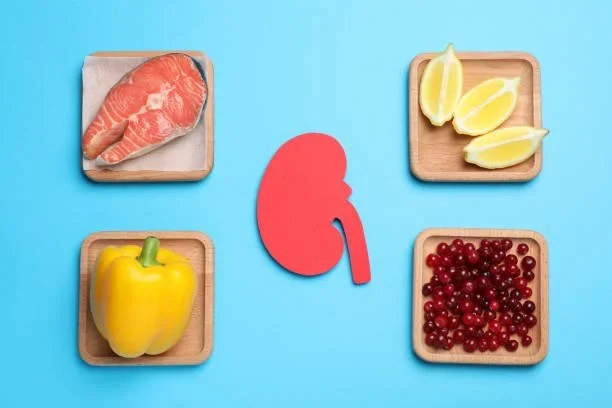
Most people with kidney disease are being told what to cut out. But according to renal dietitian Jen Hernandez, that's exactly the wrong question — and the internet's most popular kidney diet advice may be doing more harm than good.
The Wellness Trap: Rethinking Chronic Illness, Healing, and Accessibility with Grace Quantock
Grace Quantock is a renowned counselor and author of Reclaiming Wellness with Chronic Illness. In this interview, she discusses the pitfalls of the “bootstrap wellness narrative” and presents new approaches to individualized wellness routines.

Neurodivergence, Chronic Illness, and What the Therapeutic Space Has to Get Right
When neurodivergence and chronic illness overlap, getting the right diagnosis changes everything downstream. In this episode, I sit down with Dr. Heather Olivier — LPC, supervisor, and assistant professor — to talk about why so many women are misdiagnosed for years, what sensory overload actually looks like in a clinical setting, and why the relationship you create as a clinician matters just as much as any tool in your toolkit.

Navigating Relationships When Chronic Illness Changes Everything
When chronic illness enters a relationship, everything shifts. The way you divide household tasks, how you spend your weekends, your intimacy, even how you talk to each other about what's happening. I sat down with Lisa Gray, a licensed professional counselor who specializes in couples and chronic illness, to talk about what happens when one partner gets sick. Here's something that doesn't get talked about enough: both partners are grieving—just in completely different directions. The sick partner is grieving their old self and abilities. The well partner is grieving too, but different losses. And that can make it feel like you're pulling in opposite directions instead of working as a team.

Wellness When You're Chronically Ill Isn't What You Think It Is
I think in the US in particular, we really dislike being comfortable. Like we are actively against comfort. Go to your nearest grocery store and you'll see cashiers standing the whole time. That's just not how it's done in other countries. We have all of these messages that are built in, quite literally, that you should be able to stand for eight or 12 hours at a time when that's not accessible—not only to chronically ill bodies, but to a lot of bodies." In this episode, Destiny sits down with Dr. Victoria Rodriguez to talk about what wellness actually means when you're navigating chronic illness. They discuss the social model of disability, why it's easier to change your environment than your body, how to navigate accommodations both as a therapist and with clients, and the systemic barriers that make rest feel like something you have to earn. This conversation challenges everything you thought you knew about wellness and offers a radically different approach grounded in compassion, sustainability, and actually meeting bodies where they are.

When Money Stress Meets Chronic Illness: What Financial Therapy Actually Is
If you've ever felt guilty about spending money on something small while medical bills pile up, or convinced yourself you're "not poor enough" to apply for assistance programs, this conversation is for you. Financial therapist Megan Stevenson breaks down the emotional blocks that show up around money when you're navigating chronic illness—from impulsive spending as a way to regain control, to the money shame that keeps you from asking for help. Because the reality is, we can't separate someone's mental health from their financial health, especially when they're navigating a chronic condition in a system that wasn't built to support them.

Learning to Partner With Your Body (Instead of Fighting It)
What if the way you relate to your body matters just as much as the treatments you try? Physical therapist Jason Therrien shares why chronic pain is more about sensitivity than damage, how to calm your nervous system before building strength, and why grace leads to growth while shame keeps you stuck in the same patterns.

What Therapy Actually Looks Like When You Have POTS
Therapy for POTS isn't about managing anxiety or getting more coping skills right away. Dr. Laurie Dos Santos, a clinical psychologist specializing in dysautonomia, explains that the first chapter of therapy involves no strategies, no tools—just listening. When you've been dismissed by the medical system for years and told your symptoms are "all in your head," having someone finally believe you changes everything. Here's what real mental health support for chronic illness looks like.
The Free Resource That's Helping People With Lung Disease Feel Less Alone
When you're living with lung disease, doctors don't have time to teach you how to use your inhaler correctly or help you figure out who to call when you need help. Respiratory therapist Tiffany shares how the American Lung Association's free helpline fills the gaps that medical appointments can't—from navigating shame and isolation to weeding through internet "miracle cures."

How to Actually Get Heard by Your Doctors (Without Getting Dismissed)
You know what's wild? That we have to strategize just to get basic medical care. Registered nurse Kayla Thompson-Riviere shares the communication techniques that actually work when you're stuck on the medical merry-go-round—including the "breadcrumb technique" for getting the tests and referrals you need without being dismissed.

Your Brain on Pain- When Chronic Pain Changes the Way We Think and Feel (Guest Spotlight)
Chronic pain doesn't just hurt—it changes the way we think, feel, and process the world around us. Neuroimaging studies show that people with chronic pain experience measurable changes in gray matter volume, particularly in regions involved in pain processing, emotional regulation, and decision-making. Science journalist Faith Davis breaks down the neuroscience of how pain rewires the brain.

When Your Doctor Believes You: Finding Care For EDS, POTS, MCAS
There is a specific, sinking feeling that happens when you leave a doctor’s appointment with a clean bill of health but no answers for your pain. You’re told the labs are "normal," but your body is telling you a different story. And suddenly, you aren't just fighting an illness; you're fighting to be believed.
I sat down with Dr. Kara Pepper, a board-certified internist who specializes in complex conditions like POTS, MCAS, and EDS, to talk about why the standard 10-minute office visit is failing chronic illness patients. Dr. Pepper shares why standard tests often miss functional diagnoses, how she creates space to actually hear her patients' stories, and why validating your lived experience is the first—and most important—step toward getting better.

Finding Safety Despite Medical Trauma w/ Sarah Stasica LMSW
When something goes wrong medically, whether it's with you or someone you love, there's this thing that happens that nobody really talks about: you stop trusting your body. And maybe you stop trusting the people who are supposed to help you too.
I sat down with Sarah Stasica, a therapist and trauma-informed yoga teacher who specializes in medical trauma, to talk about what happens when medical experiences leave lasting marks on our nervous systems. Sarah's journey into this work started when she was pregnant with her first child and found out there were medical complications. What followed was years of navigating a medical system that wasn't built for emotional processing, parenting a child through medical challenges, and slowly learning that healing doesn't happen on anyone's timeline but your own.