
Why Slow Movement Might Be the Thing That Actually Works
There's a moment that happens for a lot of us with chronic illness where we realize the advice we've been given doesn't fit our bodies. Push through it. Do more. Optimize harder. And somewhere along the way we start to wonder if the problem is us.
I sat down with Jeannie Di Bon, a movement therapist in London who has spent over 15 years working with people who have hypermobility, Ehlers-Danlos Syndrome, and chronic pain. Jeannie has hypermobile EDS herself, along with POTS and MCAS, and she's spent the last decade figuring out, through her own body, what actually helps. I've followed her work for years. She was one of the first people I found who was talking about pacing with real nuance, back before anyone else in this space was.
Traditional Rehab Wasn't Built for This Community
When Jeannie first started working with people with EDS and hypermobility, the go-to approach in the fitness and rehab world looked like this: bands, weights, stability drills, straight into strengthening.
But there was a problem nobody was accounting for:
Many people in this community had already been stressed, anxious, and gaslit by the time they reached her.
Hypermobile bodies tend to brace and hold tension just to feel stable, which is its own kind of exhausting.
Jumping straight into strength work on top of all that tends to backfire.
So instead of starting with exercise, Jeannie started with breath and relaxation. This was years before "nervous system regulation" became a phrase everyone uses. She was simply noticing that her clients, and herself, were stuck in a sympathetically-driven state, and that no amount of strength training was going to fix that until the body had a chance to settle first.
The Grief Nobody Warns You About
One part of this conversation stuck with me because I've lived it. Jeannie talked about how much comparison plays into this. Not comparison to other people necessarily, but comparison to your own past self.
I used to work full-time. I used to go to the gym five days a week. Why can't I do that now?
That question carries real grief, and grief has a way of turning into pressure. Pressure turns into pushing too hard. And pushing too hard is exactly what lands so many of us in the boom-and-bust cycle, where we do too much on a good day and pay for it for the next three.
I knew intellectually for years that going slower was the answer. Actually letting myself do it took a lot longer. Your thoughts can understand something completely and your body can still take a while to catch up.
Self-Compassion Is Not the Same Thing as Self-Care
This next part might sound too simple, but it changed how I think about the difference between the two. Jeannie shared that she didn't actually learn what self-compassion was until fairly recently. Someone asked what she did for it, and her honest answer was "I get a massage occasionally." She was told, gently, that's self-care. Not self-compassion.
Self-compassion, she explained, is being able to lie down, breathe, and think, "This is okay. I don't have to be doing something all the time." It's the opposite of perfectionism. And perfectionism runs deep in this community. At one EDS conference, Jeannie asked a room of about 100 people who identified as a perfectionist. Nearly every hand went up.
Perfectionism and self-compassion are hard to hold at the same time. If part of you is always chasing flawless, there's not a lot of room left over to be gentle with yourself.
Your Pain Is Not Just a Mechanical Problem
This is the piece I think about most. Jeannie's graduate research on pain management found that the medical system itself contributes significantly to pain-related disability in the EDS and HSD community.
Here's the issue. Most clinicians are trained to view pain through a strictly biomechanical lens: you hurt your foot, you have pain, that's the whole story. That framework falls apart quickly for anyone with a complex, multi-system condition, because it doesn't leave room for the biopsychosocial piece, the reality that pain is shaped by stress, environment, relationships, and nervous system state, not only by tissue damage.
So when someone shows up describing pain in multiple areas along with gut issues, headaches, and joint instability, a system only built to find one mechanical cause often lands on the same conclusion: this must be exaggerated, or anxious, or attention-seeking.
That exact pattern is why this podcast exists. A referral to a therapist from a doctor's office has too often meant "you're making this up," instead of a genuine acknowledgment that the mind and body are connected, and that connection deserves support instead of dismissal.
Small Steps Still Count, Even the Really Small Ones
Jeannie's message for anyone struggling right now is simple. Please don't give up. If exercise has made things worse in the past, that doesn't mean movement isn't for you. It likely means you haven't found the version that fits your specific body yet.
Even for people who are bed-bound or house-bound, there's always something. Two minutes at home, entirely on your terms, can shift things psychologically even when it looks small to everyone else. Progress doesn't need to be impressive to matter. If your version of progress feels overwhelming, try cutting it down by a quarter. You're probably still moving forward.
You're Not Meant to Do This Alone
One last thing worth naming. Community matters here too. Jeannie talked about the value of her Zebra Club community, where people can say "this happened today" and hear back, "I understand, that's happened to me too." That kind of recognition is healing on its own, separate from any exercise or protocol.
None of us are meant to manage a complex chronic condition in isolation. Whatever that support looks like for you, a movement community, a support group, or even just one person who truly gets it, you deserve to have it.
Disclaimer: Everything we discuss here is just meant to be general education and information. It's not intended as personal mental health or medical advice. If you have any questions related to your unique circumstances, please contact a licensed therapist or medical professional in your state of residence.
Destiny Davis, LPC CRC, is solely responsible for the content of this article. The views expressed herein may or may not necessarily reflect the opinions of the guest.
The content in this blog post comes directly from a real, human interview between Destiny and her guest on The Chronic Illness Therapist Podcast. This written version was formatted using AI. Listen to the full episode to hear the actual conversation.
Listen to my full conversation with Jeannie Di Bon on Ep 128: Why Slow Movement Might Be the Thing That Actually Works
-
Episode transcribed with AI and may contain errors that are not representative of the actual word or meaning of the sentence.
Destiny Davis LPC CRC: Hi, everyone. We are back after a little bit of a break. I am sitting here in New Orleans. Um, I'm about to speak tomorrow morning at the NephCure conference. Um, and we'll be speaking about what it's like to go through, um, relapses and setbacks in chronic kidney disease,
But for those who can't join us, I would love to invite you all into Welcome to the Waiting Room. That's my support group that still happens almost every Friday at noon Eastern. It's $17 a month, and you can join us anytime. And for therapists, I am moving the consultation group into a paid membership. It is going to be expanded in a lot of different ways, and I really hope that you'll join us
If you are looking to continue learning how to hone your skills in working with clients with chronic illness, this is the membership for you. It's clinical consultation, business consultation, and we have a new [00:01:00] skills class that's gonna be every first and third Wednesday of the month from 1:00 to 2:00 PM Eastern.
So on top of the clinical consultation group that's every month, we're also gonna have this skills group where we'll be learning all sorts of different skills related to working with chronic illness. Sometimes the skill might be somatic based, ACT based, even some CBT skills that, you know, you might be surprised to hear me say that, but some of them are really useful, especially when adapted for chronic illness.
and so if you're looking to hone those skills and you want a steady home base to do that in, one that you know is always gonna be there, I always show up. I've been showing up for the last four years In my clinical consultation group.
Um, I'm not going anywhere. I'm really actually just getting started. I absolutely love working with not only clients with chronic illness, I still see clients and do that work every single week, but also with therapists who are either [00:02:00] chronically ill themselves or just have a strong affinity for working with this population.
Because at this point, 76% of our country has at least one chronic illness, so it means we're all working with chronic illness in some way, shape, or form. I hope you'll join us. The link is in the show notes. And today, we're talking with Jeannie Di Bon, who I have been a huge fan of for the last seven years, I think.
I think I found her work in 2017. I think she's phenomenal and is doing some fantastic work in the EDS community. So I hope you'll enjoy this episode
Destiny Davis LPC CRC: Jeannie Di Bon is a movement therapist based in London, specializing in working with people with hypermobility, Ehlers Danlos Syndrome, and chronic pain for over 15 years. Originally trained in Pilates, over the past decade, her research and study have gone on to encompass biomechanics, anatomy, neuroscience, and pain management.
She has an MSc in pain management, and Jeannie also has Hypermobile [00:03:00] Ehlers Danlos Syndrome herself and rehabbed her body and mind from chronic pain. Presents for the EDS Society and other charities and is also an educator of teachers and therapists in the field of movement therapy with the EDS Echo program at the EDS Society.
In July 2019, Jeannie launched The Zebra Club, a comprehensive clinical platform for people with hypermobility, EDS, and chronic pain. The Zebra Club has members all over the world and is recommended by doctors globally. Jeannie is the author of three books. Her latest book was published in November of 2025, The Integral Movement Method for Hypermobility Management.
Jeannie, I'm so excited to have you here 'cause, um, I mean, I learned about your work several years ago, um, when I just had chronic pain and thought there was no answers or, um, any, any diagnoses or anything like that. I just thought, you know, this is kind of basically the path I saw my mom take, and I'm destined to be in the same position.
Uh, and so that [00:04:00] was... You were one of the first accounts that I really came across that was speaking to chronic pain management with such nuance and kind of a low and slow, um, paced... I, I didn't even know what the word pacing meant at the time. I just knew you were doing it and that, um, nobody else was. So I'm really thrilled to have you here today.
I would love for you to kind of maybe say anything more about, about your work that you might want people to know before we get started.
Jeannie Di Bon: Oh, well, thank you so much. And, um, I'm so glad you found me. Um, um, absolutely. I mean, when I started talking about this, we're going back, gosh, nearly 10 years, 20-- I went to my first EDS conference in 2017 in Las Vegas. Um, and, uh, Lara Bloom, the CEO, um, invited me there specifically because nobody was talking about movement then. Um, so yeah. Um, there was, as you quite rightly say, no one was really talking, um, online about it, on social media. So, [00:05:00] um, yeah, it was a big thing and, um, absolutely honored to be able to sort of lead the way in that for, for our community. Um, and kind of changing the narrative, as you q- as you said, you know, very much, um You know, a go low, go slow approach.
Um, as you said, I have hypermobile EDS, I have POTS, I have MCAS, mast cell activation. So I knew that being pushed and forcing myself was causing me issues. Like, I would crash for days, and I would have pain flare-ups, and this thing that I didn't know what it was, but I'd be dizzy and I'd be fatigued, and obviously now I know it's POTS.
But all of that wasn't working for me, and so I was like, what can I do for myself to improve m- my health, um, and then of course help other people? Um, and
Destiny Davis LPC CRC: Yeah.
JEANNIE: where I got started, I, I guess.
Destiny Davis LPC CRC: A-amazing. Um, I'm curious what maybe some of your, uh, like, m-mentors were, even [00:06:00] if it was just philosophies or books. But where did you start to get permission to move slower or to do things that your body needed it to do?
JEANNIE: Yes. Um, so weirdly, 'cause I ... As you said in my bio, I'm trained originally in Pilates, so I trained back in, uh, 2007, so a long time ago. Um, and so Pilates is very different. Um, and the breathing and everything's very different. It's very choreographed, and everything has to look perfect. Um, and so I was like, uh
And I started looking around, and actually a book I found, um, was from a yoga teacher, um, called Vanda Scaravelli, and she's no longer with us. Um, and her book was called Awakening the Spine, and I read her book and I was like, this is so beautiful, the way she describes breath and movement, and I thought, "Why are we not hearing this in the Pilates world?"
You know? I love this. This really resonates with me. And so I kind of wa- started going down that, um, [00:07:00] route of looking for more somatic Um, teachers and therapists and, and, you know, people from, from the past like Mabel Todd, who published a book in 1935 on, I think it was called The Thinking Body. You know, these really interesting people that, um...
I said, "I love all of this. I wanna bring that into my work." And I think that's where I really got started, and then I got and more interested in, you know, neuroscience. You know, what's going on? You know, back then, as I said, people were trying to take a traditional rehab model and put it on an EDS body. Um, so you'd
Destiny Davis LPC CRC: Yeah. Yeah. And
JEANNIE: straight into the exercise, stability work, strength work, have a band, have a, hand weights, you know. actually, people weren't going, "Well, hold on a minute. We need to step back because these are patients, these are a community that's had a pretty rough time."
You know, [00:08:00] they've been looking for answers. You know, they've been stressed and anxious. They've been gaslit. Those are all the outside things going on. But also because of our instability, our hypermobility, we tend to brace and hold ourselves in a certain way, um, and that's stressful as well. That's tiring and stressful.
So I was thinking, "We can't jump straight in with exercise, so how about we step back? Let's look at people's breath. Let's try and help people go, 'Oh.' Release some of that tension. Release the bracing patterns, and then let's build from there." And that wasn't happening. You know, that just wasn't happening.
And so I thought we've got to start with this emotional, psychological, nervous system regulation before we even consider, yes, let's get some bands. Let's do some weights, whatever people want to do. I didn't think we should be starting there, so I really
Destiny Davis LPC CRC: of course, I'm sure it wasn't called nervous system regulation back then. Was there [00:09:00] a different term you were working under?
JEANNIE: No, you're quite right. It wasn't called. That's quite a new trendy sort of thing. You see it everywhere now. Um, I... You know, the first two principles of my integral movement method are breath and relaxation, so I was kind of talking about I need to get people out of... What I observed with myself and with my patients was that they are, were very highly sympathetically driven, so it's like for a number of reasons that we just talked about- I was kind of saying, "Well, I need to move out of that sympathetic-driven, um, way of operating, and can I bring people more to parasympathetic then have that fluidity to move between the both?"
Because it's not that one is better than the other. We need both. We need sympathetic, otherwise we'd never get up and go out the door, but we need to be able to enjoy rest and digest, [00:10:00] parasympathetic. So in those early days, yes, I was talking about these two states, and now of course, yeah, you know, nervous system regulation, as I say, you hear it all the time.
Destiny Davis LPC CRC: I, yeah.
JEANNIE: coming from.
Destiny Davis LPC CRC: Yeah, I love how you just explained that too, and it just dis- even explaining that dispels some of the myths around nervous system regulation. Um, I'm, you know, a lot of... Something that a lot of our, the audience that listens to this podcast and kind of follows a lot of the accounts, um, in the POTS/EDS world, um, something that they struggle with a lot is f- this kind of, um, grappling between, like, trying to cure yourself or optimize or to kind of be always, like, the best of, uh, the best of health.
Like, if I just do enough, then I can be healthy and be out of this kind of, this body, really.
JEANNIE: Yes.
Destiny Davis LPC CRC: if you ever grappled with that at all, or if that was a part of your journey.
JEANNIE: [00:11:00] Yeah,
Destiny Davis LPC CRC: The
JEANNIE: I don't know what the phrase is, but something about comparison is like the worst thing you can
Destiny Davis LPC CRC: peak of joy, yeah.
JEANNIE: Exactly. You know, and especially I think for us it's, it's difficult because many of us, of course, maybe this condition, this symptomatic condition
Destiny Davis LPC CRC: Yeah,
JEANNIE: or chronically ill or fatigued or POTS or whatever, so maybe something happened along the way that we became symptomatic. And then you've got that grief element as well of like, "Well, I used to be able to do all of this. I used to work full-time. I used to go to the gym five days a week. Why can't I do that now?" And then we get all of that other stress and emotion, and then we start comparing ourselves not just to other people, but to our previous self. And then I honestly, I think we are so hard on ourselves sometimes because, [00:12:00] I, I, I've said this before, it's only recently, which sounds crazy, a couple of years ago did I learn what self-compassion was. asked me, "What do you do for self-compassion?" And I said, "Well, I have a massage occasionally." And they were like, "That's not self-compassion. That's self-care." And like, well, what's self-compassion? It's just something that I'd never considered, that I can be kind and gentle to myself because, yeah, we're always looking for perfection. I need to do more, and then I'll be better. push through this pain and I'll be okay. I'll do a bit more work and I'll be okay. But for us, of course, it doesn't work like that, and then we get these boom and bust cycles that so many of us get stuck in.
Destiny Davis LPC CRC: uh, perfectly said. Yeah, the, the lack of compassion or the, um, desire for it to be so much better than what it is, kind of way, way beyond, uh, where- what our appropriate goals might be, um, lead us to just, yeah, [00:13:00] cr- doing way more than we, we should be doing for our bodies.
JEANNIE: Yes,
Destiny Davis LPC CRC: Yeah. That's, that's... How do you incorporate now self-compassion into your life that maybe...
'Cause I'm hearing that, you know, even before, even though maybe mentally you didn't, you didn't, you know, inc- incorporate it in that way,
JEANNIE: Mm.
Destiny Davis LPC CRC: learning to go slower in a fitness industry that wasn't, wasn't, uh, set up for that, all of that is, to me, pretty self-compassionate. I'm curious how it's changed for you over the course of time.
JEANNIE: Yeah, that's a really nice observation actually. Um, you're right. I mean, learning to, you know, just be on the, be on my mat and just be there and breathe and feel my body and feel my breath and just think, "This is okay. I don't have to be doing stuff all the time." Um, absolutely. That was a huge part of my recovery and my healing and, and actually leading me to get stronger. I don't think I'd be where I am today if I hadn't [00:14:00] stopped and said, "Okay, let's just calm everything down a little bit." So yeah, I guess I was doing it, I just didn't have a name for it.
Destiny Davis LPC CRC: Yeah
JEANNIE: but
Destiny Davis LPC CRC: our, our thoughts take a while to catch up as well.
JEANNIE: Absolutely. Abs- You're ... Yeah, totally. Um, so yeah, I guess it was already in my practice, and then I saw it so much in my patients that when I, you know, "Let's just lie down on the table. Let ... Can I just put my hands on you? Can we just feel..." 'Cause I love feeling. I can kinda see it, but I also can feel it in the tissues, and it's like, "Can we just let this go?" And to see that lovely change, and then people often have an emotional response because it's the first time they've gone, "Oh, you know, being kind and gentle to myself." I think gentle is really, it isn't a sign of weakness, right? People think, oh One question I get asked a lot is, "Your exercises are so [00:15:00] slow.
How can they possibly be doing me any good?" honestly I know it sounds counterintuitive The going slow builds the sensitivity that we often lack to then recognize signals or warning signs in our body and it gives us the time to pay attention to what we're doing so that we're not doing fast random uncontrolled movements We're actually learning proprioceptive awareness We're learning body awareness We're learning Actually what does that feel like when I lift my arm up Is that okay Oh that feels quite nice You know whatever might be going through someone's
Destiny Davis LPC CRC: Yeah.
JEANNIE: it's not um you know just some random thing It's really really important and doing that weirdly enables people to get stronger So
Destiny Davis LPC CRC: Yeah.
JEANNIE: it's
Destiny Davis LPC CRC: Yeah.
JEANNIE: but it works
Destiny Davis LPC CRC: It totally does. I, I have my own lengthy experience with that as well, and [00:16:00] even this last kind of, um... I, I go through periods where I'll get hurt or, like, migraine will start to flare up or... Right? And so I'll be out of the, the gym for a while, and it's only in the last year or so where I feel like I've finally...
You know, I've known that for so long, like low and slow is better. This is how you get better. But there's still this, like, element of getting better, and I... The more you shed that and the more you kind of let that go and the m- the, I find, the easier it is to just be able to go slow. And then you're right, you learn more about your body, and you get stronger in a way different way than you think about going to the gym, lifting weights three times a week or something like that.
JEANNIE: Absolutely
Destiny Davis LPC CRC: really hard to put into words.
JEANNIE: Yes yes it is You know and you know everyone's got their own different goals right You know some people never wanna go to the gym and lift weights That's fine too Some people just want to be able to walk from their front door to their mailbox and pick up their mail without increasing their pain We've all got our [00:17:00] own pathways and I think when we start putting that pressure on ourselves Oh I should be at the gym I should be able to run I should be able to do a whole Pilates yoga whatever class that should at uh goes into our tissues and then that's putting more pressure on ourselves We're getting more fatigued We're getting more anxious cause should is a horrible word I think you know um There are no shoulds We're
Destiny Davis LPC CRC: Yeah.
JEANNIE: Yeah we're we're doing what we can We're doing hopefully doing what's right for us and we're all different
Destiny Davis LPC CRC: Yeah.
JEANNIE: there there's no should I don't think
Destiny Davis LPC CRC: What are some of the most common goals that people have when they work with you, and then how do maybe those goals change? Like, for example, I wanna be able to go to the gym three times a week, but th- then it turns out to be, you know, something else
JEANNIE: Yeah absolutely Well the main reason people come to see me is because of pain So you know the pain that goes with living with EDS or [00:18:00] HSD Um so the
Destiny Davis LPC CRC: Yeah.
JEANNIE: I want to be able to function I want to be able to sit up You know you know it's things that other people who don't understand this condition might go Well that's you know that's so easy Wh what do you mean you want to be able to sit up Or I want to be able to stand and I want to be able to go for a walk You know these are things that are really important to us that maybe the fitness world um or someone without this condition doesn't really understand Um so pain is a big motivator for people coming to see me Um and then through the integral movement method doing the regulation first following the steps proprioception then stability before we even get to exercise Um the pain literally starts to change starts to diminish People find it much easier to manage their pain Some people have got rid of their pain altogether And then people yeah I mean I've had [00:19:00] people who've been in incredible pain and so many of my clients have gone on to train to be Pilates teachers I mean it's incredible because they're like Wow this is life-changing I'm I want to do it too So from someone whose initial goal was can you just help me get out of pain they've totally changed their life and they're now training to do their own thing You know other people have regained ability to go hiking up mountains or some people just want to be able to go on holiday to get on an airplane um yeah it's really wonderful to be able to be part of that and help people realize those those changes that they want to make
Destiny Davis LPC CRC: Yeah. From a v- values placed, kind of values aligned, um, their goals based on what they want their life to look like, not what it should look like. Yeah. Yeah. Your, your programs, I know you have online, a, a whole array of online videos. Um, what does your work look like these days? Do you still do any [00:20:00] one-on-ones?
Do you do, um... What is, yeah, all the elements of your work?
JEANNIE: So um so now my day looks a little different Um so I my clinic which I ran for you know since 2011 um and it was really really busy You know I was seeing a lot of EDS HSD patients every week maybe 20 25 people a week so I was super busy Um kind of winding down a little now because my focus is very much on two other areas which are really really important to me One is The Zebra Club um which is my clinical platform So I dedicate a lot of my time to running that creating content managing that looking after the members Um and the other element is the education side So it's really important for me that we continue to train physical therapists Pilates teachers yoga teachers massage therapists whoever who is doing kind of body work who's [00:21:00] interested in how people move and and how to manage this condition So a lot of my time now is spent on education um either training or doing advocacy work speaking at conferences Um so yeah I've it's kind of shifted a little bit this past sort of six months or so
Destiny Davis LPC CRC: makes sense. Yeah, um, teaching more people to
JEANNIE: Exactly
Destiny Davis LPC CRC: be able to do, 'cause there's only one of you, and we do need more people learning this. Yes.
JEANNIE: we we're training I train with the EDS Society Um I train with Polestar Pilates here in London Um and I travel around People invite me to different places around the world and um it's a real honor But it's so lovely that people are interested you know
Destiny Davis LPC CRC: Yeah.
JEANNIE: we've just got to get more people the ground working with our community That's what
Destiny Davis LPC CRC: Absolutely. Yeah, and it's, it's so rewarding when you yourself as a practitioner can slow down and meet them at their pace, [00:22:00] and even help them slow down to their, the pace that maybe is, is best for their body, and then watching that progression from there is, is really... It's so much more rewarding than, like, somebody just kind of, you know, training and then meeting their goal, and there's no kind of hero's journey along the way.
It's, it's just, it's simple, and I find this work incredibly, incredibly, um, rewarding.
JEANNIE: Wonderful Yes
Destiny Davis LPC CRC: in this space for so long. I'm curious what it's been like over the last five to six years. Um, I think long COVID, you know, COVID and long COVID really brought a ton of research out and, um, and a greater understanding of, of what this community goes through.
So I'm curious from your perspective, like how you've noticed that change and, and what you're seeing in that.
JEANNIE: Yeah I mean you know that's one thing that came out of COVID right Was the fact that people suddenly became interested in this thing You know what's this thing that people are struggling with And of course we all knew what people were struggling with because [00:23:00] we've been living with it Um but yes lots of investment and research into POTS um and fatigue um uh you know conditions now thanks to COVID so yeah things have changed a lot in that I think I still think there's a long way to go you know Um you know we published two paper I say we Dr Leslie Russak who's a physical professor of physical therapy in the United States um and Jane Simmonds um here in UCL in London Um we published research on my work Um was very much self-funded you know It's um we're do I'm keen to do research I'm doing more research with the University of Illinois um on the Zebra Club um at the moment but it's all very much self-funded you know Um so that hasn't really changed um in that respect Um and I I'd love to see more research going that way You know what can we do to help people [00:24:00] on the ground today You know they need help today Um and that's very much where I'm coming from But I'm happy to self-fund it because I think it's really important Um but yeah Um think apart from that I think you know people are getting more interested you know You know we have a lot of people coming through the uh EDS Echo programs a lot of people interested in training So slowly I think but I still think we've got a long long way to go
Destiny Davis LPC CRC: Yeah. Can you speak to some of those elements? Like, what are you seeing? What are some of the specifics that you see, you know, you hope to see change over the next five, 10, 20 years?
JEANNIE: Gosh well the biggest change which you know is really difficult I would like to see and I'm no I know I'm not the only one but you know let's
Destiny Davis LPC CRC: The
JEANNIE: schools in physiotherapy schools so that people don't [00:25:00] just get one slide about a connective tissue disorder Because that's you know we've gotta deal with the root of the problem and that's that's a big part of it because people are coming out of medical schools and they don't know what this condition is That's still happening and I think the medical system my I just finished my MSC last year in pain management and my dissertation was focused obviously on EDS um and HSD hEDS and HSD and it was looking at what are the contributing factors to pain-related disability in this community Um and obviously research did a lot of reading around this topic and it's Sadly the medical system came out as being a huge contributor to that because you enter the medical system looking for answers I'm in pain I've got this I've got that All these unrelated symptoms then you go on this massive [00:26:00] odyssey of not getting help That and then the longer it goes on of course the a cascading thing of people getting more and more desperate more and more demotivated more and more pain and more d you know more disabling pain So unless we change that fundamental point I think it's gonna be very difficult So that's a big one and I don't even know if that would ever happen But that's what I would like Um and that would take a long time to filter down So um I we definitely need that Um as I say we need more people on the ground helping people who are aware The people that you know where do people go when they're in pain They come to physical therapists or they go to Pilates teachers or yoga teachers or massage therapists These people need to know we're the sort of first place that people come So they need to know what to do with us Um so again these are all systemic things that are gonna be very difficult But [00:27:00] um and I'd love obviously more research into movement type things that people can start there are no guidelines for exercise or rehab I would love to see official This is what you do with an EDS patient or a hEDS patient you know Um but there's none of that So
Destiny Davis LPC CRC: way that you might have like diabetes management, you start here. This is what we wanna see. Yeah
JEANNIE: But the you know I mean I've just launched uh for May uh clinical pathways on the Zebra Club Um so I've we've got seven to kick us off You know autonomic regulation pain and flare management um body stability lower body stability um different things that people And even a functional one How do I get off the floor How do I get out of a chair Things like that Um because there still aren't those pathways so I'm like Okay I'm gonna create the pathways um for the
Destiny Davis LPC CRC: Yeah. Yeah, that, that [00:28:00] was just gonna be my next question. You said your research was around pain management.
JEANNIE: Mm
Destiny Davis LPC CRC: It also brings me to, uh, there's so much talk lately about perception of pain, and I think it puts such a, um, so much pressure on thinking about your pain the right way. And I, I'm, I am already leading with some of my bias here, but I'm curious what your thoughts are on pain perception and, and the mental, uh, the mental side of things.
JEANNIE: Yeah I mean it's really tricky right Uh because pain is a very personal experience So you would experience pain different to me You would have a different tolerance level to me Um so it's very very difficult Um and I think you know we know sadly for us you know most of the people with our
Destiny Davis LPC CRC: Yeah. That's... Yeah, that
JEANNIE: review done in 2024 saying that women in general have a worse time in the medical world Um compared to men And then you put EDS on top of [00:29:00] that and most of us are women And so I think when you start going to doctors and they're just like Ah you know you're you're in pain Well you know are you faking it Are you attention-seeking Are you you know do you need counseling Do you want antidepressants All of this perception of of of females experiencing pain I think really has to change because um you know that's just not that's just not right Um so yeah pain is um obviously in EDS can come in many different forms Um there's not just one type of pain You can have visceral pain you can have joint pain you can have nociplastic pain you could have migraines you could have You know there's so many different types of pain and we can experience all of them you know Um so and I don't think that's understood you know um
Destiny Davis LPC CRC: was really actually the entire reason I started this podcast was because,
JEANNIE: complex
Destiny Davis LPC CRC: [00:30:00] know, a referral to a therapist when you're in a
doctor's office Almost always meant this is, you're making this up or you're just anxious and that's why you're in pain or, and so you need to go see a therapist. And I wanted people to know that there are therapists who do this work that believe you and are trying to help with the management of the pain or the stress that comes around along with being dismissed, um, and all of that.
So
JEANNIE: Absolutely
Destiny Davis LPC CRC: yeah. Yeah.
JEANNIE: Totally I mean and the thing is when I w with my um MSC that I just completed and it I say it's a new way of thinking but it's been around a long time It first was talked about in the 70s but the
problem we have is that are still looking at pain in a biomedical um a biomechanical kind of way You know
Destiny Davis LPC CRC: Yeah.
JEANNIE: hurt your foot so you have [00:31:00] pain end of story Or you have stomach ache um either you've got food poisoning or you've got appendicitis or you've got this and that It's not Well what about everything else So really we need to be looking at the biopsychosocial model
Destiny Davis LPC CRC: Right.
JEANNIE: of people it's like What's that That's new It's been around since 1977 or something like
Destiny Davis LPC CRC: Yeah.
JEANNIE: But
Destiny Davis LPC CRC: Yeah.
JEANNIE: now do we start hearing well actually pain isn't just a mechanical thing You know maybe I have pain because I'm stressed Maybe I have pain because you know I'm not happy at work Maybe I have pain because my family doesn't understand me Maybe There's so many reasons why are gonna contribute to someone's pain And then people go in and say Well I've got pain here I've got gut pain I get headaches I've got knee subluxate Whatever it is and people are going Ah no it's just not possible that you have pain and issues in all your different body parts Oh
Destiny Davis LPC CRC: Yeah.
JEANNIE: So you're making it up You're looking for attention [00:32:00] Whatever they're gonna say Because they're not even considering the
Destiny Davis LPC CRC: Yep.
JEANNIE: You
Destiny Davis LPC CRC: No.
JEANNIE: going on psychologically for this person What's going on emotionally What's going on in this person's environment You know they're just not looking at that and that's Things have to change for that
Destiny Davis LPC CRC: Yeah. Yeah.
JEANNIE: science to move on
Destiny Davis LPC CRC: Is that where your kind of seven pathways idea came from is like, it is kind of looking at all the different factors? Is that, am I on the right page there?
JEANNIE: Yeah I mean when I started looking at okay I want to think about how to help people with hypermobility so the first thing I did was filming the Strengthen Your Hypermobile Core program which was back in 2016
Destiny Davis LPC CRC: Yeah.
JEANNIE: but yeah I did a lot of research and that's And obviously I'd started seeing patients and I had I didn't know I had it myself cause I only found out when I was 48 that I
Destiny Davis LPC CRC: Yeah.
JEANNIE: I had all these issues and it was like [00:33:00] you know why We know that people who are hypermobile have obviously joint issues obviously but they're holding themselves together They're they're There's so much more going on than just the fact that they've got lax joints That's not that's not the whole picture right So why are we like this Why do we have breathing issues Why There's al so many different things that were going into that and I'm like We have to deal with that Now the breath that's the reason that was the first thing in my list was because it's such an important thermometer By looking at someone's breathing you can understand how they're feeling Are they happy Are they stressed Are they upset Are they You know is there tension here Um where's that tension coming from Is it from living with this chronic illness Is it from gaslighting Is it from the other things that can be impacting someone So yeah that was a big part of it It's like this isn't just as I said [00:34:00] at the beginning people were looking at it this is a physical thing You've got hypermobility Go and do some strength training Stabilize your joints You'll be fine No No It's not If only it was that simple It's not You've got to look at so many other things Um is why does this person have tension Why why can't they let go Why can't You know it was very very complex and that was like okay these are the first two principles breath and relaxation
Destiny Davis LPC CRC: Yeah.
JEANNIE: somebody's whole life story is impacting their pain and how they're feeling
Destiny Davis LPC CRC: Yeah.
JEANNIE: breathing properly and why they are sympathetically overdriven
Destiny Davis LPC CRC: Yeah. Yep.
JEANNIE: joints It's not just your joints
Destiny Davis LPC CRC: Yeah, that was what drew me so much to, um, like I, I like to interview a lot of physical therapists and people who are working on the, the biomechanics side because as someone on the psychological side, um, I kind of already knew, like, you know, [00:35:00] we talk a lot about letting go, of, you know, a- anxiety and learning to let go, right?
But I knew, I think inherently in my body, that my body couldn't let go and it had nothing to do with my mind. Like, I wanted to let go, but there was things happening that I didn't have any awareness of or let alone control of, um, because I didn't have the right, uh, not the right biomechanics, but like biomechanics is a part of, of this.
Like you said, there's all these different parts. It's just not the only part the way that traditional PT has been,
JEANNIE: Yeah.
Destiny Davis LPC CRC: trained in. So connecting all of these dots, I'm curious, you know, if you were to give a pamphlet to a doctor of like, "Hey, when you have a, a client, a patient coming in,
JEANNIE: Mm-hmm
Destiny Davis LPC CRC: that says this, this, and this, um, I, I'm really tired all the time.
I can't do the dishes for more than 10 minutes at a time," um, and you know, something else along those lines
JEANNIE: Yeah
Destiny Davis LPC CRC: should they send them first given their constraints of [00:36:00] seven to 15 minutes with appointments?
JEANNIE: Gosh that's a that's a tricky question Um so are we talking they've just gone to see like their primary care doctor
Destiny Davis LPC CRC: Yeah.
JEANNIE: Gosh Well there's so many aren't there I mean in the UK we'd be sent to a rheumatologist um for you know that But then you know there's fatigue isn't there Why can't you stand up and do the dishes You know all of those things And like you say is it you know is it rheumatology Is it uh POTS and fatigue Is it a psychological element There's so many different things that it could be Um but I think if somebody presented at a primary care doctor and said Look I'm struggling to stand up I get pain doing the dishes I'm fatigued all the time and maybe you know a couple of other things You know there's that saying that famous saying isn't there "If you can't connect the issues think connective tissues you [00:37:00] know I would say please look at the whole person you know Um it's not j you know especially because you know 90 is gonna be a woman right Please don't dismiss them as just being some hysterical woman who you know, can't do her dishes you know Please look at the whole person Please listen to this person and what they're telling you Cause that's the big thing right People come to see me I mean I'm not a doctor right But they come and see me and they say You are the first person who's ever listened to me Which is lovely for me to hear but that is not right I shouldn't be number 20 on the list of doctors um and I'm the one who's listened you know What about the 20 people before me What happened there
Destiny Davis LPC CRC: Yeah.
Yep.
JEANNIE: that's wrong and it brings us back to that whole medical system thing What do we need to change
Destiny Davis LPC CRC: Mm-hmm.
JEANNIE: if you're seeing 20 30 doctors and nobody's listening or connecting the dots [00:38:00] then that's Something's wrong there in the
Destiny Davis LPC CRC: Exactly. Exactly, yeah. Yeah, and it leaves us all to kind of our own self-research and trying to figure out, and we fall down so many rabbit holes i- in that timeframe. I know I did. Um, and it sounds like maybe your ra- rabbit holes with like Pilates kind of led you to understanding your body. S- some, some of our rabbit holes are, are not so lucky.
They lead us down really kind of false and dangerous, uh, treatments that are, you know, totally... They make things worse or things like that. So it's hard because, yeah, I mean, while I do know that the EDS Society has a ton of resources, which is great, there are all these like organizations now that are building libraries of resources and My hope is that that does make a change at the systemic level.
Um, but I do think that, yes, this condition requires that hour and hours of, of, um, qualitative interviewing, which
JEANNIE: Yeah
Destiny Davis LPC CRC: I [00:39:00] totally understand that doctors don't have time for, and even, I don't even blame them for that. Um, but there has to be some way to connect these qualitative interviews that, like for example, I'm doing, you're doing, um, in a way that then allows the doctor to make the right referrals.
JEANNIE: I
Destiny Davis LPC CRC: But...
JEANNIE: And I don't re I don't wanna Well we're gonna I'm gonna mention it because it's happening But you know these days with AI at people's fingertips
Destiny Davis LPC CRC: Yeah.
JEANNIE: could say Tap it in I've got this patient who's got Not that I'm suggesting that people
Destiny Davis LPC CRC: Yeah.
JEANNIE: AI for medical diagnosis but for a research tool I've got this patient who's got X Y Z You know no excu Even without AI you say go online Google it I've got a patient who's got X Y Z going to get some answers.
Destiny Davis LPC CRC: Yep.
JEANNIE: know, it's
Destiny Davis LPC CRC: Yeah.
JEANNIE: There's
Destiny Davis LPC CRC: Thanks.
JEANNIE: these days. It's not like we're in the 1980s where we just didn't [00:40:00] have at our fingertips resources, 'cause we
Destiny Davis LPC CRC: Yeah. And I, I, exactly, as I was even asking the question, I- AI popped into my mind too. I'm like, actually, there, there really is a way now to pop in a... And, and I agree, there's a lot, um, wrong with AI, and it's being used in some really horrendous ways.
JEANNIE: course But it
Destiny Davis LPC CRC: so-
JEANNIE: has a lot of benefits, you
Destiny Davis LPC CRC: Yeah.
JEANNIE: Same with everything, right? There are good things and there are bad things. And again, I'm not suggesting we start using AI to do all our medical
Destiny Davis LPC CRC: Yeah.
JEANNIE: like that. But it's a powerful tool that used correctly can help, especially
Destiny Davis LPC CRC: Yeah.
JEANNIE: hasn't got a clue.
"I have no idea what this patient is talking about."
Destiny Davis LPC CRC: Yep. Yep.
JEANNIE: If
Destiny Davis LPC CRC: I know, it always baffles me. I think when you're in the field for so long, you're like, you hear all these stories, and it baffles me sometimes when, when clients still show up saying like, "Yeah, my doctor kinda had no idea about this or that." I'm like, "What, what are you learning about?" I mean, I, I [00:41:00] trust, I, I trust, um, I go to the doctor.
I believe in our medical system in a lot of ways, and also I'm just... There's still so much that that's left to be desired.
JEANNIE: Yeah. Yeah. you know, we-- as I say, a lot going on. Education, there's resources. We've got to hope that things change, right? That
Destiny Davis LPC CRC: Yes.
JEANNIE: Um, 'cause there's a lot of people out there trying to educate and doing the very best. So we're... Small steps. It's gonna be small steps, but, you know. I know-- any of us will give up in our, in our sort of advocacy work in trying to get this knowledge out
Destiny Davis LPC CRC: Yeah. Yeah.
JEANNIE: be a good thing, right? That we're all-- we've all got a common, a common cause. Um, and it makes us very powerful as a community, which is lovely.
Destiny Davis LPC CRC: Yeah, I agree. I couldn't agree more. Is there anything else about your work or about kind of what we've seen [00:42:00] in, um, the medical progress around everything that you-- we haven't touched on that you'd like to touch on?
JEANNIE: Um, well, I think, yeah, I think we've covered my work quite a bit and, you know, how, uh, you know, I'm really pleased that the, um, Integral Movement method is now evidence-based, and we know that it works and, um, you know, it's a trusted, uh, pathway
Destiny Davis LPC CRC: Yeah.
JEANNIE: So I'm really proud and, and honored to, to, to be able to, to do that, um, 'cause it's really my life's work. so yeah, that's great. Thank you for the opportunity to, to talk about it. Um, you know, and as I say, I just think with everyone continuing to work hard and, um, things have got to get better. Things have got to improve for our patients. Um, but, uh, yeah, that's, that's my hope. Um, and I [00:43:00] do, I do always like to say, you know, if p- if patients are listening to this, and I know how hard it can be and, um, we can get really sort of, you know, "What do I do now?"
What... You know, it can get really hard trying to get answers- Or they've tried ... Obviously, I'm, my focus is movement and movement therapy. You know, "I've tried exercise and it doesn't work, and it's made me worse, and I don't know what to do." Um, you know, I always say, "Please don't give up. It's just that you haven't found the right thing that works for your body yet." If you've been trying to fit your body into a traditional fitness or rehab model, yes, that might be making pain worse, flare-ups worse, et cetera. You know, the no pain, no gain and all of that, push on through the pain. Um, I always say there's always hope. It doesn't matter where you are today. Uh, you know, I, w- I have people who are bed-bound, house-bound. We're still able to do [00:44:00] something. There's always something. To o- someone else, it might seem, well, that's so small, and i- they're not small. These little small incremental steps are really, really important, it brings us back to the whole psychology discussion, you know? If I'm house-bound and I haven't been able to go out and exercise or join a gym or whatever, being able to do it even a little, two minutes at home on my own, psychologically is going to make me feel so much better, more hopeful.
'Cause that's the one thing people really struggle with, right? People start to lose hope, and I think when we start to lose hope, you know, that's, one thing I wanna sort of help with, that we don't lose
Destiny Davis LPC CRC: Yeah. Yeah. Yeah. Yeah. Yep. Yep. Yes
JEANNIE: matter what it looks like, it's not about being perfect, doesn't have to look wonderful, really doesn't matter,
Destiny Davis LPC CRC: Oh.
JEANNIE: of that will count.
Destiny Davis LPC CRC: Yes. Yeah, just any incremental progress and pro- you know, again, even that word [00:45:00] I think sometimes can be triggering for people, um, who maybe have a lot of perfectionist tendencies.
JEANNIE: Oh,
Destiny Davis LPC CRC: And so whatever your progress, your visualization of progress is, you probably cut it by a quarter and you're still doing great.
JEANNIE: Absolutely. Yeah,
Destiny Davis LPC CRC: Yeah.
JEANNIE: perfectionism, that brings ... You know, we talked about the self-compassion earlier, didn't we?
Destiny Davis LPC CRC: Yeah.
JEANNIE: I was at an EDS conference once. I can't remember where it was. Um, Baltimore, maybe 2018. And
so I was speaking in a room of maybe 100 people, and just informally I said, "Hands up, who thinks that they might be a perfectionist?" Literally, the whole room put their
Destiny Davis LPC CRC: Yes.
JEANNIE: we do tend towards that perfectionism, you know? Um, and that's hard. Then that goes against your self-compassion, 'cause if you're trying to be a perfectionist, there's no self-compassion, right? And I think f- I definitely was. I'm trying not to be. Um, you know, but I was such a perfectionist that the, [00:46:00] the self-compassion was like, pff, don't h- you know, as I said, I didn't even know what it was, but I didn't have time for that.
Destiny Davis LPC CRC: Yeah. Yeah.
JEANNIE: So yeah, perfectionim- perfectionism is a real, know- difficult thing. We've gotta ditch the perfectionism.
Destiny Davis LPC CRC: Totally agree. I could not agree more. That's a great place for us to leave on, so people can find you at , thezebra.club, yes. And so you have programs there, people can join that, and it's all low and slow in an effort to just help you feel a little bit better in your body and hopeful. I think that's probably the biggest takeaway even though it's a, a movement course. It probably is, yeah, hope I think is the biggest, um, uh, reward on the other side of, of even probably the first time watching something
JEANNIE: Absolutely. And, you know, within the Zebra Club, or The Zebra Club, um, we have a huge community. Um, and I think it's important that people don't feel they're alone managing this condition, and [00:47:00] reaching out and saying, "Hey, this happened today," and having, you know, a load of people say, "I get that. That's happened to me.
I understand." That in itself is hugely healing as well. So, um, I think community power is a huge part of managing this condition as well. Um, we can't do it on our own. We do need, we do need people around us, however that looks for you.
Destiny Davis LPC CRC: Yep, I totally agree. Thank you so much for everything that you, um, have shared today and for all of the resources you've created. I am just so glad that people are doing this work 'cause like you said, um, we, we have to. Other people-- No one else is gonna do it. We're the only ones who are gonna take it on, and so thank you for that.
JEANNIE: Yeah. Oh, well, thank you for inviting me. It's been really lovely talking to you, so thank you so much
Destiny Davis LPC CRC: You as well.
Thanks for listening. If you learned something new today, consider writing it down in your phone notes or journal and make that new neural pathway light up. Better yet, I'd love to hear from you. Send me a DM on Instagram, email [00:48:00] me, or leave a voice memo for us to play on the next show. The way you summarize your takeaways can be the perfect little soundbite that someone else might need.
And lastly, leaving a review really helps others find this podcast, so please do if you found this episode helpful. And PS, clicking subscribe ensures you'll be here for the next episode. See you then.
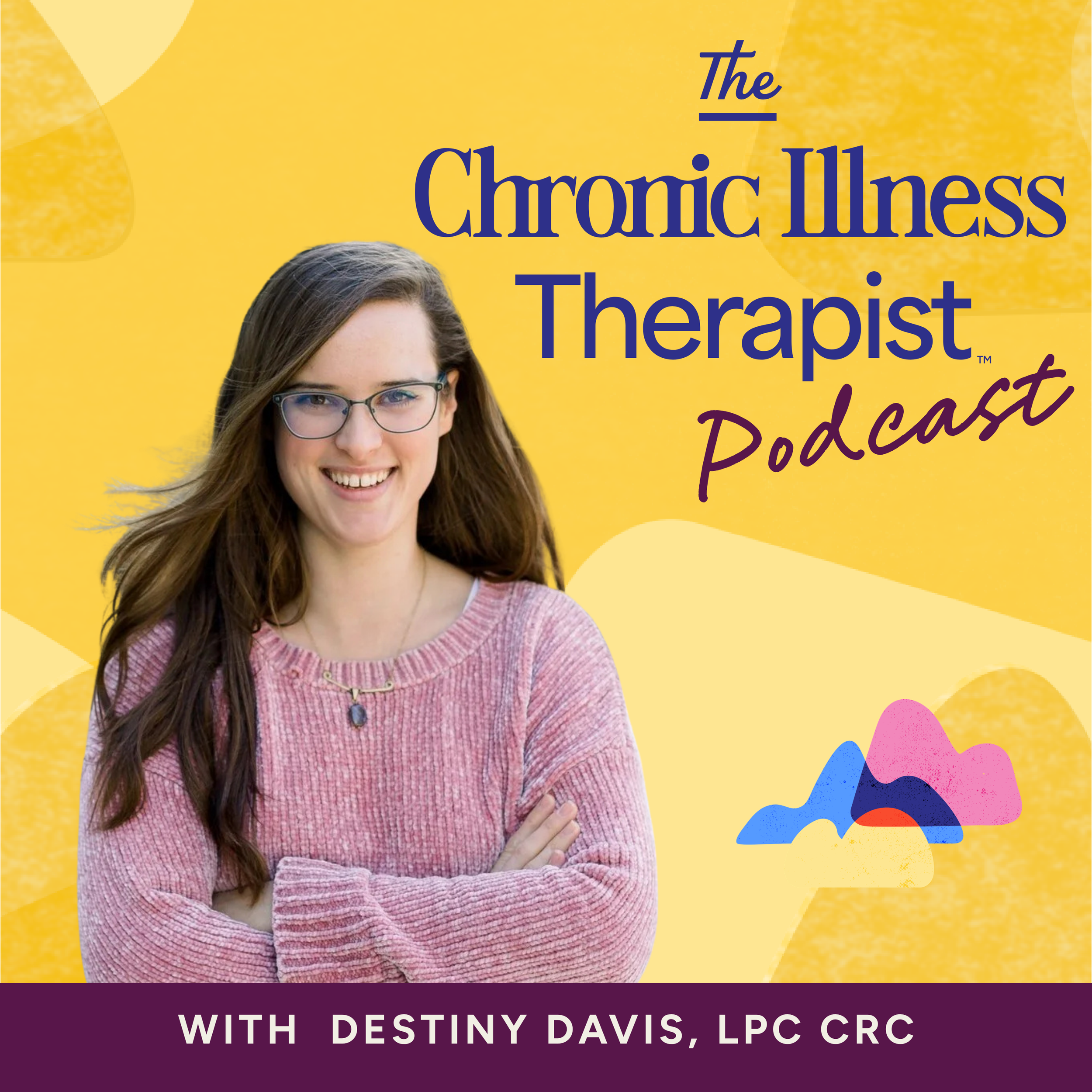
Listen to Jeannie’s interview with me, Destiny Davis, on Ep 128: Why Slow Movement Might Be the Thing That Actually Works
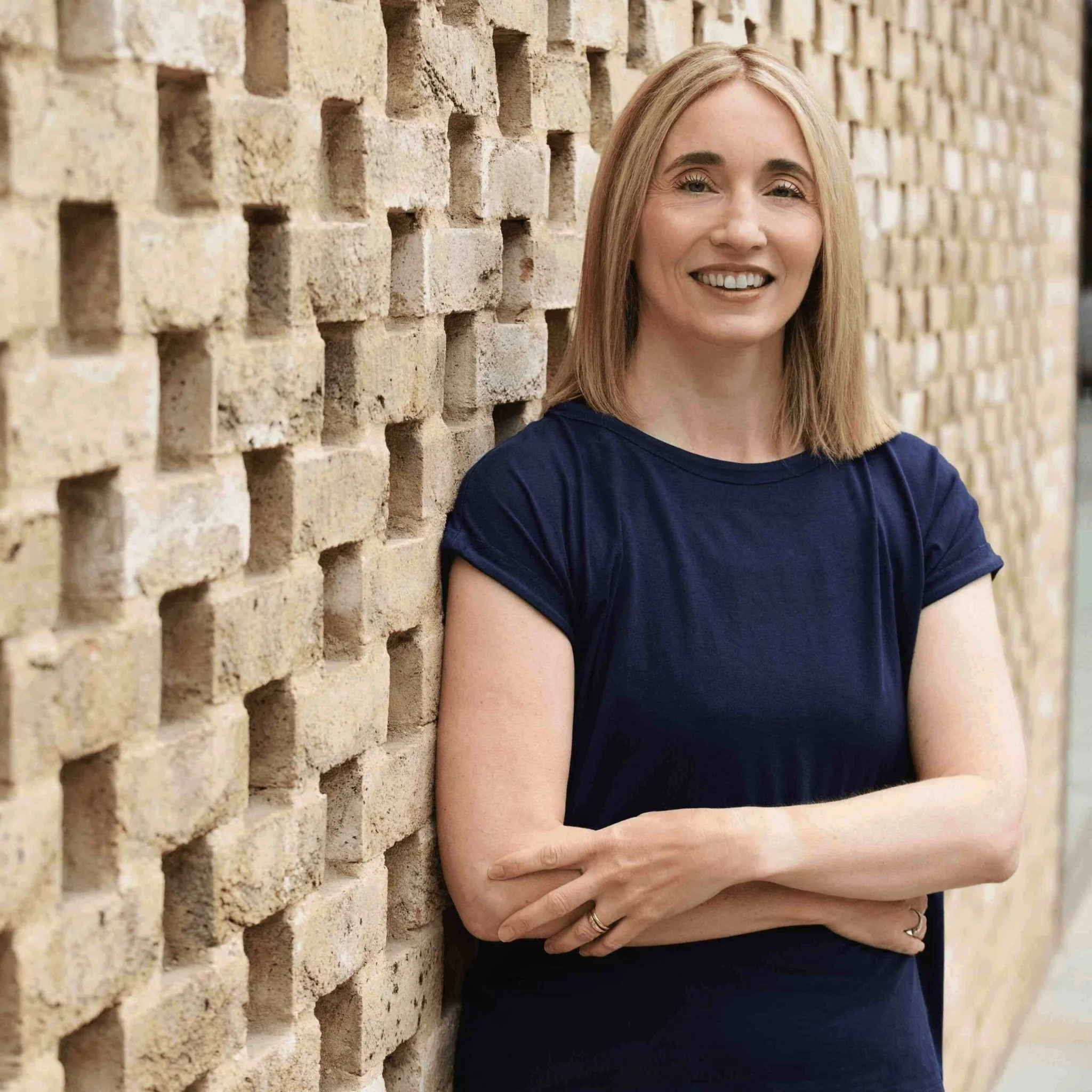
Jeannie Di Bon is a Movement Therapist based in London specializing in working with people with hypermobility, Ehlers-Danlos Syndrome (EDS) and chronic pain for over 15 years. Originally trained in Pilates, over the past decade her research and study have gone on to encompass biomechanics, anatomy, neuroscience and pain management. She has an MSc in Pain Management. Jeannie has hypermobile Ehlers-Danlos Syndrome and rehabbed her body and mind from chronic pain. She presents for The EDS Society and other charities. Jeannie is also an educator of teachers and therapists in the field of movement therapy with the EDS Echo program at The EDS Society. In July 2019, Jeannie launched The Zebra Club – a comprehensive clinical platform for people with hypermobility, EDS and chronic pain. The Zebra Club has members all over the world and is recommended by doctors globally. Jeannie is the author of three books - her latest book was published in November 2025 - The Integral Movement Method for Hypermobility Management.
Connect with Jeannie:
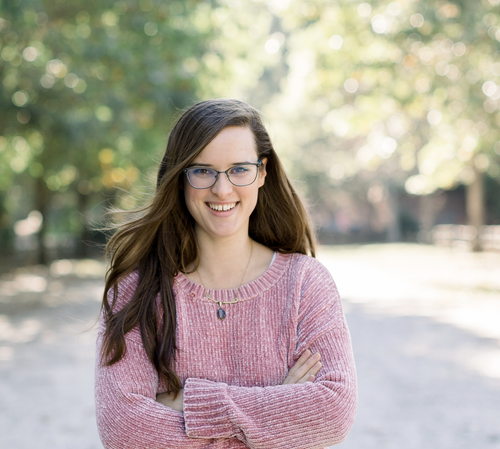
Meet Destiny - The host of The Chronic Illness Therapist Podcast and a licensed mental health therapist in the states of Georgia and Florida. Destiny offers traditional 50-minute therapy sessions as well as therapy intensives and monthly online workshops for the chronic illness community.