
When Your Labs Are Normal But Your Body Isn't: Understanding Invisible Illness
I had one of those conversations recently that I think is going to resonate with a lot of you. Dr. Kara Wada joined me on the podcast to talk about navigating chronic illness when the medical system keeps telling you nothing's wrong, and what to do when you're caught between dismissive doctors and wellness influencers making big promises.
Dr. Kara's a board-certified allergist and immunologist who also happens to live with Sjögren's disease and dysautonomia. So she gets it from both sides: the clinical side where you're trying to help patients within a broken system, and the patient side where you're the one being told your labs look "normal" while your body is screaming otherwise.
And if you've ever been in that position, you know how maddening it is.
The Problem With "Normal" (And Why So Many of Us Fall Through the Cracks)
Did you know that 30 to 40% of people with Sjögren's disease have completely normal blood work?
Let that sink in.
Sjögren's affects about one in 100 people, which is as common as celiac disease, and yet most of us have never heard of it. It's primarily known for causing dry eyes and dry mouth, but the reality is way more complex. We're talking body-wide pain, profound fatigue, brain fog, digestive issues, and nervous system dysfunction that can look like POTS or even mimic multiple sclerosis.
But if your labs come back normal? Good luck getting a diagnosis.
Kara explained that most clinicians today have been trained in a system where we rely heavily on black-and-white data. Blood tests. Imaging. Something concrete that says, "Yes, this is the problem." And when that data isn't there, a lot of doctors just don't know what to do with you.
It's not intentionally malicious. It's just that the system hasn't equipped them to trust clinical judgment, patient experience, and physical exam findings alone. So you end up unheard, undiagnosed, and probably scrolling the internet at 2 a.m. looking for answers.
The Dangerous Allure of Certainty (And Why She Ended Up Needing a Liver Biopsy)
As you might already know, I've also been there. I've spent way too much money on supplements that promised to fix my fatigue. I've gone down rabbit holes with extreme diets and protocols that sounded so certain, so simple.
Dr. Kara shared her own version of this story, and it was so validating to hear. After her Sjögren's diagnosis, she did what any self-proclaimed Type A person would do: she went all in. Superfood smoothies, intense Peloton workouts, all the supplements. She was going to fix this.
Instead, she ended up yellow, itchy, and needing a liver biopsy because those "superfood" supplements weren't so super for her liver.
Here's what she said that really stuck with me: when you're exhausted and dejected after another dismissive doctor's appointment, and then you're scrolling and see someone promising a quick fix for your inflammation or fatigue, it feels so certain. And that certainty is seductive, especially when the medical system has left you with nothing but question marks.
But here's the thing: storytellers aren't scientists. And just because someone has a compelling personal story and knows a lot about their own condition doesn't mean they know what they don't know.
That gap between confidence and competence can be really dangerous. Just look up the Dunning-Kreuger Effect, it explains this concept fantastically.
So How Do You Find Providers Who Actually Get It?
Dr. Kara gave me three questions to ask yourself when you're evaluating whether someone is legit or just selling you snake oil:
What's their background and experience? This helps you understand how much weight to give their recommendations.
Are they promising a quick fix, or are they talking about partnership? Because the reality is, chronic conditions are a long haul. Even if you figure out on the first try that a whole food plant-based diet works for you - that's still a long haul.
Are they selling you certainty, or are they coming from a place of integrity? Pay attention to whether they acknowledge what they don't know and lift up other experts.
That last one is huge. If someone is positioning themselves as having all the answers and you just need to buy their course or their protocol—run.
The green flag is when you hear a provider say, "Here's what I know, here's what I don't know, and here's who might be able to help you with that specific piece."
And you can check out another doctor’s list of Clinicians Who Care to hopefully find one of these amazing doctors that Dr. Kara and I are talking about. Dr. Bayo’s list can be found here: https://doctorbayo.com/clinicians-who-care/ - Bayo Curry-Winchell, MD, MS.
The Hypervigilance Trap (And Why Your Nervous System Needs You to Chill)
One thing we talked about that hit me hard was hypervigilance, and I don't just mean the mental health kind.
Dr. Kara explained that with conditions like mast cell activation syndrome (MCAS), your small fiber nerves and mast cells are literally sensing danger from things that shouldn't be harmful. Your body is reacting to gluten, or dog fur, or even your own sweat like it's a threat. And all those sensations and chemical reactions feed back to your central nervous system.
So you're stuck in this loop. Your body is on high alert, which keeps your nervous system ramped up, which makes your body more reactive, which keeps the cycle going.
I saw this in my own life as well. We get so afraid of triggers—whether that's a food, a thought, or a feeling—that we start avoiding everything. And then we’re stuck.
The path forward isn't about doing more or doing less. It's about finding the right amount of challenge with the right amount of support. Dr. Kara literally spent two hours with a patient helping her slowly introduce a medication, starting with just putting a tiny bit on her skin, then in her mouth, then taking the tiniest sip of a diluted version in an effort to help ease the anxiety that’s inevitable with a lot of these medical interventions.
That's partnership. That's what individualized care actually looks like.
What Actually Moves the Needle (Without Burning Out or Spending Thousands)
Here's where Dr. Kara really brought it home for us in this conversation: she started thinking about the 80/20 rule. What's the 20% of what you do that moves the dial 80%?
For her, it's sleep. More than diet, more than supplements, more than anything else. When her sleep is off, her pain goes up, her fatigue goes up, her dryness gets worse.
So instead of trying to do all the things perfectly, she focuses on tracking sleep quality and maybe one or two other markers. And once those become habit, then she thinks about what else to add.
Most importantly, she’s focusing on de-prescribing. Taking things off her plate, whether that's medications, supplements, or habits that aren't serving her anymore.
And I think that's where a lot of us get stuck. We keep adding more because we're not where we want to be. More treatments, more habits, more protocols. Until we're human “doings” instead of human “beings”.
My bare bones definition of nervous system regulation is this: saying yes to the things that are important to you and no to the things that aren't.
That's simple. It's not easy. But it's the work.
Key Takeaways
Normal labs don't mean you're fine. Conditions like Sjögren's, POTS, and mast cell disorders often don't show up in standard testing, and that doesn't make your experience any less real.
Certainty is seductive, but partnership is better. Be wary of anyone promising quick fixes. The providers worth their salt are the ones who acknowledge what they don't know and work with you over the long haul.
Your body isn't the enemy, even when it feels like it. Hypervigilance, whether mental or physical, is your system trying to protect you. The work is learning to meet it with compassion instead of fear.
Focus on what moves the dial. You don't need to do all the things. Find your 20% that creates 80% of the results, and start there.
It's okay to do less. Sometimes the most powerful thing you can do is de-prescribe - whether that's a medication, a supplement, or a belief that's not serving you anymore.
You're not too complicated. You're not imagining things. And you deserve care that listens as deeply as it treats.
Disclaimer: Everything we discuss here is just meant to be general education and information. It's not intended as personal mental health or medical advice. If you have any questions related to your unique circumstances, please contact a licensed therapist or medical professional in your state of residence.
Destiny Davis, LPC CRC, is solely responsible for the content of this article. The views expressed herein may or may not necessarily reflect the opinions of the guest.
The content in this blog post comes directly from a real, human interview between Destiny and her guest on The Chronic Illness Therapist Podcast. This written version was formatted using AI. Listen to the full episode to hear the actual conversation.
Listen to Dr. Kara’s interview with me, Destiny Davis, on Ep 105:When Your Labs Are Normal But Your Body Isn't: Understanding Invisible Illness
-
Episode transcribed with AI and may contain errors that are not representative of the actual word or meaning of the sentence.
Destiny Davis LPC CRC: The Chronic Illness Therapist Podcast is meant to be a place where people with chronic illnesses can come to feel, heard, seen, and safe. While listening to mental health therapists and other medical professionals talk about the realities of treating difficult conditions, this might be a new concept for you, one in which you never have to worry about someone inferring that it's all in your head.
We dive deep into the human side of treating complex medical conditions and help you find professionals that leave you feeling hopeful for the future. I hope you love what you learned here, and please consider leaving a review or sharing this podcast with someone you love. This podcast is meant for educational purposes only.
For specific questions related to your unique circumstances, please contact a licensed medical professional in your state of residence.
thank you so much. Dr. Wada, [00:01:00] for being on the show? Please tell us a little bit about your practice and what you do with patients and what your work looks like these days.
Kara Wada MD: Yeah. Oh, thank you so much for having me. Destiny, please call me Kara. I am a, uh, board certified pediatric and adult allergy immunology lifestyle medicine physician. I'm also someone who lives. With an autoimmune condition called Sjogren's disease, and dysautonomia meaning my nervous system, uh, tends to glitch from time to time.
It's often associated with Sjogren's, uh, though that, uh, doesn't get talked about much. And I had worked in practice within academic medicine on faculty at Ohio State for about eight years, up until this past January. When I really felt called to build, a clinical space and practice, that really is what I would've wanted for myself, , and for my patients.
, When I was initially diagnosed I, [00:02:00] founded the Immune Confident Institute, which primarily is a telehealth based practice. Um, but we are growing into some in-person services and really our mission is to ensure that, , patients are seen, heard, and believed, and that we can really redefine what the standard of care is for immune system care when it comes to, , you know,
empowering through trust, , pushing back against the status quo, putting the whole picture together, you know, connecting those dots and really being practical by design. Because frankly, I've read so many you know, guru books with their protocols and it's like, how does anyone have the time, energy, or money to do any of this?
And really at my core, I'm a, I'm a pretty practical Midwest. Mom of three that like, you know, I, I'm running on, on, on borrowed energy and time and really like to be thoughtful about how I invest my money too.
Destiny Davis LPC CRC: Yes. Thank you so much. [00:03:00] Yeah, I think it's really difficult right now because on one hand, western medicine, you know, does great at like life or death situations. This is kind of how people talk about this a lot like they do, Western medicine is great at life or death, but not so much at prevention or not so much at like funding that quote root cause.
And so I'm very curious how you intertwine in your work, conventional and functional medicine and how you, can we talk a little bit about evidence-based medicine and how you bring emerging approaches in maybe it's not quite the, the evidence isn't all the way there yet?
Kara Wada MD: Yeah, I, because of the conditions that I care for with more often than, than other times in practice. I, a lot of patients with Sjogren's, with dysautonomia, with mast cell disorders. These are conditions that have kind of nicknamed clinical ghosts because they. They're [00:04:00] lacking a substantial body of evidence.
Like when we think about, okay, what? What do we do to treat asthma? Well, goodness, the treatment of asthma since I was a medical student almost 20 years ago till now, has evolved tremendously. And what we realize is, for instance, asthma, we used to think it was allergic or not allergic. It's actually over a dozen different types of asthma.
So that. That knowledge and how we care for patients has changed dramatically because we have that information and we can say, oh, this is, you know, this patient fits this subgroup of asthma. We know now that they may respond better to a particular type of treatment. We don't have that at our disposal in these conditions that frankly, as experts, we can't even agree many times on the diagnostic criteria let alone the treatment protocols.
And so where I find myself often is having a lot of [00:05:00] conversations with. My patient, meeting them where they are and trying to get a sense of, one, their comfort level with how, how much evidence do they want or need to feel comfortable with trying a particular treatment and talking through the risks versus the benefits, and acknowledging the knowledge gaps that we do have in many of these conditions.
And deciding, okay, based on all this, what is our next best step forward in? And in working towards your goal and where you would like to see your symptoms and quality of life and, and all the things
Destiny Davis LPC CRC: Yeah. curious about Sjogren's specifically. What are some of the ways that you, maybe we can even just provide a working definition of what
Kara Wada MD: Yeah.
Destiny Davis LPC CRC: condition
Kara Wada MD: Yeah.
Destiny Davis LPC CRC: Yeah.
Kara Wada MD: So Sjogren's or it formerly known as Sjogren's Syndrome, has recently been quote unquote upgraded to disease. In part [00:06:00] because it really is its own clinical entity. For many years it's been described either as primary or secondary, but really we've gone away from that terminology. It's an autoimmune condition that can affect people from head to toe.
It's primarily. Characterized and described and t and tested on the fact that it, it often will cause tissue dryness, dry eyes and dry mouth. That's, that's what's a part of every question, standardized question that a, a clinician could encounter about Sjogren's. But the reality is that most patients are also affected by a lot of body pain and profound fatigue.
And those are symptoms that they're more often going to lead with when they go to see their primary care physician or if they're seeing their therapist. They may be really struggling with brain fog. They can't focus, they can't recall different words. Maybe their sleep is not great because also, you know, if [00:07:00] they're really, you know, have a lot of pain and, and you know, they're all, all of these things kind of in, in, together, kind of feed off one another, poor sleep, increase pain, poor sleep feeds on each other. They often will often have digestive issues. So it's not uncommon to see IBS fibromyalgia kind of listed on those on the diagnosis list and the other condition umbrella term that, is often associated with Sjogren's, but isn't really taught about are its impacts on the nervous system.
And the nervous system impact can be anywhere from those little small fiber nerves that are responsible for our sensation and for our automatic functions like our gut motility, our ability to sweat our pupils, to dilate correctly, our blood vessels and heart to communicate correctly. So it's the.
Number one, autoimmune cause pots, for instance. But it also can look and kind of be a mimic for something like multiple [00:08:00] sclerosis. Increased rates of migraine. That neurologic impact can look a lot of different ways. And that piece doesn't necessarily make it to those question stems, uh, or those lectures that I learned you know, on my way to, you know.
Becoming an immune system expert. You know, one would think you'd get a little more, and, and we did. But it really has centered around this dryness piece. And frankly, the dryness can be really bad. It can result in increased dental issues, lots of cavities. Teeth being broken, trouble swallowing because your food can't get enough saliva, you know, in it having to drink a lot of water and the dry eye can actually cause damage to the corneas.
So yes, that, that can be incredibly problematic. And also, it's not always what brings you to the doctor's office either.
Destiny Davis LPC CRC: That makes many thoughts are going through my mind. Like psychiatrically, we when [00:09:00] you're talking about yeah, so much of this like that's, it was just chalked up to anxiety and how do you, okay. How do you start to diagnose, how do you start a diagnosis and how do you weed through, you know, when it's looking like so many other things And yeah.
Kara Wada MD: It's hard. I think there is somewhat of a pattern recognition that you do start to get over time. And also you, I always try to check myself of like, okay, I have a lot of people who suspect they have Sjogren's who come to me because they have, had trouble finding folks maybe, you know, locally or what have you to recognize that, right?
But I, I always check my, okay, not everything when you hammer, not everything's a nail. But we know that there's a misperception that Sjogren's is rare when actually it affects about one out of 100 people. So it's just as common as something like celiac disease. It. Is one of the most common autoimmune conditions [00:10:00] that no one knows how to, how to pronounce.
Because you know, you're probably listening to this, but Sjogren's is spelled SJO, so it, it's G-R-E-N-S, although it's pronounced show like you're showing your grin. And so that creates all sorts of confusion of those one out of a hundred people, 90% of those affected are women. So there isn't a big gender disparity between those that are affected.
Absolutely, though I, I have male patients. They can have diseases just, you know, just as significant. But there are very likely are some kind of hormonal impacts on, on what's going on. And when we think about the diagnostic process there are a set, there's several sets of criteria that have been published.
At its core, the diagnosis is a combination of clinical findings and some data. But there's a more [00:11:00] stringent set of criteria called the classification criteria that are primarily we're created for research. When we do a big research study, we want to make sure that the people we've included.
Absolutely have that disease. So typically for to be, you know, be a part of a research study or a clinical trial, we want very small, you know, a smaller box than what, you know, probably encompasses all patients. But unfortunately what's happened within, clinical medicine is that these more stringent criteria are often thought of as the end all be all for the diagnosis.
And the reality is that 30 to 40% of people with Sjogren's disease have normal blood work. And so when you have, uh, clinician workforce of physicians, nurse practitioners, PAs that. Have only practiced in a setting where we have a wealth of like really, [00:12:00] really great diagnostics that give us this black and white data that makes us feel, oh gosh, we have the diagnosis.
We know what it is. We haven't had to rely on our clinical, you know, judgment of. Our interpretation of that patient's lived experience and our physical exam findings alone. And so most of us as clinicians don't feel super comfortable with making clinical diagnoses.
Destiny Davis LPC CRC: makes sense. Yeah, I would. Is that the same thing with MCAS right now with the criteria? Yeah.
Kara Wada MD: Yeah, and there's a whole a whole other like layer of I know a little, little spill the tea a little bit, but a little bit of, you know, pull back the curtain. That with MCAS, there are two sets of those criteria that are, are mainly discussed. Consensus one and Consensus two, the folks that are kind of behind Consensus one and Consensus two, they don't.
They don't communicate well with one another, they don't get along real [00:13:00] well. That's in part why those two criteria exist. And you know, the, the group that is around consensus one primarily, or allergist immunologist, they're my peers, it's a more again, a smaller box that they would say, okay, these are the more stringent criteria.
Often those criteria are relying more heavily on a blood level called tryptase to make that diagnosis. And in order to be seen by many of the well-known mast cell clinics academic clinics, you have to have an elevated tryptase to get an appointment. If you don't have that blood marker, they won't schedule you and they won't accept that referral.
They would say, okay, consensus two is too is too broad. We are over diagnosing, we're over calling. That may be, that may be the case. And, but I also, you know, going back to the analogy of asthma, I really, truly believe what we're [00:14:00] gonna find out five, 10 years from now. Is it, there's this category of MCAS that plays a little, you know, maybe is more associated with hypermobility and there's this type of type of MCAS that's more related to folks with autoimmune conditions like Sjogren's or, you know, like there's the likely will be these subtypes that we have better understanding of like who that patient kind of looks like, what the gender breakdown is, what treatments they respond to better and what lab markers might be better.
Destiny Davis LPC CRC: Hmm.
Kara Wada MD: To help to make this them too.
Destiny Davis LPC CRC: Yes. Can we, you talk a little bit, your, my brain is going into the ideas of the idea of a primary versus secondary diagnosis, and I'm thinking fibromyalgia pots like, and so you mentioned Sjogren's kind of used that kinda used to be the case, that it was like it was a secondary to something else being wrong and now we're, we're allowing it to be seen as an autoimmune condition primary.
Can you [00:15:00] explain bit more for a lay person to understand how that's important, why, like, why that's important and how that helps us conceptualize what may or may not be happening.
Kara Wada MD: Yeah, I think o one thing to kind of step back is to realize that, gosh, all of these different systems are interconnected. Our immune system is intimately connected with our nervous system and. The, especially the mast cells and the small fiber nerves, they're they're touching one another. Those are primarily found in our connective tissues, in our, and in our barriers, our airway, our gut, our skin, and primarily as women.
Our genital urinary trap too. They're also found around our blood vessels. And so when we think about how things can go haywire at this interface, right, it wouldn't, it wouldn't surprise people to think, oh gosh, if you have tissues that are already more more flexible, hypermobile, [00:16:00] more prone to tissue injury, that perhaps there'd be some downstream effects on the immune system and nervous system there too.
'cause it's all in the same space or. If you have increased mast cell activity, that that could then impact the nervous system and the connective tissue potentially. When we think about the terminology of secondary with Sjogren's there. You know, we've come to realize, uh, horses tend to travel in a herd and many autoimmune conditions tend to be diagnosed in the same person.
I had a patient earlier this week who was like, gosh. It seems like, and, and she was a fellow healthcare professional. She's like, it sounds like I'm saying like lightning has struck 15 times and it just, I was always taught that that couldn't happen. And I'm like, but it does, when there is something fundamentally askew or amis wrong things happen and more wrong things can happen.
You know, like there can be more glitches. [00:17:00] So for a long time it was thought, okay, if you had rheumatoid arthritis and you had symptoms of dry eyes and dry mouth, then your Sjogren's was secondary to the ra. Or if you, same thing, if you had lupus or whatever the RA or the lupus or the other conditions were considered to be.
More impactful, more profound. They were given more weight both psychologically and clinically, probably in part because we had actual treatments that were approved for those conditions. Whereas Sjogren's, to this day when we're recording in August of 2025, does not have an FDA approved drug for it.
And so tho then those folks who like myself they're. Only autoimmune diagnosis was Sjogren's. They were termed primary Sjogren's because there wasn't anything else in the mix. Now, what I am not a hundred percent clear on because this has changed kind of during my, my clinical practice [00:18:00] was if I were to go on to be diagnosed with ra, would someone have then termed my Sjogren's secondary?
I don't know.
Destiny Davis LPC CRC: right. What does that mean for people when they're looking for ways to improve their conditions? Of course, we're talking medication, lifestyle, uh, management. Like does it mean for them to, because I think the, I think the thinking is if something is primary and I fix that, that thing, then everything else will be better.
Kara Wada MD: Yeah. Yeah.
Destiny Davis LPC CRC: How do you kind of start to conceptualize,
Kara Wada MD: where do you go?
Destiny Davis LPC CRC: Yeah.
Kara Wada MD: So lemme share a little bit about kind of my personal experience, which was after my diagnosis, which would've been around May of 2019. Like any good type a person, I was like, okay, we are going to do all the things because one, I knew that I had. A treatment option with [00:19:00] hydroxychloroquine or Plaquenil, that, that might help a little bit, but frankly is not terribly immune suppressive and, and its track record is like, it's a mixed bag.
It can be helpful but it's not the end all be all. And then there's this huge gap in treatment. Until the proverbial, you know, what really hit the fan, and you maybe had a lot of gland swelling. You had maybe some pre cancerous type changes because one of the really scary things about Sjogrens is about 10% of patients will end up with a lymphoma diagnosis and or really bad neurologic issues.
They would put you on something called rituximab. Rituximab, essentially really helpful medicine, really powerful medicine too. It essentially wipes out about half of your immune system function. Depending on how you look at it. Wipes out your B cells and your antibody production, at least temporarily.
And in my role at that point in time as an allergist immunologist, one of my, [00:20:00] you know, populations of patients I treat and continue to treat are folks with immune deficiency.
Destiny Davis LPC CRC: Yeah.
Kara Wada MD: Sometimes lingering from that Rituximab. So I was like, oh Lord, I do not want that med. If I can avoid it, what else can I do? So I leaned into lifestyle and, you know, some more alt, you know, alternative ish alternative light things.
I. Turned around my diet. I bought some super food based supplements. You know, I thought, okay, I'm gonna smoothie my way through this. I'm gonna work out really hard on my Peloton. 'cause it was like when Peloton was real big, like right before the pandemic. And I'm gonna just do everything perfectly and that is gonna be like my, you know, magic spell to make this all go away.
It ended up backfiring pretty considerably.
Destiny Davis LPC CRC: story on this podcast.
Kara Wada MD: Yes, and I, I ended up yellow, itchy and needing a liver biopsy because unfortunately those superfood supplements were not so super for my liver. And I, [00:21:00] I really had a pretty significant functional, you know, kind of, uh, down leveling that even to this day, like I, and, and admittedly I haven't pushed myself as hard for all sorts of reasons, but I, I have some of those old prs from the Peloton and.
I'm nowhere near those. And a lot of life has happened. I've I've gotten to make a, a long story, not, not any longer as I have had significant improvement with some more reasonable lifestyle changes and medication and, learned a whole lot. But got to a point where I was able to very thankfully have another successful pregnancy.
And that little kiddo is now napping on the couch. So hopefully he won't interrupt us. But he's three and a half and, you know, a lot of other life stuff happened too.
Destiny Davis LPC CRC: I am really glad you shared that because I think it's, you know, important for people to understand, you know, how the quote holistic medicine really goes wrong. And, how we can kind of get back to a more balanced place again, like Western [00:22:00] medicine doesn't always have great answers, and it's either these super strong, awful drugs that have like more side effects than what it's worth, or it has wonderful drugs that do exactly what it's supposed to do.
Or, know, even in the era of like GLP ones right now, like there's a lot of lifestyle factors that you have to do in order to really make that drug really benefit you the most. And it's not one or the other.
Kara Wada MD: I've started thinking a little bit about the idea of a lever and for those that maybe are watching or if you're just listening you think about, I have a pen and I, where I put my finger underneath that pen, depends on like, that alters how much pressure I need to push down on the one end to make the other end move.
Right? And so. I think it can be really one, it can be so overwhelming when you have a huge burden of symptoms, and then you're also embarking on trying to get care in a very [00:23:00] broken healthcare system, and also weeding through all of the, all of the information that's out there. I get overwhelmed too. And so what I've been really focusing in on is this idea of what are, what's the 20% of what I do that really moves the dial 80%?
And how can I, how could I improve upon that before I add all of the other, like you know, things that don't have as much evidence behind them. So for me, what I've realized, sleep is huge. Sleep even more than, than nutrition and diet. Like I'm, you know, do my best to eat a well balanced you know, plant forward diet.
And also if I have a stretch of cruddy sleep or not enough sleep, gosh, that really increases my pain levels, my fatigue is up, my dryness is up. And [00:24:00] so. What if I use some measures of my sleep quality, whether it's using a health wearable or just old fashioned, like, I slept this much and I feel like it was this restful.
You know, you don't have to necessarily use expensive technology.
Destiny Davis LPC CRC: Yep.
Kara Wada MD: And I focus on tracking that and maybe one or two other markers over time. And then I start to, you know as, as those become just habit. And don't even have to think about them. Then what else can I add? So that it's,
Destiny Davis LPC CRC: yeah, I, I have a very similar to the, to, to needing a biopsy, but very similar in that I went down the supplements and holistic route and trying to do, and spent a ton of money for, honestly no, no
Kara Wada MD: oh.
Destiny Davis LPC CRC: And I think, learning to uh. Uh, balanced. I think sometimes ho, hopefully it doesn't have to, but it almost feels like from everyone I've talked to, like it requires this like deep end kind of like going off the deep [00:25:00] end and stuff that doesn't work. at the time when you're at the beginning journey and you're trying to implement something like simple diet changes and uh, getting better sleep and maybe going for more walks and nothing's happening for six months, it feels like, well, this isn't working.
This isn't, what am I doing here?
Kara Wada MD: Oh yeah,
Destiny Davis LPC CRC: and grasp for something that promises something more quickly, like a supplement or an extreme diet change. Yeah.
Kara Wada MD: Or even, you know, I, I was thinking about this a lot in the, the last 24 hours, but like when you are exhausted, you feel dejected. 'cause you've just come home from another doctor appointment that like, feels like you are unheard and you are no further ahead and you're like, oh gosh, what's that copay or bill gonna be like?
And then you're scrolling, right? And that like. That friend influencer pops up, you know, with like this, you know, oh, this is gonna fix your fatigue, or this like, got to the root cause of my inflammation, or [00:26:00] whatever. It feels like, oh gosh, it's so certain. And it feels like, oh God, well maybe this is it.
Like, it's so simple and I think. That's also what makes that dangerous in some ways. And, and I don't say that to like shame anyone. 'cause obviously I've been there, you know, like I didn't get a t-shirt, but I and I don't have a scar from the biopsy, but the story and it can be really important to parse out and just take a, a pause to say, okay.
Is this a storyteller or is this a scientist? Because yes, the system has left gaping holes. And you know, a lot, a lot of folks', patients like, understandably are trying to fill it because they have, they have, they have really good intentions. They've found something that worked for them, which is great.
They know a lot about the condition because they've had to become experts in the condition too, so they sound pretty competent. They've walked in your shoes, so they, they [00:27:00] know how to like tell that story. And also they don't know. What they don't know. And I think what's been super humbling for me is as I've dug into the science behind lifestyle and done my lifestyle certification, as I'm almost done with my functional medicine certification, I can tell you like, when you hit that moment of realizing the, the enormity of what you like, you know, you know quite a bit, but when you realize how much you still have to learn.
That's the real oh four letter word moment because you, it realizes a clinician, a clinician who's been in practice for over 15 years now and kept up, , four board certifications. Like I still have so much left to learn and this, this job of learning. It's not really a job calling to keep learning and that's why I'm in this field.
I love learning and immensely curious. That's never gonna end.
Destiny Davis LPC CRC: Yeah.
Kara Wada MD: Drinking [00:28:00] water out of a fire hose every day.
Destiny Davis LPC CRC: I know. I feel the same way. And so that, that leads me though to the question of what does that mean for clients, patients who are looking for answers and, and
Kara Wada MD: Yeah.
Destiny Davis LPC CRC: we guide them versus how somebody who claims to just simply have all the answers tries to guide them.
Kara Wada MD: Yeah. I think there's three questions I kind of come back to. Understanding what is their background and their experience. And I think it's just helpful to kind of better understand like you know, how much weight you give that recommendation. Right. The other question number two that I think about, are they promising a quick fix or are they really talking about partnership?
Because the reality is, these conditions require partnership. They are a long haul. Uh, even if you on your first try figure out like, oh yes, I am really responsive to a whole food plant-based diet. Awesome. That's great. It [00:29:00] still is a long haul. And then number three are, you know, are they selling me certainty?
Or are they coming from a place of integrity and aligned you know, with, with, with leading with, you know, their values. And
Destiny Davis LPC CRC: I think that's,
Kara Wada MD: I think it's,
Destiny Davis LPC CRC: Because
Kara Wada MD: that's where I go
Destiny Davis LPC CRC: yeah. I think
Kara Wada MD: remind myself of that.
Destiny Davis LPC CRC: even now, it's like, you know, we have a bunch of kind of coaches that are out there trying would probably be present as kind of how you, you know, it's, they are offering kind of this partnership, but they don't have the knowledge and expertise, but they claim to,
Kara Wada MD: Yeah,
Destiny Davis LPC CRC: I, you know, yeah.
It's, it's, I'm just
Kara Wada MD: it's hard.
Destiny Davis LPC CRC: tricky for people right now.
Kara Wada MD: Well, and frankly this has been one of my I dunno, pet peeve is the right way, but like, uh, a. A frustration I've had with functional medicine. I think the frameworks I've learned and some of revisiting some of the basic science and things related [00:30:00] to the underlying. Things that are going wrong with all the pathophysiology of, of conditions.
Super helpful. And also I think how some of these training programs are set up is that they empower folks to, feel a little bit more emboldened to practice outside of their scope of the kind of their, their, their, you know, if maybe they're a dietitian by training or physical therapist by training or what have you.
And that worries me to some degree, and I think that also has really given kind of functional medicine a bit of a bad rap amongst. Peers of mine as well because they then, you know, win. Patients kind of go down the rabbit hole and spend immense amounts of money on testing that's maybe not ready for prime time or you know, the, the stacks of [00:31:00] supplements that they may or may not tell you they're earning a commission on or you know, and, and then after all that, then they fall back into conventional medicine and.
At a total loss for what to do.
Destiny Davis LPC CRC: Yep.
Kara Wada MD: Mm-hmm. Yeah. I mean, and that's, so part of my I am still actively engaged in this, is deciding, okay. And doing it on this case by case conversation by conversation standpoint of. Let's focus on the things that we know have the best evidence. Let's not reinvent the wheel if you've tried X, Y, Z, right?
Like, I, I understand that and we wanna continue to move forward, but let's also not jump to doing thousands in lab tests that may or may not change our management without some real thoughtfulness in what [00:32:00] we're gonna do with that data. How much. You know how much we're gonna trust it. And and I think that
Destiny Davis LPC CRC: Yeah,
Kara Wada MD: the, the reality is those conversations take a lot of time.
Destiny Davis LPC CRC: I know it's hard and I, I feel similarly about like nervous system regulation because.
Kara Wada MD: Yeah. Because everyone's a nervous system coach now too.
Destiny Davis LPC CRC: Yes, exactly. And you know, in the beginning it makes you feel like, is there something, wait, maybe I did miss something in school. Like maybe I, you know, I didn't get that secret answer about regulating my, my clients so well that they are just perfectly, uh, mentally happy all the time now. And you know, I've, I've been through somatic experiencing training.
Have in clinical rehabilitation counseling. I, and it, it does, it can really make you question what you know, but at the end of the day, it keeps coming back. I say this to all of my clients, like my bare bones definition of nervous system regulation is saying yes to the things that are important to you and no [00:33:00] to the things that aren't. that is easier said than done, but that's why it takes so long to do the work sometimes. How do you say no
Kara Wada MD: Absolute.
Destiny Davis LPC CRC: that you've been in 15 years? How do you See
Kara Wada MD: if it's with a parent,
Destiny Davis LPC CRC: yeah.
Kara Wada MD: right? Yeah.
Destiny Davis LPC CRC: So it's, it's simple and it's not easy and it takes a lot of support and a lot of like little tweaks and trial and error and that requires somebody else, like alongside the journey with you so that it's not just you in your own head, you
Kara Wada MD: Oh my gosh.
Destiny Davis LPC CRC: that extra sounding board.
Kara Wada MD: You know, when I mentioned sleep being one of the big drivers I have to add to say right next to that is that mindset, thought work, stress. Toolbox because the example I love to use is I would often, and I still do, I'll look ahead at my schedule for the next day, right. Just to see what's on the docket, make sure I know what time I need to get my kids out the door and everything.
And [00:34:00] I. I, I laugh and I actually shudder to think about how much I put myself into fight or flight, stress induced panic, whatever you wanna call it. By doing that over the years, because I would look ahead at my clinic schedule, even dating, back to residency, and I would start thinking about all the bad things that were gonna happen.
Oh gosh, I'm overbooked. I have too many patients. I, I take longer, and I like. Having conversations with my patients, I'm kind of chatty too. And so I was never the fastest in and out doc from the get go. And so if I was overbooked or I saw a patient that I knew was more clinically complex or had a lot going on socio, you know, socially, or we were gonna have trouble getting prescriptions covered, all these things, like my mind would go and I would be in that like stressed out state from the time I looked at the schedule until, you know.
I got into the groove in clinic that next day, [00:35:00] but what I, it, what I needed someone to point out to me a few times was, and someone professional to point out to me was that, over half the time. My experience in clinic was fine. Like someone late canceled, or that patient that I thought was going to have a lot going on, something magically happened and they, and, and things were better and we had made some headway.
Like so oftentimes there'd be like this relief, but it was this relief from the self-induced like stress that I've been under. Yeah. Some of the days were tougher. Right? Obviously that's life. And also I made it through all of them.
Destiny Davis LPC CRC: Yeah,
Kara Wada MD: still do?
Destiny Davis LPC CRC: it makes me
Kara Wada MD: Like
Destiny Davis LPC CRC: little bit almost of like the concept of autoimmune conditions and how your body is. It's trying to protect you by fighting against you, and it's the
Kara Wada MD: Yeah.
Destiny Davis LPC CRC: is how the thoughts work too. Your brain is trying to protect you by, you gotta [00:36:00] go faster, you gotta be perfect, you gotta do this, and then like meanwhile, it's kind of doing all this damage on the side.
Kara Wada MD: Yeah. And, and a lot of it I think will be this continuous coming back to, because self-compassion is not something that, you know, I learned early on. And so this is a muscle I'm gonna continuously have to work out. You know, and maybe at some point it will just become second nature. But I think there will always be this coming back to like, oh, nope, human experience.
Okay.
Destiny Davis LPC CRC: It's true. It's true. Yeah. Even when I think, you know, gotten, I do, I would say habitually, my thoughts are way different now than they used, you know, they were 10 years ago. But sometimes I'll still catch myself and I'll be like, oh, like I was really just critical all day, like, you know, and the, the goal is to catch it and to pivot and to engage in self-care and self-soothing and, and just get back on track.
Same thing with, I'm sure diet and, and lifestyle management for.
Kara Wada MD: [00:37:00] Absolutely. It's, it's, it's this continuous, like coming back to, and it's I think the other piece of that, like. The conversation is we all have this tendency and, and I do as a physician to add more, right? Let's add another treatment because we're not where we want to be. Let's add another habit. Let's add, add, add, add, add.
And at the end, you know, after all that, you're like, okay, all I have room for in my stomach are. Pills and I don't have any free time because I'm meditating from this time. I'm working out, I'm spending quality time with my kid, right? Like we're, we become human doings instead of human beings. And so what I've been trying to really focus on this last few weeks, even just in my clinical practice, is, uh, to think about what we can stop or what we might.
What may not be serving us and try to de-prescribe, whether it's a supplement or a medication [00:38:00] or, uh, something in our, you know, in our lives that's not serving us anymore. I'm trying to de-prescribe social media for myself, but that's
Destiny Davis LPC CRC: Yeah.
Kara Wada MD: pretty challenging.
Destiny Davis LPC CRC: I
Is
Kara Wada MD: yeah.
Destiny Davis LPC CRC: out too, why it's so important for such individualized care, whether it's on the body level or the mental health side of things. Because actually had two or three conversations in the last couple weeks about with, with people who actually need to push a little bit more like not, and so like me, I'm constantly trying to figure out how to do less because I have this like de desire, this need to constantly be doing.
And and, but you know, then you can fall into, especially when that burns you out, then you can get scared of movement and you can kind of go into the momentum of doing very nothing very. So like, know, uh, catatonic almost. And then learning to get past that, you have to move past some of the fear of what it means to start ramping up again. And that again, that's [00:39:00] like an extremely individualized conversation.
Kara Wada MD: It is interesting. I, I haven't studied this, but I would. Hazard to guess that I see that more often in my patients with mast cell activation. They're like stuck in a, a loop of hypervigilance. And I do, I do wonder like if you're, if your nervous system, like literally your, your small fiber nerves and your mast cells are sensing and you know that you are being harmed or in danger from whatever it is.
That, you know, uh, gluten or, uh, you know, dog fur, what have you. You know, obviously that's inappropriate,
Destiny Davis LPC CRC: means
Kara Wada MD: right?
Destiny Davis LPC CRC: Like sweat can be
Kara Wada MD: Yeah.
Destiny Davis LPC CRC: huge trigger. Yeah.
Kara Wada MD: And so and, and that all those. Those sensations, you know, and those chemical cytokine reactions, they feed back to the central [00:40:00] nervous system. And so, you know what I've realized and what.
You know, as, as I was practicing in an academic setting was and, and seeing more and more of these patients over the last three years of my career in academics was that I wasn't able to provide that handholding. That they needed in order to help them through making some of those moves. Whether it be, like yesterday I spent over two hours in the office with a patient and we just ever so gradually introduced and crumble in into into the routine.
And so we started by just putting a little bit on her skin. And we watched it and that was fine. And then we switched some in her mouth and spit it out and that was fine. And then we took the tiniest little sip of a diluted, like we put a quarter of a violin, like probably a cup of water. And she just took a sip of that right?
And over, you know, a couple of hours just sat and talked and just had more, more relaxed setting. So that. [00:41:00] Now I'm hoping I need to touch base with her 'cause I haven't had a chance yet today. But to see how it's going to hopefully help build that confidence to be able to try slowly continuing that and ramping up on that at home, knowing that based on our, our conversations leading up to that, that we thought this was the next best step forward, kind of from a treatment standpoint.
Destiny Davis LPC CRC: I love that so much. It's true. Think a lot of therapy, like mental health therapy is really exposure, work exposure to your negative thoughts and feelings. So I practice from a lens of acceptance and commitment therapy. So we're not trying to just get rid of those thoughts, we're actually trying to acknowledge them, allow them to be online and you can be with them without them driving the bus.
And that's, to me, it's just, it's such exposure therapy. The more you can kind of befriend, be with and then eventually befriend something like sadness, fear, anger, then it doesn't cause you to do hypervigilant behavior. [00:42:00] So, I'm curious about the difference between chromin and keto tiffin. Do you prescribe keto tiffin or.
Kara Wada MD: Yeah. Yeah. So Chromin is not absorbed and it is considered a mast cell stabilizer. There's a little bit of debate about how well it works, but it's been available commercially in a nose spray form for a long time. Even I think predating things like Flonase, and frankly, it kind of fell out of favor because for.
And, you know, sinus, typical run of the mill allergies, you would have to use that spray four times a day to really see its full effect. That's a pain, right? Like no one wants to do four times a day if you can help it. It's also though, available in a few other different formulations. So there's something called gastro, which is oral chromin, which you can take by mouth.
Destiny Davis LPC CRC: That
Kara Wada MD: mm-hmm.
Destiny Davis LPC CRC: times a day too. Is it not?
Kara Wada MD: It is. Yep. So it's not ideal from the standpoint, but for some folks, especially if we think that gi mast cells are driving [00:43:00] the bus seems to be pretty helpful. It also comes in a nebulizer, so can be use a aerosolized. And then there are some, some published recipes. You know, we were talking about, you know, kind of knowing your sources, but there is a nonprofit that really focuses on taking care of kiddos with mast cell related rashes on their skin.
A con, a condition called cutaneous mastocytosis. So the moms this is my understanding of the story and someone can correct me if I'm wrong, but developed, uh. Homemade, kind of compounded lotion using some of the chromin, putting it into a, a base like a, a CVE or a VNA cream, something that, you know, that we knew the kiddo or the patient already tolerated with a little glycerin to keep it.
Mixed up, and then that can be helpful topically too. So there are some other ways that sometimes those are used, but it, it's interesting because it's not absorbed, it also doesn't have a ton of extra filler ingredients. Like a lot of [00:44:00] medications that we prescribe or available over the counter, especially in tablets, have excipients or fillers.
And that at times can be a trigger. And with mast cell disorders, if we can avoid triggers, that's like the one of them, an allergy. Avoiding your allergen is one of the best things we can do. It's just not always a hundred percent practical. Kain ke to toin. Tomato, tomato, I don't know what the exact.
Proper pronation is it is a antihistamine and mast cell stabilizer in the United States. It is available over the counter in an eye drop that is in an orange bottle or orange packaging. And now the name of the brand is escaping me. But if you see the orange packaging, you'll probably see Kein Kein on the packaging.
And. So it, it's used for allergic eye, condi eye symptoms. It's also though available in an oral [00:45:00] formulation in Canada and other parts of the world, and there is kind of approved and standardized dosing to use it orally for asthma and allergic conditions. So, some docs who, uh, you have been treating mast cell patients over the years have found getting an oral formulation compounded in the US is another option.
It I have some patients on it that do really well. One of the, uh. Pros and also a con is it, it crosses the blood-brain barrier. So for some folks that are experiencing a lot of anxiety and other symptoms associated with increased mast cell activity, that can be a good thing. And also it can be pretty sedating.
So that's kind of the like, ooh, we gotta see. Sometimes that does get better over time, and other folks just find that to be like too much. So it's a. Six on one hand, half dozen on the other mast cell. You know, you're talking about this theme of individuality. [00:46:00] Gosh, there are broad brush strokes across, you know, kind of how these patients may present or the symptoms they may have.
Each person really truly has their own set of triggers and kind of the keys that help turn that inflammation down to.
Destiny Davis LPC CRC: I'm so curious how people can learn about condition in the best way possible, like without going down too many misinformation, rabbit holes without.
Kara Wada MD: Oh yeah. I think that it's like the million dollar question, right? I think a few things in particular that I found really helpful within Sjogren's, and maybe we can use that kind of as an example. One is looking for nonprofits that are in that space. So for instance, the Sjogren's Foundation really puts out some fantastic yeah.
Clinical practice guidelines. They [00:47:00] put on continuing education for physicians and they put on really great support groups and other educational endeavors for the patient community too. They're funding research, they're really doing, great work so that, you know, that is one place, you know, that generally Dysautonomia International, for instance, is a great nonprofit, similar in in their scope of work and body of work.
And, and so those are some really great. Initial things to look for. The other would be, you know, looking for research centers that focus on these conditions. And I say that with a little bit of an asterisk. You know, we've talked about a, a few you know, instances where there, there is ongoing debate amongst clinicians.
And so, generally though those are, you know, at at least a reasonable place, uh, to go and to look. You may not be able to stop there depending. And you know, those, those who are actively engaged in [00:48:00] the work I think looking, you know, going back to the, you know, the expert is like looking to see what's their real background.
Are they a physician? Are they phys, a physician in the field? Are they and or other, you know, healthcare professional, you know, that would make sense in the context. You know, nervous assisted regulation. Yes, I know a little bit, but I'm an allergist immunologist, like it's not gonna be like my, my full on.
And, and I was talking with some folks today, like I see a lot of patients with hypermobility, so I feel like fairly knowledge, you know, like more knowledgeable than the average, maybe allergist because I see a lot of patients with that. But musculoskeletal medicine, that is not my genius zone.
Destiny Davis LPC CRC: Yeah.
Kara Wada MD: And so I think if you are looking for someone who isn't a bit more of that expert influencer ish type space I think it's important to listen for clue.
A green flag is when you hear someone [00:49:00] also saying what they don't know. Lifting up other people that they look to for expertise.
Destiny Davis LPC CRC: I think that to best, yeah, you're totally right because you will not hear a health influencer that without a, without a degree or license, say that it's, I have the answers by my course, buy my product, buy my thing. And that's what I, you know, the more and more I talk to other professionals doing this work as well as other therapists, that's the green flag is when you hear a, here's what I know and here's what I don't know, and here's who I think might be able to answer that specific question for you.
Thanks for listening. If you learned something new today, consider writing it down in your phone notes or journal and make that new neural pathway light up. Better yet, I'd love to hear from you. Send me a DM on Instagram, email me or leave a voice memo for us to play on the next show. The way you summarize your takeaways can be the perfect little soundbite that someone else might need.
And lastly, leaving a review really helps others find this podcast, so please do [00:50:00] if you found this episode helpful. NPS Clicking, subscribe ensures you'll be here for the next episode. See you then.
Listen to Kara’s interview with me, Destiny Davis, on Ep 105: When Your Labs Are Normal But Your Body Isn’t: Understanding Invisible Illness
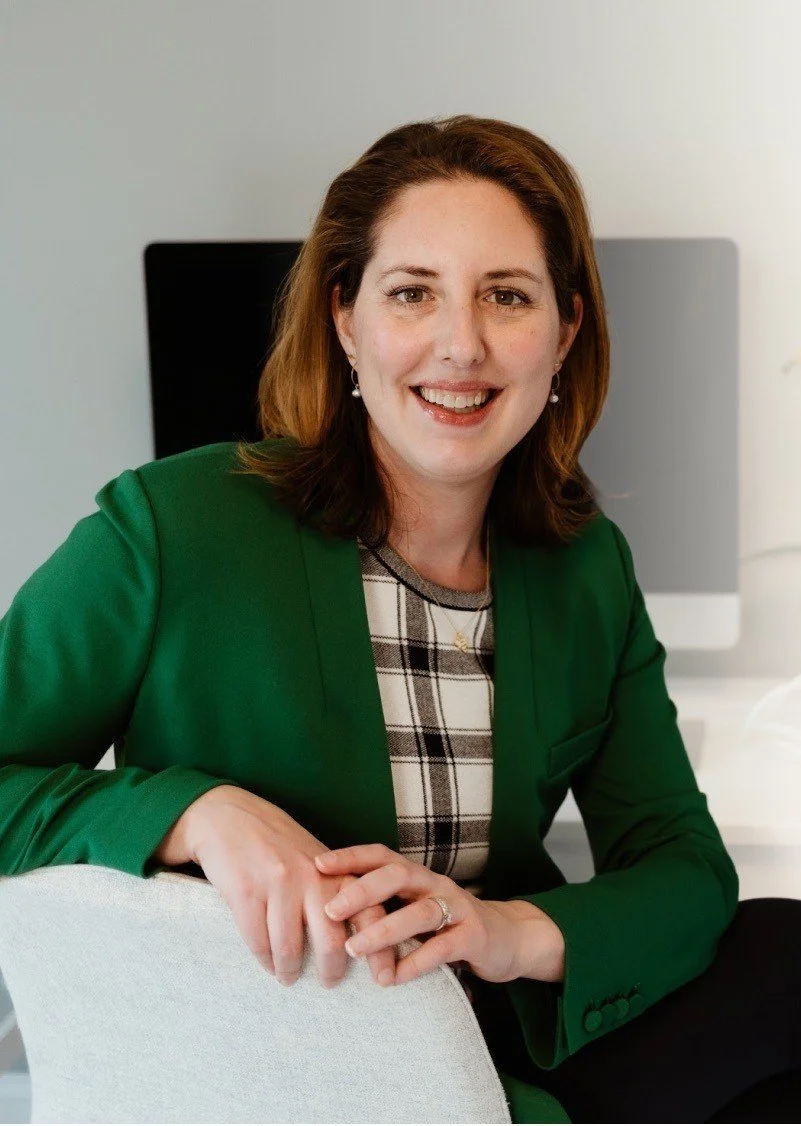
Dr. Kara Wada is a board-certified allergist, immunologist, and functional medicine physician who combines cutting-edge medical expertise with integrative, trauma-informed care to help patients uncover the root causes of their symptoms. Living with an autoimmune condition herself, she founded The Immune Confidence Institute to empower others through personalized, science-supported healing that honors each person's unique body and journey.
Connect with Dr. Kara:

Meet Destiny - The host of The Chronic Illness Therapist Podcast and a licensed mental health therapist in the states of Georgia and Florida. Destiny offers traditional 50-minute therapy sessions as well as therapy intensives and monthly online workshops for the chronic illness community.