
Therapists, We're Missing Something in the Eating Disorder / Gastrointestinal Disease Intersection
I've been working exclusively with chronically ill populations for years now, and I keep seeing the same pattern. Clients come to me after being bounced between specialists - their GI doctor says it's anxiety, their PCP says it's IBS with no treatment plan, and somehow they end up in my therapy office talking about the stress of not being able to eat without pain.
Here's what I've learned: we're missing some crucial pieces in how we assess, refer, and treat at this intersection. And honestly? It's costing our clients years of unnecessary suffering.
The Assessment Gap We Need to Address
How many of us are actually screening all chronic illness patients for eating disorders? I mean really screening - not just asking "do you have issues with food?" but understanding that someone with gastroparesis who's developed fear-based food avoidance might not even identify what they're experiencing as an eating disorder.
When I do a full assessment, I'm looking for clinical observation cues that go beyond standard questionnaires. I'm noticing if someone dissociates when we talk about food (super common with chronic pain conditions like EDS and fibromyalgia). I'm asking questions that don't put their guard up but encourage openness about their actual eating patterns.
The screening section in resources like the new Comprehensive Nutrition Therapy for Co-Occurring Gastrointestinal & Eating Disorders (ED/GI) textbook really emphasizes this - we need to foster understanding and compassion so clients feel safe telling us what's really happening. When we lead with "you're not eating right and that's why your gastroparesis isn't getting better," we've already lost them.
The Chicken and Egg Reality
We often don't know whether the eating disorder led to the GI condition or vice versa. What we do know is that people diagnosed with chronic illnesses requiring nutrition interventions experience heightened disordered eating.
This means every single one of our chronically ill clients should be getting screened. Not just the ones who "look" like they have eating disorders, not just the ones who mention food issues - all of them.
What I See in Treatment Facilities
I recently met with an eating disorder treatment facility, and they're doing incredible work helping people meet meal plans and develop confidence around food and body image. But here's where it gets tricky - if practitioners don't understand the nuances of managing both GI disorders and eating disorder recovery, it can make recovery really difficult.
For example, if the requirement is three meals and two snacks daily with specific components, but your client has gastroparesis, do you have the education to modify texture and consistency? Do you know that someone with gastroparesis might need five smaller meals instead of three larger ones without that being considered restriction?
We need to offer validation that what they're experiencing with GI symptoms is not all in their head, while also supporting eating disorder recovery. That requires understanding both pieces.
The Referral Challenge
Here's something I deal with constantly: knowing when to refer and to whom. If I have a client whose anxiety is primarily stemming from their inability to eat without physical consequences, they actually need a dietitian who specializes in their condition more than they need continued therapy. Often both are needed at the same time, but we often have to prioritize time, money, and energy.
But finding dietitians who understand this intersection? That's its own challenge. We need practitioners who won't just hand someone another elimination diet, who understand that the low FODMAP protocol handed out without guidance often leads to people eating only three "safe" foods and worsening their symptoms.
The Mind-Body Integration We're Still Learning
Even those of us who work in integrative approaches can get stuck in old patterns. I know the mind and body aren't disconnected, I work with this daily, but when I'm trying to explain things in a teaching way, I can still fall into that trap of making it sound like we're saying "it's psychological."
The reality is more complex. Someone with gastroparesis who develops ARFID isn't making a choice to restrict. They're responding to real physical consequences. But the fear and avoidance patterns that develop absolutely benefit from therapeutic intervention alongside medical nutrition therapy.
What Our Clients Need From Us
Comprehensive assessment that includes screening for both eating disorders and GI conditions, understanding that they often co-occur.
Trauma-informed approaches that recognize many of our clients have medical trauma from years of being dismissed or misdiagnosed.
Team-based care where we actually communicate with each other instead of working in silos.
Cultural competence that doesn't just default to Mediterranean diet recommendations without considering that a client's cultural foods can absolutely support digestive and overall health.
Understanding of contraindications - like knowing that gut-directed hypnotherapy isn't appropriate for someone with active PTSD or recent trauma.
The Training We Need
Honestly, most of us weren't trained for this intersection. Mental health programs don't typically cover the nuances of chronic illness, and medical programs don't always emphasize the psychological components.
Resources like continuing education programs, specialized textbooks, and interdisciplinary training are crucial. We need to understand each other's scope of practice and when to collaborate versus when to refer.
Destiny’s free consultation group meets every 3rd Friday of the month from 1-2:30pm EST, and it’s an interdisciplinary space where therapists and other licensed medical professionals join together to better hone their clinical skills. You can join us by filling out this form here.
Moving Forward
The clients finding their way to our offices have often been dismissed by multiple providers. They're coming to us having been told their symptoms aren't real, that it's "just anxiety," or that they should "just eat and they'll feel better."
We have an opportunity to be different. To provide care that acknowledges the complexity of their experience, validates their symptoms, and gives them practical tools that actually work.
But that requires us to expand our understanding, collaborate more effectively, and honestly assess where our own knowledge gaps are. It requires us to be comfortable saying "I don't know, but let me help you find someone who does" instead of trying to fit every client into our existing frameworks.
Our clients deserve better than being bounced between providers who only see part of their experience. They deserve practitioners who understand that chronic illness, eating challenges, and mental health are interconnected - and who know how to work with that complexity rather than against it.
The good news? More resources are becoming available, and more of us are recognizing these intersections. But we still have work to do in bridging these gaps in care.
Samina Qureshi is a Registered Dietitian and founder of Wholesome Start, a virtual practice specializing in digestive health. She helps clients improve their well-being through a holistic approach rooted in Intuitive Eating and HAES®. Learn more at wholesomestart.com/dietitian-samina.
This blog post is based on an interview with Samina Qureshi, registered dietitian, on The Chronic Illness Therapist Podcast. For more resources on navigating healthcare challenges, subscribe to our newsletter and follow us on social media.
Disclaimer: Everything we discuss here is just meant to be general education and information. It's not intended as personal mental health or medical advice. If you have any questions related to your unique circumstances, please contact a licensed therapist or medical professional in your state of residence.
Listen to Samina’s interview with me, Destiny Davis, on Ep 96: When You Actually Need a Registered Dietitian, Not More Therapy
-
Episode transcribed with AI and will contain errors that are not representative of the actual word or meaning of the sentence.
Destiny Davis LPC CRC: Samina Qureshi was on episode
84. Of this podcast called The Truth About IBS and Nutrition, why it's not just about eliminating foods. And today we did a really cool follow up about a clinical textbook that she and a bunch of other registered dieticians and psychologists have done together.
In bringing the clinical therapeutic work, uh, and making that accessible to other clinicians who work with people with GI disorders. So this particular episode is about that. I think you can still gain something from this episode about what it's like to live with eating that feels disordered, even if it has nothing to do with weight, nothing to do with how you look, and everything to do with just keeping your body safe.
Those things often are at war with each other because sometimes the things we do to keep us safe cause harm in other ways. So I hope that this is a really valuable episode for all of those who are both therapists and clinicians as well as those who are not.
And while we just wrapped up the nervous System [00:01:00] Informed Care Workshop, which you can still purchase or get free access to by checking the show notes below, please feel free to also sign up for.
Our next workshop, it will be sometime at the end of August. More details will come, but I'll be interviewing another therapist who will be talking to us about the intersection of EDS and MCAS and pots and neurodivergence, and we'll be talking about the emotional toll of those intersections. So if that sounds like something that's of interest to you, please sign up for the wait list below.
The Chronic Illness Therapist Podcast is meant to be a place where people with chronic illnesses can come to feel, heard, seen, and safe. While listening to mental health therapists and other medical professionals talk about the realities of treating difficult conditions, this might be a new concept for you, one in which you never have to worry about someone inferring that it's all in your head.
We dive deep into the human side of treating complex medical conditions and help you find professionals that leave you feeling hopeful for the future. [00:02:00] I hope you love what you learned here, and please consider leaving a review or sharing this podcast with someone you love. This podcast is meant for educational purposes only.
For specific questions related to your unique circumstances, please contact a licensed medical professional in your state of residence.
Destiny Davis LPC CRC: Welcome back Samina. I'm really excited to interview you today about your new textbook. Is just really exciting because, you know, I work with people who have chronic illnesses and that leads into a lot of disordered eating but not always. Sometimes, oftentimes it has nothing to do with with weight, and so I know when people hear eating disorders, like we tend to think of, you know, people want to be, look, they wanna look a certain [00:03:00] way or they want to, you know, or like even they'll think. I think it's really common, even like in the eating disorder world for therapists to know that a lot of times it's really not about the weight, it's about maybe like the control that you feel when you're able to control your diet. And so even that is still slightly different when you en enter in with a chronic illness because I do still think it's about control.
But that control is like, because if I eat potatoes, I'm in pain, not because if I eat potatoes, then I just feel like I'm not in control. Like it's different. There's that physical aspect to it. And I found it really helpful as a chronic illness specialist to, to have this kind of, this textbook of like the mind body connection and I can still take from it what I needed to then work with my population. So I would love to know what brought you to writing this book with your colleagues and how this project got started and who you might be thinking of when you're [00:04:00] writing and reading this book.
Samina Qureshi: Yeah. Yeah. Well, thank you so much and I, I loved your feedback. I mean, as a therapist, it's so important for us to have your insight right. As well, and I, I'm very excited to chat about this, but we, I. This book was written by 10 health professionals, right? So eight dieticians in the GI and eating disorder field, as well as a gastroenterologist and a psychologist.
So we have this multidisciplinary team, and when we were writing this book, we were thinking of, you know, all of the gaps in care that we saw in our practices. Okay? We have patients coming in with chronic. GI disorders and they are now fearing food to the extent of having unexplained weight loss. And it's not a.
Body image concern. It is a concern of fear of throwing up, fear of having worsened GI symptoms [00:05:00] bordering on the line of arfid, right? And so we really wanted to create this multidisciplinary resource with evidence-based techniques, teaching clinicians how to screen for eating disorders and GI disorders, assess them and support patients that struggle with the complex co-occurring conditions.
Destiny Davis LPC CRC: Yes. Yeah. Can you you just said like bordering into Arfid, can you really kind of define Arfid and how, again, this kind of differentiation I think. Maybe even I'm a little bit still stuck in the mind body disconnect because it's not disconnected and I know that when I'm working with clients.
But I think when you're trying to explain it like in a teaching manner you know, the I did have an experience one time where I was kind of introducing the concept of AFI and it really offended somebody because they thought I was saying like had this eating disorder that was again, this kind of like choice and like it was real, but [00:06:00] it really was 'cause.
They had a GI condition and, and it, you know, so can you really what's the word I'm looking for? Normalize, like some of these eating disorders and it, how it, you know, again, it just doesn't mean that you're just trying to be thin or you're trying to like it. There really is this other physical component, especially when you're living with GI conditions.
Samina Qureshi: Yeah. And honestly, the book goes into all of this. I have it here as like my handy resource, and of course, I, I don't memorize all of the definitions, so I am gonna refer back to it, and that's exactly what I want clinicians to use this book for. Um, so. A I stands for avoidant Restrictive Food Intake Disorder, right?
And it is a disorder characterized by avoiding food without concern for body image, right? So that body image piece of wanting to fit into society's beauty ideals or thinness or whatever is not necessarily there. It can present. Present as apparent lack of interest in eating food, [00:07:00] or avoidance of particular sensory characteristics of food, whether it be taste, texture, heat, temperature and avoidance of certain foods based off of fear or aversive cons, consequences of eating, right?
So blo, bloating, pain, diarrhea, constipation, gas reflux, nausea, vomiting, all that. And the fearful sub subtype of arf ID is prevalent in the GI space, but more research is needed to really better understand how to, how to treat this population. And so if I'm looking at the DSM five criteria to fit within the criteria of arf, ID it says, there are a few things that you need to meet, right? And so appropriate nutritional and or energy needs associated with significant weight loss or failure to achieve expected weight gain or faltering growth in children. Right? When we see our fit in children, we really [00:08:00] wanna look at their growth rate.
Um, significant nutritional deficiency dependence on enteral or oral nutrition supplements. So. They are not able to meet their nutritional needs by mouth. By chewing their food. They're relying on nutritional supplements, whether it be liquid form or tube feeding marked interference with psychological functioning.
So there's that. Brain gut connection, kind of something going on there as well that needs to be addressed. And the eating disturbance does not occur exclusively during the course of anorexia or bulimia. And there is no evidence of disturbance in the way in which one's body, weight or shape is experienced, right?
So this is not a eating disorder related to concern with body image.
Destiny Davis LPC CRC: Yeah. And when you, so with all of that said, 'cause I think people, you know, really, when we start to get into this, the common kind of initial pushback from clients is like thinking that we just have to like, [00:09:00] eat the food and get over it, because that's what's best for us. How do start to with clients on a step-by-step basis?
And, and what is the end goal? Is it a. I know you, so I know your answer, but I'm gonna ask it anyway, like, what is the end goal? is it a full and varied diet, minus, I'll say true allergies, and, and how do you deal with this kind of sensitivity versus allergy? And, and again, that end goal is what?
Samina Qureshi: Yeah. So it depends on what the, each patient is coming in and presenting with, whether they've been diagnosed with a specific condition or if this is outside of diagnosis. Right? I think you and I both. Know that with chronic illnesses, it can take what seems like forever to reach a diagnosis. And so people can be coming in with extreme food fears or aversions to food based off of symptoms they're experiencing that are technically unexplained.
Right? So first and [00:10:00] foremost, talking with each of your patients or clients and saying like, listen, I know we, you haven't. Finding out what this is, but I wanna be here to support you in nourishing your body in an accessible way that helps you expand your diet, feel more confident around food, um, regain the ability to nourish your body in normal social settings.
Ultimately heal that relationship with food. So absolutely. If you know, I have a patient that is coming to me saying, I am so scared of eating wheat products. I think I have celiac disease. I am gluten sensitive. First and foremost, I believe you. Right? Doesn't matter if you have a. Test to confirm that or not, right?
I am not going to throw that wheat in your face. We are going to find out, okay, what's going on here? Are you providing your body with carbohydrates, period to [00:11:00] support your mental and physical health? Or are you saying, okay, wheat is off the table now I can't eat any gluten and now I'm only eating protein rich foods.
So really looking at the balance of their plate and helping expand from there. And as we get, continue to work together and possibly come up with a more information from their GI doctor or PCP about whether or not they have non celiac gluten sensitivity or celiac disease or whatever condition, then that'll give us more information and confidence to explore further expanding their diet.
So the end goal really is to, yes, expand their diet, but also look into the total balance of their foods, the access to food that they have, and making sure that the recommendations aren't just eat and you'll feel better really giving them solutions that feel again accessible.
Destiny Davis LPC CRC: Yeah. Yeah. And I think that's, that is the advice, especially from their doctors that they get a lot, is eat and you will feel better. And they're just like, [00:12:00] what? How? And so I can work a lot on fear with clients, but you, that your specialty comes in with the more specific targeted, well, okay, if you can't eat gluten, like let's make sure your carbs are coming from X, Y, and Z because you, is that accurate?
Samina Qureshi: Yeah, absolutely. Yeah, yeah, yeah. Making sure that they're meeting their macro and micronutrients regardless of whatever food sensitivity or allergy may
Destiny Davis LPC CRC: yeah. What was the your biggest part in this textbook? What did you write most about?
Samina Qureshi: Yeah, so I wrote the nutrition interventions for what used to be known as fatty liver disease. Um, I did also gastroparesis, um, a few other nutrition interventions. I mean, we all played a role in reading through and adding different components in each section. So, um. Reviewing and editing. And then I had a little role as well in looking at just the inclusivity of the [00:13:00] language, especially when it comes to cultural references.
You know, one thing in the book and a lot with GI Health is looking at the Mediterranean diet to support digestive health and overall health, right? And one thing I want to note is that, you know, the me. Mediterranean diet can be a trigger for a lot of people from other cultures because they tend to idealize Western or European Mediterranean diets without highlighting the other countries that could be on the Mediterranean as well.
So really coming in and making sure that any cultural foods, as long as they are providing you with comfort. Variety and quality ingredients, you know, the fruits, vegetables, grains, proteins, dairy, et cetera can absolutely be applicable to a diet that can support you in your mental, physical, and digestive health.
Destiny Davis LPC CRC: Thank you. Yes. I love that. When it comes to the Mediterranean diet, 'cause you're right, there is a very like mainstream way of viewing it. Is there a, is there a [00:14:00] pitfall to that mainstream way? Is it just that it doesn't incorporate, comfort foods for other people? Or are there also kind of nutritional deficiencies that you might have or gain from following just that strict protocol of, yeah.
Samina Qureshi: No, no, I, I think the Mediterranean diet, uh, absolutely. Is not something that would lead to any like nutritional deficiency. It's very like comprehensive and whole. It's really encouraging more plant forward foods with a variety is the key for protein, grains, fruits, vegetables, and healthy fats as well.
Um, but when people hear Mediterranean diet, let's say for example, my family's from Pakistan, right? Okay. We are not on the Mediterranean, and does that mean that my cultural food is now unhealthy, deemed unhealthy, right? It's just like the idea that other cultural foods could not provide health promoting foods,
Destiny Davis LPC CRC: Yeah, absolutely. Yes.
Samina Qureshi: right?
Destiny Davis LPC CRC: Yeah. I love that distinction. And there was something else you said that [00:15:00] just caught my attention. Oh. In terms of gastroparesis, is this something that you see a lot more? A lot there's like a, kind of is happening first and then the food restriction happens next, or do you often see food restriction leading to gastroparesis?
Samina Qureshi: Yeah, I think a lot with these co-occurring eating disorder and GI disorders is that it's kind of like a chicken and egg situation. We don't know whether the eating disorder. Led them to experience gastroparesis or if gastroparesis led them to exhibit eating disorder behaviors. However, we know that people who are diagnosed or experience chronic illnesses that have a nutrition intervention may experience heightened disordered eating.
So we don't know. However, it's really important then for us as [00:16:00] practitioners to be screening all patients with chronic illnesses for eating disorders and also screening for like red flags and GI disorders as well.
Destiny Davis LPC CRC: Yeah, I love that section in your book, the screening. Um, it was really comprehensive because it, it wasn't just testing, it was also like using your clinical observation and intuition to ask the appropriate questions in a way that doesn't bring someone's guard up and really allow, like encourages. It fosters an understanding, um, and compassion with the client so that they hopefully are more open and more willing to be like, yes, this is an issue, and yes, this is something I wanna work on. Which doesn't tend to happen when it's just like, well, you're not eating right and then that's why your gastroparesis isn't, you know, getting better. And it's like, okay, there's, yeah, we need a little bit
Samina Qureshi: Yeah. And I Absolutely, yeah, and I, I just met with like a eating disorder treatment facility and you know, they're doing their best to help people meet their meal plans and get to a place where they feel confident in [00:17:00] food, with food, right. And, and their body image and all of that stuff that plays with it.
But if. Practitioners don't understand the com, the nuances of helping people manage both these GI disorders. With the eating disorder piece, it can become,
it can make recovery really difficult because we want to offer that validation to our clients and patients that what you're experiencing with your GI symptoms is not all in your head. You know what I mean? So like, for example, let's just talk about gastroparesis. If the requirement in that treatment facility is okay, you need to eat three meals and two snacks daily.
It has to include X, Y, and Z components to meet your nutritional needs. Great. Right, but for gastroparesis, if this is something they're really struggling with, are they, do they have the education and understanding to change the texture and consistency of the food to help it be more easily digestible [00:18:00] and cause less pain and discomfort for that patient?
Destiny Davis LPC CRC: Yeah. Yeah. And even would you say. Because you know, for those who don't know, gastroparesis has slowed motility. Would you say that like, yeah, the recommendation is three meals and two snacks, but you know, for your gastroparesis you might need two meals and two snacks, or like, there's so many ways that this can vary to accommodate your slow motility without restricting so much food that it, you're now going into malnutrition and
Samina Qureshi: Mm-hmm.
Destiny Davis LPC CRC: your motility might actually be getting worse.
Samina Qureshi: Yeah, absolutely. And I think like that once people are at a place with their eating disorder recovery to then graduate from a recovery center and get that support from their outpatient diet, dietician and therapist, that's where more of those, I think, like nuances with supporting the patient and that outpatient setting can really help them manage their symptoms and come up with a plan that is realistic.
For them, right? Just because we have these recommendations, it [00:19:00] doesn't mean that everyone's lifestyle is going to fit that. Like we don't know if people are working night shifts, if they are the night nurse or whatever their work situation or life situation is, right? The goal is really to help them stay nourished and not go backwards.
Destiny Davis LPC CRC: Yeah, I love that. Definitely difficult. And you know, I think all of the content online that, uh, from professionals who are advocating for a lot of this work, I think can be good addition to the work that profe you're doing with your professional. But there's just something about getting that individualized approach from somebody who really understands and then really understands you to be able to give you actual advice that fits your body and your needs.
Samina Qureshi: Mm-hmm. Yeah, for sure. I mean, individualized care is, is where it's at.
Destiny Davis LPC CRC: Yeah. And
Samina Qureshi: Patient centered care. Yes. We want that.
Destiny Davis LPC CRC: exactly. And then I wanted to talk about clinical hypnosis [00:20:00] because that is becoming more and more popular and very interesting research there. And I know that might not be the, the part that you, um, you wrote in the book, however, could you speak a little bit to how hypnosis does And also just keeping in mind that just because we are using something like hypnosis, which is a, you can say like a mind exercise or what activity again, does not mean that this is in your head. It's just that our body, our mind and body is connected and what we do that's good for our mind is good for our body.
And what's good for our body is good for our mind.
Samina Qureshi: Yes, absolutely. And there's a whole section on this in the book about gut directed hypnotherapy in research. It has been shown to help mostly with IBS, so irritable bowel syndrome. And what they have found is that gut directed hypnotherapy should be done alongside your eating de. Disorder recovery work as well.
So this is not a replacement because gut directed hypnotherapy is [00:21:00] usually done by a trained mental health professional. There is no research to show the kind of co-occurring conditions and how it supports that. The research is really just focused on managing the IBS symptoms in itself. So it's really important if you choose to use gut directed hypnotherapy clinical hypnosis, that you are doing this alongside your own eating disorder recovery.
Work with your eating disorder, dietician and therapist.
Destiny Davis LPC CRC: Right, because it's just one small tool. It's. Doesn't replace all of that other, it, it, again, that's that mind body stuff that people are just talking about online. When they have no understanding of it. They just have read an article or somebody else's like Facebook post about this, and they just kind of assume that it means, oh, this is the treatment, this is the cure.
We can just do this. And
Samina Qureshi: Mm-hmm.
Destiny Davis LPC CRC: reminding people that no, it, it's a one tool in a wide, wide toolbox.
Samina Qureshi: [00:22:00] Yeah, absolutely. And so you know, the low FODMAP diet, it has been shown to help, it is the medical nutrition therapy like protocol for people with IBS. But what we know about that is that it may not be appropriate for people that struggle with. Eating disorders, right? How can I put a elimination style diet on someone who has struggled with a relationship with food?
And so gut directed hypnotherapy can be a starting place for someone if they're like, okay, I know that they, I am experiencing these GI symptoms and I also experience anxiety and depression, and I want to get a hold of managing my mental health because. Mental health and your emotional state absolutely impacts your IBS symptoms.
This can be a great tool for that to see like, how does calming that nervous system and having these tools really help with, um, managing your symptoms.
Destiny Davis LPC CRC: Yeah. And can you maybe give [00:23:00] just one small, like piece of what clinical hypnosis looks like so people can, we can just demystify that.
Samina Qureshi: Yeah, so gut directed hypnotherapy is not the same as like clinical hypnosis, right? It is a therapeutic technique delivered by trained CLI clinicians. Gut directed hypnotherapy is not the same as like a stage hypnosis. It is a therapeutic technique that is delivered by a trained clinician and it focuses on using psychological therapies that work on these sub subconscious mind. So typically hypnosis will begin with induction and deepening techniques that allow the person to go into an altered state or consciousness.
And in this state, the client can work with the clinician through imagery and metaphors and help provide them. This relaxing subconscious state, which [00:24:00] are then accessible to the client outside of the session. So really helping them connect with that state to reduce their symptoms. Um, so for example, while the clinician has you in this trance state, they would provide these guided imageries and metaphors, right, to help you manage some of your GI symptoms. So an example of something that the clinician could say would be like, your bowel movements or bowel habits will continue to improve day by day, week by week.
They'll continue to say like, you will be able to eat without discomfort and pain, and having these. Thoughts and kind of imagery while they're in this trance state can help with managing the anxiety, and that comes along with managing IBS and these other GI conditions.
Destiny Davis LPC CRC: Yeah. Yeah. And just for people listening, you know, this kind of, again, it's not stage hypnosis, it is a clinical hypnosis, and it's, it's not magic. It. Really does require the client to be like, able [00:25:00] and willing to kind of go into this state of relaxation. And so sometimes we do start with like a lower, kind of just practicing relaxation at home.
Um, just practicing progressive muscle relaxation, just practicing being able to pause and go, go mindful for a few moments. All of that is wrapped up in. works. So again, just for people listening, it just sounds so magical and I always wanna dispel that myth. And what we're doing is teaching your nervous system how to be calm, which is important for your gi.
Samina Qureshi: Yeah, absolutely. And there's one thing I wanted to mention. You know, you mentioned that it's up to the client to be able to enter that trance state, right? So if you know that a client or patient has had a history of trauma, they're dealing with PTSD, it is recent and it, and it's very, you know, present. GDH would not gut directed.
Hypnotherapy would not be a, an appropriate therapy for them because we [00:26:00] do not retrigger that experience.
Destiny Davis LPC CRC: Yeah. Yeah, and that's why a full assessment is so important. And honestly, you know, yeah, we usually talk about it in terms of this kind of PTSD, but I've found through working solely with the chronically ill population, especially with conditions like EDS and other, like there's just chronic pain all the time, fibromyalgia we go into a dissociative state a lot and barely notice it.
And so this actually becomes a little bit problematic within therapy if you don't know what you're looking for as the clinician. So. It's tricky and we just take it slow and if you don't have an issue with this, you can take this, this, uh, treatment a little bit faster. And so I think sometimes people who do this work even can get caught up in the like, no, this works and it works fast, but that's only for the CA certain population. So I just wanna give that caveat from my own work in this field. So. This is [00:27:00] another one of those. It depends questions, but how, how does someone know if work that they're doing with their therapist, especially if their therapist is not maybe as educated on this and they don't even know the proper way to refer, which your book also has a section on that and how to refer.
So if you're a clinician listening, I highly recommend you get this book. But for clients listening, 'cause I do have the general population listens to this podcast too. If their therapist, their mental health therapist, is not really touching this subject, how would they know? Know, whether this is like, when it's time to seek out a registered dietician, I.
Samina Qureshi: Yeah. So if you are struggling with GI symptoms or just nourishing your body, period, reach out to a dietician, right? Like if you are struggling with symptoms related to eating. Or inability to eat because of [00:28:00] symptoms. If you are just overwhelmed with the amount of information online and you don't know whether or not to follow the diet that Aunt Susie is on contact a dietician.
We're not just here for chronic illness support. We're also here for just regular day-to-day questions, right? We want to provide you with sound nutrition advice that is not impacted from like diet, culture and fad diets that could be going on and, yeah.
Destiny Davis LPC CRC: Yeah. Yeah. I think, and I'm like, Hmm, I wonder why I even came to that question. And it's because for years people have been, they go to their doctors, their doctor's like, you have IBS don't, sorry, like, I dunno what to do for you. And so, and then they tell them, you know, I think you're, you have anxiety and then they end up in therapy. When really they might be better off with a registered dietician who understands the nuance of IBS, especially if the stress in their life is coming specifically from their [00:29:00] physical symptoms. and that is a lot of the work that I do as a therapist. But I find, yeah, I find that that's, that's just tricky sometimes to differentiate like. it's like you actually really don't need therapy. Like you need education around your particular condition and then how to eat appropriately for that condition. But yeah, it, it, of course, going years, being told that there's nothing we can do for you creates fear and anxiety and stress and all of that.
And so they, they end up in my office talking about the stress and I'm usually like, you actually still need medical care. You just haven't gotten to the right medical professional yet, so let's help you do that.
Samina Qureshi: Yeah, absolutely. And um, yeah, oftentimes I'll hear from patients that their GI doctor just handed them the low FODMAP diet and it's a big, long list of foods that they cannot eat, and they're like, what the heck do I eat?
Destiny Davis LPC CRC: Yep.
Samina Qureshi: So then [00:30:00] they're limited to the three foods that they feel comfortable eating and that lack of diversity in their.
Diet causes even worsened GI symptoms despite not eating any of the foods on the no list on the LO low FODMAP diet. If this is you, let's work together. Let's, I will refer you to a dietician that you know is in your state and can support you reach out because. That is exactly what I see day to day is people coming in with no idea of how to nourish their body and feel confident around food, confident in social settings, whether it's at work, um, with family, dining out, traveling, et cetera, because they don't know if they can eat anything or how to survive.
Destiny Davis LPC CRC: Yes. Yes. Yeah. Is there a directory that you guys have that is specific to registered dieticians who really are at the intersection of understanding these nuances?
Samina Qureshi: That is a great question. There is [00:31:00] a non-diet dietician directory, but I don't know if there is a specific one for eating disorders and GI disorders. So maybe that's something that we can create
Destiny Davis LPC CRC: Yeah.
Samina Qureshi: and you can contact any of the dieticians on the book We all work in. There's eight of us and we are in, you know, all over the United States.
And if you're like, oh, you know, Mina's in Texas, I'm in Texas, I can support you.
Destiny Davis LPC CRC: Yeah. Yeah. Well, side note, you guys are all welcome to join the directory on my site. Um, it's free and it's just it's for chronic illness specialists who are either in, I mean, usually in private practice, but it doesn't have to be, because that's the whole goal is that people can find people who are not gonna tell you.
It's all in your head, who are not going to of just tell you it's anxiety or or even tell you just like, well, you just need to eat. Like there's help and there's support, and we all understand that this is very nuanced and individualistic, and not just like a, you know, well, here's what you're supposed to [00:32:00] be doing.
Samina Qureshi: Yeah, like obviously you don't feel well. You're not following the diet well enough. Like no, you're not gonna.
Destiny Davis LPC CRC: Yeah, exactly. So, yeah. Well, good. Um, and you know, I think you, yeah, you're active on, on Instagram. I think people can DM you if they're looking for someone in their state.
Samina Qureshi: Yeah, absolutely.
Destiny Davis LPC CRC: your connections might help them get the help that they need.
Samina Qureshi: Yes. Absolute colleagues.
Destiny Davis LPC CRC: Awesome. Is there anything else about this book that feels important to like another section? Yeah.
Samina Qureshi: Yeah. Yeah, yeah, yeah. So I do want to let you know, especially for all the practitioners out there, that this book offers 12 continuing education credits accredited by the CDR. So if you're a dietician or I don't know how therapist continuing education works, definitely check it out. It's a really great resource and we're also thinking about starting a book club and even doing continuing education, like [00:33:00] webinars and things like that.
So if you're not already signed up for our email list at ed gi training.com, please go ahead and sign up because you will just be the first ones to know about any and all fun workshops that we are hosting.
Destiny Davis LPC CRC: Awesome. Amazing. Thank you so much for writing this book and for putting this out there. It's really like we are at the forefront of all of this kind of intersectional work, and I'm glad that more and more resources are coming available.
Samina Qureshi: Yeah. Thank you so much for having me and for sharing this with your community.
Thanks for listening. If you learned something new today, consider writing it down in your phone notes or journal and make that new neural pathway light up. Better yet, I'd love to hear from you. Send me a DM on Instagram, email me or leave a voice memo for us to play on the next show. The way you summarize your takeaways can be the perfect little soundbite that someone else might need.
And lastly, leaving a review really helps others [00:34:00] find this podcast, so please do if you found this episode helpful. NPS Clicking, subscribe ensures you'll be here for the next episode. See you then.
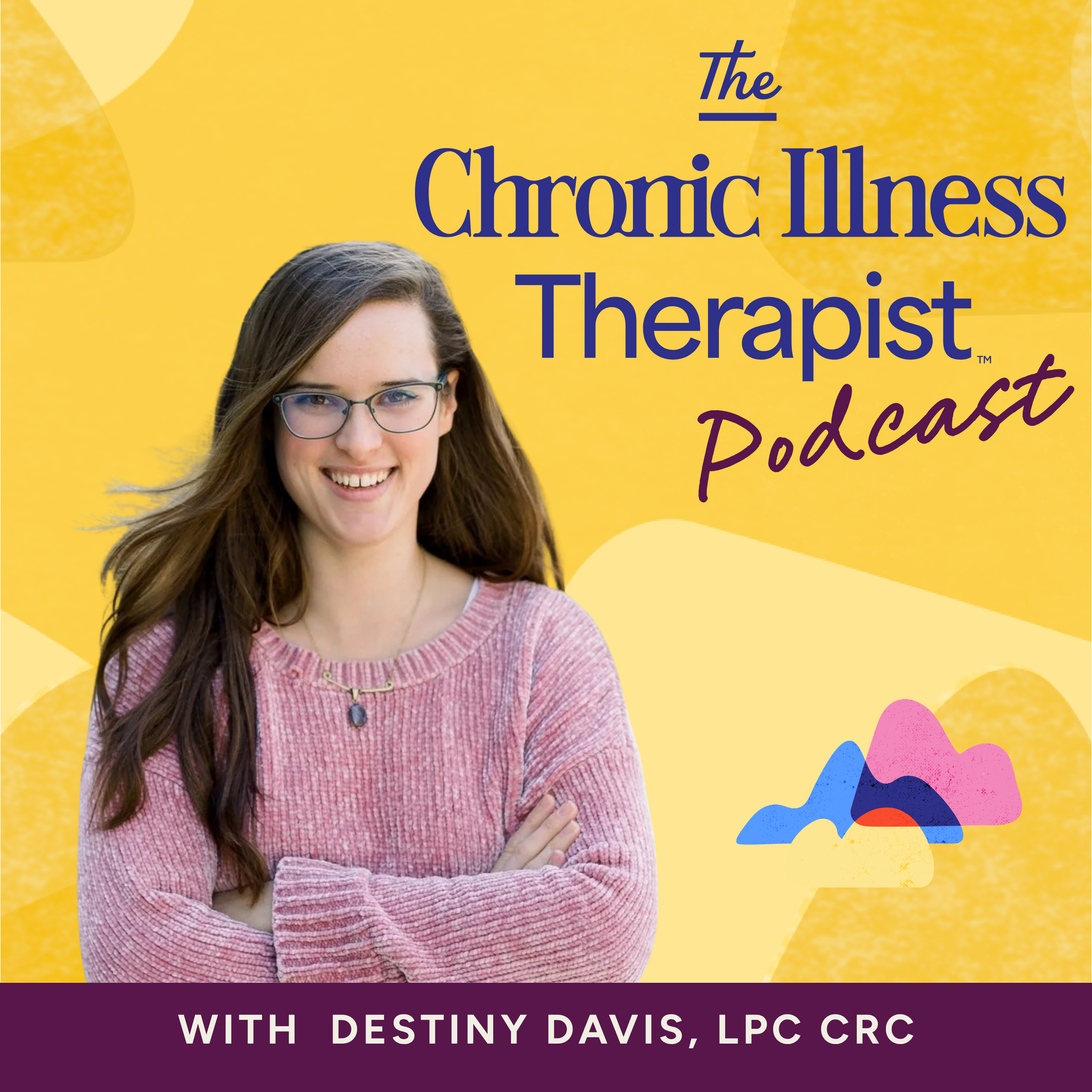
Listen to Samina’s interview with me, Destiny Davis, on Ep 96: When You Actually Need a Registered Dietitian, Not More Therapy

Samina Qureshi, RD, is the founder of Wholesome Start, a virtual practice specializing in digestive health. Trained at the University of Texas at Austin, she helps clients care for their health through a holistic approach rooted in Intuitive Eating, HAES®, and respect for body diversity.
Connect with Samina:

Meet Destiny - The host of The Chronic Illness Therapist Podcast and a licensed mental health therapist in the states of Georgia and Florida. Destiny offers traditional 50-minute therapy sessions as well as therapy intensives and monthly online workshops for the chronic illness community.