
You Don't Have to Choose Between Conventional Medicine & Holistic Health (And Why That Choice is Hurting You)
I just had one of those conversations that left me feeling like someone finally put words to something I've been trying to figure out for years. Dr. Rita Gupta, a board-certified family medicine physician who's also trained in integrative medicine, joined me on the podcast to talk about chronic pain, and honestly? She nailed something that's been bugging me about the whole "conventional vs. holistic" debate.
Here's the thing: You don't have to pick a side. And more importantly, picking a side might actually be making your pain worse.
The Problem with the Healthcare Civil War
We've created this awful civil war in healthcare where you're either Team Conventional Medicine (bloodwork, procedures, "real" diagnoses) or Team Holistic (lifestyle changes, mind-body connection, "natural" everything). And both sides are throwing shade at each other while people with chronic pain are stuck in the middle, feeling like they have to choose.
But here's what Dr. Rita helped me realize: the choice itself is the problem.
When you demonize conventional medicine, you create distrust. When you dismiss holistic approaches, you miss huge pieces of the puzzle. And when you're living with chronic pain, distrust and missing puzzle pieces are literally making your symptoms worse.
What Integration Actually Looks Like
Dr. Rita practices integrated medicine, and I love how she described the difference between this approach and conventional. Instead of just looking at your elevated liver enzymes and ordering a bunch of tests (conventional approach) or dismissing your lab results entirely (some holistic approaches), she's asking: "What's going on in your life right now? What does your home look like? What are your stressors?"
But - and this is key - she's still ordering those tests. She's still using her medical training. She's just adding context.
It's like the difference between a mechanic who only looks under the hood versus one who also asks, "How's this car been driving lately? Any weird noises? When did you first notice the problem” and then drives around the block a few times with you to really make sure the context and content match.
Same diagnostic tools. Completely different level of information.
The Three Types of Pain (And Why They're All Connected)
One of the most helpful parts of our conversation was when Dr. Rita broke down the three main types of pain:
Nociceptive pain: Tissue damage - you break your ankle, your brain gets the message, you feel pain where the injury is.
Neuropathic pain: Nerve damage - something's wrong with the actual wiring, like when a nerve gets pinched or inflamed.
Neuroplastic pain: This is where it gets interesting. Your nervous system has basically learned a pain pattern. It's like when you had that first accident as a child where you put your hand on the stove, and then you feel the pain again simply by putting your hand above the stove, even though there wasn’t any fire this time.
These aren't separate categories. Most of us with chronic conditions have some combination of all three happening at once.
I can tell when I'm inflamed versus when I'm not. My joint pain feels different after a bad night's sleep or a glass of wine. But I'm also probably more sensitive to those pain signals than someone without chronic illness. It's not "all in my head" - but my head is definitely part of the equation.
Imagine if, when you put your hand on the stove as a kid, your caregiver scolded you and didn’t teach you anything about the stove. And then next time you went anywhere near it, your caregiver’s anxiety sparked and they reminded you about that time you burned yourself. Your nervous system would literally produce more pain signals to you than to someone who had a more nurturing experience with that mistake.
And side note - it’s not just about your upbringing. Biology also plays a part in your level of pain sensitivity. The level of synaptic pruning, which often happens less than we’d like it to for neurodivergent individuals, potentially plays a role in exacerbating our pain to stimuli.
Why Education Changes Everything
This is where the integration piece gets really practical. Dr. Rita spends a lot of her time now in a coaching capacity, helping people understand what their doctors are telling them and how to actually implement treatment plans.
But more than that, she's helping people understand how pain works in their specific body.
Because here's the thing - and this is where I got a little fired up during our conversation - most of us have been taught that any pain means something's wrong, so we should stop doing whatever caused it. But that's not always true.
I asked Dr. Rita about how I approach this with my clients: before we try to change any behaviors around activity, we need to know your baseline recovery time. If playing with your daughter makes your back hurt, how long does it take for you to feel normal again? Twelve hours? Twenty-four hours? Two weeks?
Once you know that, you can make informed decisions. Maybe you play with your daughter anyway because the joy is worth 24 hours of recovery time. Maybe you find different ways to play that don't require that recovery. But you're making the choice from knowledge, not fear.
Let's Talk About the Vaccine Thing
Okay, I'm going to wade into controversial territory here because Dr. Rita and I had a really nuanced conversation about vaccines and chronic illness that I think people need to hear.
First: Dr. Gupta and I are pro-vaccine. She explains that vaccines have been a major advancement in medicine and prevent serious diseases.
But she also acknowledged something that I think gets lost in the polarized vaccine debates: some people did develop long-COVID-like symptoms after vaccination, even without documented COVID exposure.
One possible explanation? Fear is a powerful thing, Dr Gupta explains. “The entire COVID experience was unprecedented. We were all terrified, wiping down groceries, not seeing people for months. That level of sustained fear and anxiety creates real neurochemical changes in your body.”
And this is where it gets important: those changes are real. They're not "made up" or "psychosomatic" in the dismissive way people use that term. Your brain can create physical symptoms when it's trying to protect you from perceived threats.
This doesn't mean vaccines are dangerous. It means we live in a context where fear and anxiety impact our physical health, and we need to account for that.
The Cognitive Dissonance Problem
During our conversation, I brought up something that I see all the time with my clients: people struggle with cognitive dissonance around health information.
You hear "vaccines are good" and "vaccines are bad," and there's evidence for both if you're looking for it. Although, as I’ve learned in my own journey from anti- to pro-vax, the evidence against vaccine use doesn’t have replicable or reputable studies to back it up. Most people can't live with ambiguity, so they pick one side and only consume information that confirms their choice.
But here's what I've learned (the hard way - I used to be very anti-vaccine): you don't have to resolve every contradiction to make good decisions for yourself.
You can acknowledge that pharmaceutical companies have done harmful things AND that vaccines prevent serious diseases. You can know that some people have had adverse reactions AND that the overall benefit-to-risk ratio supports vaccination over and over and over again. You can trust science while also recognizing that science changes as we get new information.
The goal isn't to eliminate all uncertainty. The goal is to make informed decisions within uncertainty, with trusted practitioners who understand your individual situation.
What "Trusted Practitioners" Actually Means
This brings me back to the integration piece. Dr. Rita talked about how the conventional model is broken for people with chronic conditions - seven-minute appointments, no relationship with your doctor, focus only on the physical symptoms without any context.
But she also talked about how some holistic approaches can be harmful if they're demonizing all conventional medicine and creating more fear and distrust.
The practitioners who help are the ones who integrate both approaches and who see you as a whole person with a whole life, not just a collection of symptoms to manage.
They're asking about your stress levels AND ordering appropriate tests. They're helping you understand how emotions impact your physical symptoms AND not dismissing the need for medical intervention when appropriate. They're giving you hope AND being realistic about what's possible.
Recovery Time
One practical thing I want you to take from this: start paying attention to your recovery times.
Not to judge them or try to change them immediately, but just to gather data. When you do something that typically makes your symptoms worse - exercise, social events, stressful work projects - how long does it take you to feel back to baseline?
The data you collect from observing and getting to know your reovery times will help you avoid pushing through pain, ignoring your body’s signals, and make informed decisions instead of fear-based ones.
Maybe your recovery time is longer than you'd like, but it's predictable. Maybe it's shorter than you thought. Maybe it varies based on other factors like sleep or stress levels (insider tip: it does).
That information is power. It's the difference between "I can't do that because it might hurt" and "I can do that, and here's what I need to plan for afterward."
The Bottom Line
You don't have to choose between conventional medicine and holistic approaches. The magic happens when you find practitioners who integrate both, who see you as a whole human being, and who help you understand how YOUR specific body works within YOUR specific life.
The goal isn't perfect health. The goal isn't zero pain. The goal is reclaiming your life within whatever limitations exist, making informed decisions instead of fear-based ones, and finding practitioners who support that journey.
Because at the end of the day, healing isn't about fixing everything that's wrong with you. It's about understanding yourself well enough to live the life you actually want, chronic illness and all.
Dr. Rita Gupta is a board-certified family and integrative medicine physician (DO) with nearly 20 years of experience, having completed her residency at Mayo Clinic and graduated from the Andrew Weil Center for Integrative Medicine's fellowship program.
This blog post is based on an interview with Rita Gupta, DO, on The Chronic Illness Therapist Podcast. For more resources on navigating healthcare challenges, subscribe to our newsletter and follow us on social media.
Disclaimer: Everything we discuss here is just meant to be general education and information. It's not intended as personal mental health or medical advice. If you have any questions related to your unique circumstances, please contact a licensed therapist or medical professional in your state of residence.
Listen to Rita’s interview with me, Destiny Davis, on Ep 98: You Don't Have to Choose Between Conventional Medicine & Holistic Health (And Why That Choice is Hurting You)
-
Episode transcribed with AI and will contain errors that are not representative of the actual word or meaning of the sentence.
Destiny Davis LPC CRC: I
Rita: / my name is Dr. Rita Gupta. I'm a board certified family and integrative medicine physician. I've been working in medicine for almost 20 years now. It's hard to believe and I've been in the traditional model mainly. But about a few years ago I really got interested in kind of branching out.
Um, I've always been interested in integrated medicine. It's kind of something I knew about . So I took the leap and I joined the fellowship program. It's the Andrew center for Integrated Medicine. It was a two year program and really from that it opened the path to really understanding mind body medicine and really the interconnection of the mind and the body.
And now I've really felt that this is what was missing in traditional medicine. I really do believe the healthcare system. Has a lot of great points, but it's really broken and it's very isolating for [00:01:00] people with chronic illness, chronic pain, chronic persistent symptoms. People who just don't have a clear answer of how to get better.
They don't know what the roadmap looks like, and honestly, it's like feeling hopeless because you're not getting any validation or support. And I think as clinicians too, we are meant to really help people and get them to feel better. So we feel inadequate ourselves when we're not able to provide a solution for people's, problems and suffering and debilitating suffering on top of that.
So my background is I'm a DO physician. It's an osteopathic medicine physician. I do practice in an allopathic role 'cause I did my traditional residency at Mayo Clinic and Family Medicine and I'm board certified through the American Board of Family Medicine, which MDs and DOS both take but our philosophy from the get-go is a little bit more holistic.
So it's really about looking [00:02:00] at the whole person and kind of understanding the relationship between structure and function. Really tapping into that body's innate wisdom to heal itself. And I think fundamentally, I've always believed in that, that if you get out of the way or create conditions for healing, the body's going to heal.
And and that really goes along with mind body medicine and just my interest in that and really. Being able to help patients from a whole person perspective. I've had many patients over the years who've actually came to me because I was a DO physician. 'cause in my office there were DO and MDs working side by side.
So some people would preferentially seek me because of that holistic, philosophy.
Destiny Davis LPC CRC: Can you give me an example of, I love, I actually love this, like thinking about it. Even within the traditional medical setting and there's a DO and an MD in the same office, what do you think [00:03:00] drew people to you as the do and what did you do different than your colleagues? I.
Rita: Yeah, I think, in, in some senses because of my training and just understanding how structure and function are interconnected, it really got me into thinking about a person, like not just it's their physical ailment okay. They have, an abnormal liver enzyme test or they have a right shoulder or left shoulder pain.
Like I really saw them as a whole person and I was really trying to dive in deeper, to really understand what's going on in your life right now? What does your home life look like? What are your stressors? What are your hopes? What are your disappointments like? It's funny that you would think I would go into all of that based on the liver test being up, but then I would find out maybe they're taking some supplements that are just not, that are, kicking up their liver test or maybe they're drinking a little more alcohol or maybe they feel really stressed out and.
They're not [00:04:00] exercising and their, BMI is increasing just to give you some like examples but it really gives you a context of what's going on.
Destiny Davis LPC CRC: How would that differ from maybe how a traditional MD would see the same labs and then how they might approach that session, that appointment?
Rita: There's always not a good or bad approach in my opinion. So I think it, sometimes a traditional MD might, and again this varies amongst the DO population and the MD population, 'cause there's holistic MDs and then there's dos who are very much like almost really never got absorb that philosophy or really felt it was right for them. So I think a MD would probably, a traditional MD would just really dive in there and be like doing the full workup, which I would still do too. But really getting that slew of blood tests that are like this long and getting the liver ultrasound and really [00:05:00] just thinking worst case scenario like.
What's going on here? It is just and almost leaving out anything psychosocial. Like it's really the bio part. It's not the bio-psychosocial.
Destiny Davis LPC CRC: That makes sense and I'm curious if we can go even more granular and Yeah, absolutely. Recognizing that, there are more, more holistic MDs, less holistic dos. So when you are, you've got the less holistic, let's say, person, just, when you say they're just seeing the labs that mean they're not asking about lifestyle?
Does that mean they're not what, like what is that like main difference between how they're going to approach that? I.
Rita: I think they're really looking at it from like a chemical structural tissue diagnosis perspective, like a physical material science-based approach. That's the best [00:06:00] way I could put it. And it's like looking at the body and isolation of everything else. Of the environment it's in.
If it's, the mind body connection, our thoughts and emotions, it's it's really just isolating to like, if I were to dissect something like just in a very, I. Precise way, like what is causing X to happen or Y to happen. But the problem is it doesn't really capture real life now as we see chronic illness and disease increasing, actually even with all the lifestyle interventions.
So it's not even what we do to, for our bodies to heal. It's how we do it and how we feel when we're doing it, in my opinion.
Destiny Davis LPC CRC: Yeah. There might be two different ways to treat something and you and the other practitioner might have the exact same toolbox, but through maybe your line of questioning, you figure out that. [00:07:00] option is way better for the client based on their lifestyle and what they are motivated to do or not motivated to do. And you can maybe choose the right treatment for them based on who they are, rather than just I'm the doctor and I always do this treatment for this thing. Is that accurate or would you edit that in any way?
Rita: I think you, you said it really and it, what it brought to mind is that idea of the style, right? Like medicine used to be a very directing style. Okay, I. You're like, here's the clinician, here's the patient or client, and the clinician tells the, you know them what to do because they have the experience and the knowledge.
But when you're doing a more holistic way, you're using motivational interviewing where you're trying to help be a guide for the patient to uncover their own wisdom and their own bodies innate knowledge. So it's a more. Flux of a situation where it's ebbing and flowing.
, It's [00:08:00] also like when we are, when we learn how to, one of the first things we learned in our, medical education is how to take a really good history and physical, and they say that 90% of what, the answer is, or what, we're trying to almost uncover a mystery, if you will, is in the history.
It's what the patient tells us. And it's like modern medicine has moved away from that concept because we've gotten so heavily relied on diagnostics and blood tests and measuring and anything that we can't physically or tangibly see or measure or take out or put in, or it's like it's, we can't, we, it has to be a material thing.
And that's gotten us away from. The patient's innate wisdom.
Destiny Davis LPC CRC: Yeah, there was a really funny story I read online years ago, and it was like, actually I think think the last time we talked that I told you this story, but so this [00:09:00] family doctor, one doctor, whole town husband a guy comes in for his hearing. He can't, he can hear sometimes he can't hear other times, and. Because the doctor knows him and his family and all his, all of his family and his life history. I'm actually really bad at forgetting or like remembering the punchline, but it, and the context, but the punchline is basically you have selective hearing. 'cause you don't wanna hear what your wife is telling you. It is there's nothing wrong with your ears and the tests prove that. And this has nothing to do with it. It was a really funny story because it's like, yeah, sometimes the context is very important.
Rita: Yes.
Destiny Davis LPC CRC: I. On a more serious note, I think what I can, like you're talking about, even just the example of the liver enzymes, if you, of course people are not always honest on their history and their intake because rightfully there's a lot of fear around, if my insurance company knows that I even had a drink of alcohol, then my, I'm gonna be denied for life insurance later.
Like stupid stuff like that. But, If you know someone's a [00:10:00] drinker or if they're not a drinker at all and they've got these elevated liver enzymes, like those are two different routes you're gonna take with that patient. There's maybe there is a medication that, depending on where the levels are and what's happening, that would be the same medication for both of those people.
But we have to have more of a conversation around the alcohol if that's contributing to this liver issue, which I think. lot of doctors don't wanna have, and it's not because think they would probably say, because one patients don't wanna hear it. They don't want us to tell them, you're an alcoholic and you have to stop. It's yeah, but that's also because they don't know you. You, they see you for three minutes a year and it takes a. Trusted relationship to be able to tell someone you've gotta cut down on your alcohol use, it's really killing you. Like it takes a lot of trust in a relationship to be able to say a lot of the things that we sometimes have to say to clients. I.
Rita: Yeah, and you've highlighted so many points like [00:11:00] that relationship, and unfortunately that relationship with your GP or your primary doctor, it's getting eroded. There's no time in the mouth. They say there's seven minutes for an appointment now. And a lot of people don't even know their gp, or they don't even have a gp.
They don't go to an, there's no such thing as the annual appointment anymore. It's just you go in when you need something or something, and I know I'm, I guess a generation, an Xer. I, God, I can't keep track, but I know the younger generations really don't even have that experience of what it would be like to really have somebody you trust and have a practitioner who's really on your side supporting you there for you.
So it's a lot of fear, a lot of fear and stigma, especially chronic pain and illness. There's it's always that feeling like you're not better yet. Why aren't you better yet? What's wrong with you? Instead of, your needs are not being [00:12:00] met.
Destiny Davis LPC CRC: Yeah. Exactly. The there. Yeah. Why do you think it is so difficult for the system to help those of us with these chronic conditions?
Rita: I don't think it's from lack of not wanting to help, I just wanna say that first because that really comes to mind. I think a lot of us go into this the, any healing profession where you're helping others, you go in into it because you wanna help others you gain a lot of your own personal meaning and reward and.
It's a purpose and it feels good to know that you're of service to helping others. But I think a lot of it is everyone becomes a victim of their own system. And I think a lot of healthcare workers are going through burnout right now and frustration with how the healthcare system is broken, not. Not even for their own work life balance, but maybe also for their authentic values of what they see happening.
And they're like having to [00:13:00] participate in it, but they don't want to. And then there's a lot of judgment and stigma within the healthcare system. If you have a certain belief system or you believe in looking at things more holistically, maybe there is some derogatory views, from your colleagues about that.
And oh, you're just pursuing holistic and, it just, it doesn't have that research science base. But then, but the neuroscience is catching up on how mind body medicine is helpful in phy real physical symptoms too. And then I think people are just not informed. A lot of this work I found was really through my upbringing because I, I was born in the United States, but my parents, immigrated from India and there were a lot of Ayurvedic principles that they were bringing in to our upbringing just around food and rituals and.
Human bathing and timing and just all these things, which I didn't really know was [00:14:00] like ancient wisdoms of a whole health science. I really learned that in integrated medicine fellowship, but I think I was ingrained with that holistic view. And then I benefited from a lot of this work with my own chronic pain and illness and living with chronic pain and being a patient in our broken healthcare system, and also feeling that burden of like, why don't I feel better?
Why isn't this healing? Like really feeling that as a clinician, healed thyself and I was not able to, fix it basically.
Destiny Davis LPC CRC: I'm curious if culturally as well, if that was a message instilled in you too. Like the need to fix, and if you can't, then there's a pressure of what? What are you not doing right.
Rita: It is possible. Yeah. I mean it definitely in, in a lot of minority culture, if you live the American dream and come here to the US for land of [00:15:00] opportunity, it's, I think a lot of pressure to succeed and. Be high achievers and I sometimes say overachiever. So there's a lot of that people pleasing and personal pressure and sense of having to validate ourselves like through our profession or through our, family duties or being the good role model or wife or a daughter.
As a woman, mother, just so much pressure, for sure.
Destiny Davis LPC CRC: Yeah. It just all brings to mind, whether we're talking about. I always am going to lean into that balanced approach of evidence-based medicine with a holistic, functional approach to understanding treatments and lifestyle. Because not every medicine is right for every person. Not every treatment is right for every person, I also believe that the placebo effect is really strong, and that's a good thing. think, if I'm gonna believe my way into feeling better about something that's, Hey I'm all for that. Like, [00:16:00] when it works of course it does not always work. And in those cases, we're looking to healer, the doctor, the practitioner, to help us in a way that we can't help ourselves. So I'm just curious. you feel like your role is with the patients that you see, or the clients that you see, and how you balance evidence-based and holistic practices and do you practice from an Ayurvedic, like what should somebody expect when they are in a session with you?
Rita: Thank you for highlighting all that, all of that. I think what I would say first is that. Working with me is really about just taking in all of my experiences clinically, professionally. 'cause I do believe how we show up professionally is how we show up personally. So a lot of this work is so intertwined./
There's of course my traditional medical knowledge and integrated medicine knowledge, [00:17:00] but there is my lived experience. Like I mentioned, growing up with Ayurvedic principles and having my own chronic pain journey. So having that awareness, I think personally is really been helpful for me to understand that, how powerful it is to be for my clients.
Because when you can see that, then you have a, you have choice, right? And when you don't have that awareness. Not that having awareness is a good or bad thing, but just by having it, it does open the world to choice and it can really help us see that we have options and also see that we're all interdependent.
It's really isolating even on the clinician side, when you're dealing with a lot of things that you cannot really. You wanna be like, think you're omni potent and you know you're gonna just solve it for everyone. And that's why I love evidence-based medicine because it says, okay, look, this works, or look, it helps, [00:18:00] evidence-based also can go so far too, right? Our society validates it because it's evidence-based, but it's not gonna work for everybody. But if it improves someone's lifestyle where that they can enjoy life, they can be a part of life. They're not on the sidelines, which I felt like I was on the sidelines of my own life.
I feel that's a positive effect and I just feel we all need support to do this work. There's a reason why ancient wisdom knew like we need, we needed healers, we, and we're all capable of being a healer too, and that's the beauty of this. It can have this ripple effect that when we help somebody else, we almost change a whole dynamic in a family system.
If one member has chronic pain or. An illness or, or there's just so many different, just shined a spotlight on so many different scenarios on how this has a ripple effect for others.
Destiny Davis LPC CRC: Yeah. Yeah. So in your work would you say that [00:19:00] you practice more like a functional medicine practitioner who's looking for some kind of root cause somewhere? Or are you so coaching somebody through? The medical system that they're still gonna be involved in and they're still going through, but you're coaching through your medical knowledge of, have you asked your doctor about this or have you looked at this lab?
Or have you looked at this lifestyle modification that no one has taught you about yet? Or which way does your work tend to lean?
Rita: My work is definitely more in the coaching capacity. I can I work as a liaison with. Helping when people get like a directive from their physician or functional medicine doctor and then they go home and they're not sure how to implement the intervention or how to take the medications or change their lifestyle.
So I can give them some more support and guidance around that. I think what I really provide is hope. Because I'm [00:20:00] really giving them the neuroscience based research of how they can rewire their brain in terms of reclaiming their life or getting on with their life. Maybe their pain doesn't decrease to zero, but it may decrease in intensity.
It may help them stop, living life in that small circle that many of us who have chronic pain and illness will do, because we have a lot of fear about. Reengaging with things or things that are gonna make our pain or suffering worse. But really my goal is to help support others with the neuroscience and my medical knowledge.
And also just to let them know that they're not alone and that they are, their symptoms are real and valid and they de and they deserve to get the treatment they need. I get emotional sometimes because I think a lot of it is self-compassion at the core, and that really is what opened the door for my own healing is really when we understand [00:21:00] our own worthiness and it's things that we didn't get from our upbringing or from our educational system or culturally.
When we really have that voice just to be able to speak up our own needs. That's really what healing is about. Healing is not about a perfect state of nothing because we, that's not the human condition.
Destiny Davis LPC CRC: Yeah, I wanna ask a little bit more controversial questions, but I'm not sure. You can just tell me like where your comfort level lies. But I would love to know I'm, where do you stand on vaccines?
Rita: I believe vaccines are good. I think they're not, yeah, they're not causing any harm to the body. They're not the active virus. And if they are the virus, they're attenuated. So
Destiny Davis LPC CRC: Okay. Can I then ask you, I'd love to. This has been in my circles online a lot, and I'm gonna move my desk down. I'm gonna ask you about can explain [00:22:00] that the vaccines did not cause anyone's chronic illness, how it can actually maybe prevent chronic illnesses. also about how, ve people have this kind of misconception around I got the vaccine, I should never get this illness, and how. That's not how it works, and yet it still protects us from X, Y, and Z. that a con conversation that you're like to have here?
Rita: I make it and I don't, I think what happens is a lot of times we create a lot of emotions around certain of things, like it could be a vaccine or it could be an illness. And our mind as we know through the placebo and nocebo effects and the power of the mind. And these are not things that, the mind just makes up and.
Then we believe them. It's, they can cause real neurochemical changes in the body. Like we can see that when, our face gets flushed when we're embarrassed or our stomach starts hurting. Probably the [00:23:00] permeability of our intestines is changing due to those thoughts. So this is real, and I've seen patients actually who, of course a lot of people are really suffering with long covid, and I think patients who didn't even get covid, but they got the vaccine and then they developed long covid. But that was so unprecedented, like the fear and anxiety of going through covid, like the uncertainty of, what could happen.
Were we all gonna survive? We were all wiping down our groceries, we were not connecting with others. So much fear and anxiety during that time, and I think that kind of created a conditioned response in a way. And so we attributed our symptoms to the vaccine or through the.
Illness, but it's, and these are real neurochemical changes that are happening, but that's just the power of the brain. Just like when we get, some people get rashes, from stress or from a [00:24:00] neuropathic response. So I would say that I really believe vaccines have been an advancement in medicine and healthcare and.
We don't have to worry about our children dying from, diseases. And now we're hearing more about measles. And as a mother of an 11-year-old, I get very nervous about, the vaccine debate, I am pro vaccination and I'm pro health at the same time.
Destiny Davis LPC CRC: As you were talking about the
Rita: I.
Destiny Davis LPC CRC: that happened, I agree. There was so much fear and I think that fear, some people's response to that was then transferred on to the vaccine itself. Through really poor leadership in every aspect of, in our country. Granted, they were all going through it for the first time too.
However, did actually know that something like this was on the horizon through like [00:25:00] historical precedents. Like we, knew, like epidemiologists knew that something like this was gonna happen. We just didn't know what or when.
Rita: Yeah.
Destiny Davis LPC CRC: I think right now there's this whole like trust science and people don't know how to trust science because one, it's done harm there. It's not perfect two science changes, but when it changes, it's not willy-nilly. It's it's based off of new information. And then we plug that new information into the old information that we had. And we create a new hypothesis or thesis based on the new information. And I think people really struggle with the ambiguity around that. That's the cognitive dissonance piece, and that's where therapy comes in as well, because the cognitive dissonance piece is really hard for a lot of people to live with.
And co cognitive dissonance is just when there's two different stories in your brain. The vaccine is good, the vaccine is bad, and there's evidence for both based on what people are hearing, seeing, reading. There's evidence [00:26:00] for both, and people can't live with that, that there's two realities.
And so they clinging to one reality and then they only that backs up reality that they've chosen. It's really hard to live in the gray and to live with ambiguity. I even wonder, you said earlier like the. The Covid shot may be giving long covid, and I just wonder, do you think that they got co, we know that some people had covid and they were asymptomatic.
Do you think that the vaccine really caused long-term, long covid, or do you think it might have been something like that? I would defer to your judgment on that.
Rita: Yeah, I mean that you raise a really good point, but I think there've been some research studies where they looked at people, at least they had no documented covid, so that could be a limitation for sure.
Destiny Davis LPC CRC: Okay.
Rita: But I think it would still not justify the number of people who I may be able to find that study, [00:27:00] but it would still not justify the number of people who did get the vaccine, who had covid or had long covid.
It still would not justify even if there was like a small sampling of people in their asymptomatic.
Destiny Davis LPC CRC: Okay. And do you think that was a of the science, the fault of the way the vaccine was developed? Or do you think that was, I. Any vaccine would do that regardless,
Rita: I think it was the context of the, just the entire situation of when the vaccine was delivered and it was so anxiety provoking and scary. It was like the end of the world feeling and I. I think it could be equated to the flu pandemic, like in 1918. When and if you look back on that time in history, I'd have to do a little more reading, but I've heard talks alluding to.
Post Covid being very similar to that timeframe too, because it was a lot of death and despair and tragedy and it's [00:28:00] like that imprinting into the nervous system and creating that fear response and then, generating real physical symptoms in the body.
Destiny Davis LPC CRC: Yeah, that makes sense. I'm just sitting with that. I agree. I think fear is really impactful and can make our symptoms, does make our symptoms so much worse. And then we come back to the, okay, so what do you do about that when you're. You can't control whether you're scared or not, that's where, going back to everything we were talking about earlier, having a trusted community around you, to, even if you don't trust certain. Sources of information. Like I, I actually just shared my story with this nonprofit called voices for Vaccines. And I used to be very anti-vax and this is a very hard thing to talk about as somebody who's a health professional. And I have swung like the complete other way and I can even sometimes get a [00:29:00] little bit angry now, like at people not taking their vaccines.
And that's not fair either. 'cause I was absolutely on the other side. But the way to, I wanted to say was, listening to information that you may or may not agree with you, you've gotta figure out how to surround yourself with trusted information, but sometimes there is a path to get there. I did not trust the science when I first decided that I was gonna start being more open and being willing to listen to it. I just knew that I had only been in one. Type of environment my whole life and that I needed something different to help instill, to give me more options to choose from. I did not trust the science.
I thought everybody was paid by big pharma to do studies that said whatever big pharma wanted. And it was only through learning about how research is done. And yes, there is absolutely. Really bad things that happen in, in [00:30:00] science, in functional medicine, in naturopathic medicine. And no matter what, like you are going to have bad players. One of the things that really helped me was understanding like I. When a study can be repeated over and over and over again and how that's what makes it gold standard. And I just don't think little things like that, I just didn't have it's science literacy, which we're not taught in school unless you go to a, into that field. But yeah, I just think this is an important conversation to have, especially right now as our government is trying to limit covid vaccines further. There is a lot of fear
Rita: Definitely. And I was reading about that actually yesterday and I was creating anxiety for me. But I definitely can see where this lack of those gaps 'cause the brain will fill in like those gaps with what it knows and it's so important to just maybe those like. You understanding the gold standard and seeing how rigorous science is, even though there are definitely bad [00:31:00] players, no doubt.
But the overall premise is solid and, but it's something that we all individually have to work through in our mind, and like you said, it's like holding two opposing viewpoints because when you do hear the stories of people who have suffered loss and tragedy and. Your heart just feels what if there is some truth to that?
And it's, so Yeah. But yeah, I am really, there's a lot of anxiety and fear that I have about col collectively that I'm feeling from our, I'm sure all of us are feeling.
Destiny Davis LPC CRC: Yeah, absolutely. Oh, and one thing you kept talking about around your work with your clients and your coaching capacity is basically the education. And that was what brought me to this line of thinking was like, is always going to be. It needs to be a part of every treatment modality.
That's why [00:32:00] physical therapists are so big on pain education. It's why I'm so big on pain education. It's why, because that education then creates beliefs. And those beliefs are then what help you. I make decisions that are more in alignment with what you and your body needs. But the beliefs,
Rita: how you said that.
Destiny Davis LPC CRC: yeah, I think I've thought a lot about because. Most therapists are trained in like an ordinary cognitive behavioral therapy kind of way, and I historically have been very anti CBT because for me, that was always presented as like the thought you're having is wrong. This is a better thought. So you should have that thought, and then that thought's gonna lead to healing.
And it's there's no extra context, there's no psychoed, there's no pain education. There's no, it was just like your beliefs are wrong and they're hurting you and it's basically your fault. And any CBT therapist would be screaming right now if they heard that. I've heard it before. They say means it was a bad CBT therapist.
Fine, but there's a lot of bad CBT out there. [00:33:00] I think we just have to do better. have to really understand how beliefs are made and it's not as simple as just changing your belief. Your brain needs. A lot of repetition and a lot of education before it will actually fully internalize and absorb that belief. So I think that's where, for practitioners coaches in your capacity, where you do have that medical knowledge and you're not just saying, yep, all of that is wrong. I think when people don't realize too about like holistic medicine that demonizes Western medicine. Is that you're actually just creating further distrust, which is then
Rita: Yes.
Destiny Davis LPC CRC: worse for the body as well.
Rita: Yes, definitely. And the way you said everything is, I just agree with you 100%. We need all of that, the repetition and we just, it's not about labeling good or bad ways, and a lot of this is education and I find myself in my own coaching, that I get mentored. I learn [00:34:00] something and then I have to be reminded gently oh my God, how did I just miss?
Our brain is just so clever at filling in the gap. Then we need that repetition and. It's education. That's where we change our beliefs and then we know we can really see too what is best for us because if we don't change our beliefs, there's no space to make that decision either. But I love how you worded it so practical and so true.
Destiny Davis LPC CRC: Thank you. Yeah, it's been a long journey. It has been. Good. So anything else that you think is important for people to know about what someone like you and your role is in their chronic illness management or chronic pain?
Rita: My biggest message is that, pain is a part of human life. It's part of the human condition, pain and pleasure. But the suffering around pain really does not have to be as severe. There is hope, there are options. There's a [00:35:00] lot of free resources. On my website I plan to, it's undergoing an update, but what I'm gonna offer is a bunch of links to, a lot like our.
Association for treatment, and this is more for neuroplastic symptoms, they really can apply to any symptoms. And the beauty of this work is that there's really no main side effects other than more authenticity and understanding of ourselves. Because if we can under ourand ourselves better, we can understand our pain better, we can have better relationships with the people we love and care about.
And it just improves the quality of our life. And we are actually more present for our life, and that's where we can access joy and freedom. And it's honestly just a beautiful journey to be on, and it just never stops. The learning never stops.
Destiny Davis LPC CRC: It doesn't, you're absolutely right. I actually do have another question you say that in your coaching you are mostly working with [00:36:00] no noci plastic pain, I know the three main types of nociceptive, neuropathic, and noci plastic, and I'm just wondering. If you can explain, even just in my mind, they have to all be connected, but I think we talk about them as individual types of pain, and so I'm wondering maybe you could explain a little bit about that.
Rita: Yeah, definitely. And so neuroplastic pain just to go back to that point, is what you, I would say it's like a subset of no neoplastic pain, like it's a umbrella term, but basically if you look at pain in kind of three categories. There's a nociceptive plane, which is like pain.
That's like your neuroception is picking up from all like real neurochemical tissue damage. Like you break your ankle or sprain your ankle, or you get a rash and you have some redness and heat from it. All of that's coming to the brain, and then the brain is interpreting that brain, but it's from real tissue damage, [00:37:00] neurochemical or structural damage.
Then there's the neuropathic pain, which is from nerve damage to the nervous system. So you can see that in radicular pain where people actually have the nerve is being pinched or it's inflamed or damaged, and then there's nocioplastic pain, which is, which is pain that is almost learn from the nervous system.
It's like a neural network, like a neural circuit. It's almost like you're looking at a picture and you'd see it. Do you know the picture of the lady where like it's her side profile and you can either see an elderly lady or you can see a young girl looking far off. It becomes like a neural circuit pathway
Destiny Davis LPC CRC: Yeah.
Rita: what, so it's almost like becomes a learned pathway.
And it in my opinion is that it gets imprinted due to like we talked about, some kind of very big event or traumatic event or a [00:38:00] stacking of a lot of, things that were happening simultaneously where it just becomes ingrained in our nervous system. And then we even see through functional MRI, that these pathways becomes more sensitized in chronic pain and then the emotional centers also light up.
Whereas if you see an acute injury, you see more like at the physical centers. So a lot of this work really looks into those pathways, but it really works for mixed pictures of pain. In my opinion. That's usually more of what I see. 'cause it's not black or white. It's really like some structural or some history of an injury.
But maybe modern medicine, for example, a lot of neck. Back low back injuries. Unfortunately, modern medicine doesn't have a lot to offer other than, interventions like anesthesia type epidurals or procedures. But then people still have pain and they're going through physical therapy and [00:39:00] medications.
But sometimes doing this work can really be life changing because we can see how that. We don't go through that disability spiral in a way because we're like saying no to this hurts me, so I don't wanna do this activity. Or, oh, I don't wanna show up for this. Not in a judgment or a stigma way at all.
It's, this is because our brain is trying to protect us and it stinks that we're doing more tissue injury or structural damage by engaging in these activities. But it, but in essence, we're making our world smaller. A physical level and emotional level and a connection level.
Destiny Davis LPC CRC: Yeah, I agree. I agree. I think what came to mind is because kids when they like touch a burning stove for the first time, it takes them several seconds to remove their hand because they don't have those receptors yet to tell them to move immediately from the pain. And so even something like an injury, which I think you called, kind of pain was [00:40:00] that?
Rita: That's the, an nociceptive,
Destiny Davis LPC CRC: Whereas I still, I'm seeing that even as also overlapping with the learned pain. Is that
Rita: the no NOL pain is when your brain learns the pain. So maybe like you go to the, you didn't touch the hot stove yet, but you got burned from the stove. So you're just you think you touched it, but you didn't, and then you feel like you got burned
Destiny Davis LPC CRC: Yeah.
Rita: You hear a noise or you get like a, like war veterans, like sometimes they.
They were injured in duty and like in the, and then 20 years later, they hear a helicopter hovering and it reminds them of being in the field where they got injured and then they feel like it, they got injured all over again.
Destiny Davis LPC CRC: Yeah. And then when that gets even more amplified, like the creaking of your bedroom door might sound like a, that noise to you, even though it's totally different. But as you get more and more sensitive and avoid more and more, [00:41:00] that's what you meant by our world getting smaller. Like now the creak of a door even sounds like the helicopter, which sounded like the bombs going off. I liked the example of you don't even touch the stove, but because of the memory, you actually feel like you physically feel like you just burned yourself again. And I think that is why this conversation usually feels so tricky for me because I am, we are working with people who have legitimate health issues. And so when we start to talk about nociceptive pain, it sounds it's not really hurting you, you just think it is. So we need to change the way you're thinking. it's actually most of us are living with a chronic illness and there is something happening. There's inflammation, there's endometriosis pain, there's joint pain.
Like it is not purely because we are overly sensitive, although the hypersensitivity occurs because there is damage hap there's more and more like. I think that's the tricky part is the conversation always goes into, nope, there's no more damage happening. But you think there is. And so your [00:42:00] pain receptors are high and it's but like I know when I'm feel inflamed and when I don't, and my pain feels different in my joints when I wake up inflamed versus when I'm less inflamed. I can tell that after one glass of wine, I can tell that after one bad night of sleep, I think I am more sensitive to my pain receptors than maybe other people are, but that doesn't diminish the fact that something is actually happening in my body and I don't, this leads me to I don't also, I also don't wanna encourage this message of so anytime you feel pain, something's wrong.
So therefore that's also not true. So it's a tricky conversation.
Rita: Yeah. And it's so nuanced because we don't want to make anyone feel stigmatized for feeling pain. Pain is real, all pain is real. It's really experience, and even neurochemically, those things are happening in the body that are triggering the pain. But what we're [00:43:00] saying is that it's still an experience that, that the brain is making.
It's making it to mean pain. Just like when we're, where we're seeing each other, the lights coming in, but 90% of the fibers, the interpretation of what we're seeing is based of on our beliefs, our thoughts, the context of how we see ourselves in the world and the world. I think a lot of this work is when I say the world gets small at least for me, because of my chronic pain journey is I would limit myself from doing even exercises 'cause I was, or activities and it was so hard for me 'cause I was like watching my daughter grow up and.
She is very as she likes to do stuff. She's, like a lot of kids, but I always joke that he, my husband is, she's like my husband, he is like a very athletic, and so I felt like I was like less favored because I couldn't pick her up or throw her over my shoulder or, and, but then I would [00:44:00] also say I can't do that because.
And it took me, doing this work really helped me realize like some of that was a conditioned response. Yeah, maybe it would hurt a little bit, but I wouldn't, I would be fine. I could do those things, in spite of the pain without causing damage to my body.
Destiny Davis LPC CRC: Yeah, I, that's why I really like, when I'm first working with a client, I'm almost always first trying to get them to just figure out how long they need to recover from something. Because once you know that baseline data, let's say you, you're scared to play with your daughter, but you play with her anyway in an effort to overcome this, and you feel really fatigued that night and maybe your back is hurting, right?
And then that would lead up. Doing these avoidant behaviors of I'm not doing that again because I just injured my back further. Look at the damage I did and so before I even approach trying to get somebody to go in and change that behavior and just play again tomorrow or something like that. [00:45:00] We have to know how long it takes you to recover it. Does it take you 12 hours? Does it take you 24 hours before you feel like you are back at the baseline that you were, before you were playing with your daughter? In that instance. Does it take you two weeks? Okay. If it takes you two weeks, that's what it takes you.
But before we start trying to change anything, I'd be curious to know if like how you approach this with clients too. For me, and I think I even some people might disagree with this 'cause they're just, they would say that's avoidant behavior. But to me, if you don't feel safe while you are then trying this thing out again because you don't fully yet believe that you're not doing damage or that you are okay, then you're gonna hurt.
Actually hurt yourself further. So I think that when you do practice honoring how long you need to recover the recovery time, shortens. Because you are actually doing the recovery practices like relaxation, breathing, ice, heat, water, et cetera.
Rita: Yeah, no, I [00:46:00] think you brought up a really good point. Again, it's, it has to be very individualized and I think when you get to know somebody and you really you know their rhythm, you know what their life looks like and you can you get a I intuitive sense like, okay, this might be just.
They need to just go for it and do what they wanna do. This is more fear based. This is not really actual based because there is a lot of work too to know your body's cues. I. If you're, like even in migraines you can, maybe the day before you're starting to feel fatigued and you just didn't have, you're so used to pushing yourself all the time.
You can't tap into that. And you can even avoid the, intensity and frequency of your migraines by just picking up on your body's cues the day before or two days before even. So I think there's a lot to be said with, really having that awareness of how your body is and feels without judgment of, oh, I can or I [00:47:00] can't, this is just data.
Then you really can make some well-informed decisions.
Destiny Davis LPC CRC: I love that. Anything else that you wanna share about what your work looks like before we end today? I.
Rita: My goal is just, I feel really passionate about this work because I've been in the traditional model for so long and it really was the missing piece that I needed, I feel like, for my own healing, but I also feel like for the people I help, and it just. Wanna be of service to really help reduce the suffering around pain and illness.
I think a lot of the answers to solving this is really from our own innate wisdom, and it's not in the how or what, it's just in the being of it sometimes, and it's like giving it space. And there's a lot of power in just softening emotions and frustration and fear because. [00:48:00] Just like joy. They're just all meant to be there.
They're all meant to guide us and and I think having this journey, even though it's hard to really say this without getting emotional, is I. Is a gift because it gives you the, that, that courage to really speak up for the life you truly want. And maybe you've been suppressing yourself or, trying to fit into something that wasn't meant for you.
And, so it really gives me that authenticity of really being in alignment in my mind, body, and soul.
Destiny Davis LPC CRC: Yeah.
Rita: Although I would never wish pain or suffering on anyone, I wish everyone peace and love and feel great in their bodies, but I've heard a lot of people who go through pain and hard times in their life.
It's it, you wanna make meaning out of it.
Destiny Davis LPC CRC: Yeah, absolutely. Yeah, we don't force the meaning making, but eventually at some point, making [00:49:00] meaning of it is a really big part of the healing journey as well.
Rita: Definitely.
Destiny Davis LPC CRC: Thank you so much. I will link all of your information in the show notes and yeah, I'll let you know as well when this goes live.
Rita: Perfect. Thanks for having me. I.
Listen to Rita’s interview with me, Destiny Davis, on Ep 98: You Don't Have to Choose Between Conventional Medicine & Holistic Health (And Why That Choice is Hurting You)
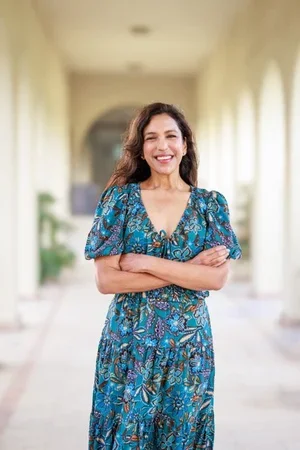
Dr. Rita Gupta is a board-certified family and integrative medicine physician (DO) with nearly 20 years of experience. She's deeply committed to empowering individuals navigating chronic pain, chronic illness, and neuroplastic pain syndromes through her work as a medical coach, combining traditional medicine with integrative approaches that emphasize self-compassion and whole-person healing.
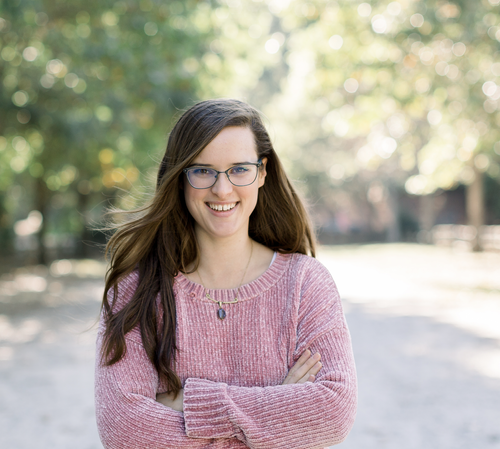
Meet Destiny - The host of The Chronic Illness Therapist Podcast and a licensed mental health therapist in the states of Georgia and Florida. Destiny offers traditional 50-minute therapy sessions as well as therapy intensives and monthly online workshops for the chronic illness community.