
The Personal Connection to Chronic Pain
One of the most compelling aspects of Chris's practice is her personal experience with chronic pain. She doesn't just empathize with her clients; she truly understands what it's like to live with an ever-changing condition. Chris shares how her journey has been a parallel process to her clients' experiences, navigating the ups and downs of chronic pain.
Grief and Chronic Illness
Grief is an intricate component of dealing with chronic illness. Chris highlights that grief is not a one-time event but a continuous process. It's about mourning the life one had before illness and accepting the new reality. Clients often grapple with fear, uncertainty, and anger, and it's crucial to address these emotions in therapy.
Holistic Techniques for Healing
As a holistic therapist, Chris incorporates a range of techniques to address the mind, body, and spirit. Yoga plays a significant role, focusing on gentle, mindful movements that help clients calm their nervous systems and boost their energy levels. Breathwork, often associated with relaxation, can also be used to invigorate the body when needed.
The Importance of Mindfulness and Sensations
Chris emphasizes the importance of mindfulness, not just as meditation but as being intentionally aware of one's surroundings and inner sensations. She encourages clients to notice how they feel in their bodies, conducting body scans to reconnect clients with their physical sensations. This practice is particularly helpful for clients with racing thoughts or those who struggle to stay grounded in their bodies.
The Challenge of Dissociation
Chris acknowledges that some clients with chronic pain may struggle with dissociation, making it challenging to connect with their bodies. In these cases, the process of reestablishing that connection can be slower, requiring patience and compassion.
The Complex Relationship Between Pain and Identity
Chris and Destiny discuss the complex relationship between chronic pain and identity. They explore how pain often serves a purpose, stemming from early life experiences. Therapy can play a crucial role in helping individuals understand their pain and develop healthier ways to cope. Clients often experience emotional activation during therapy sessions. When someone is highly activated, their body and mind are on high alert, which can make processing emotions difficult. Brainspotting helps individuals move through this activation phase by identifying resources and grounding techniques to support them during difficult moments.
Unearthing Unprocessed Trauma
Traumatic experiences that are left unprocessed can linger in the brain, causing various physical and emotional issues. Brainspotting aims to access and process these stored traumatic memories and emotions, allowing clients to finally find relief and healing.
Building Trust and Faith
The therapeutic relationship is at the heart of the healing process. Building trust and faith in the therapeutic journey begins with the initial connection. Chris emphasizes the importance of providing resources on her website, such as free meditations, to help potential clients become familiar with her voice and approach. This familiarity can foster trust and comfort, making it easier for clients to take the first step toward healing.
The Power of Belief
Having faith in the therapeutic process is essential. Believing that therapy can help and that change is possible is the foundation of progress. Chris highlights that faith doesn't mean immediate results; rather, it's about recognizing that healing is a gradual journey, often requiring time and patience.
Navigating Frustration
Frustration is a natural part of the healing journey, especially when progress feels slow. It's essential to remind oneself that the journey is multilayered and that change takes time. The therapeutic process involves practicing new skills, challenging old thought patterns, and gradually building the tools needed for long-term well-being.
Embracing the Process
Embracing the therapeutic process involves trust, faith, and repetition. Building a trusting relationship with a therapist, believing in the healing journey, and accepting the importance of repetition are key components of successful therapy. Recognizing that therapy is a gradual and multilayered process can help individuals navigate their unique path to healing, ultimately leading to a more holistic sense of well-being.
Conclusion
Chris McDonald's holistic approach to therapy offers a unique and powerful path to healing for those grappling with chronic illness, grief, and life transitions. Her personal experience with chronic pain adds an empathetic dimension that resonates deeply with her clients. In a world where uncertainty often looms large, therapists like Chris provide invaluable support on the journey to well-being. By integrating mindfulness, breathwork, and yoga, Chris empowers her clients to embrace their bodies, heal their minds, and find peace amid pain.
Disclaimer: Everything we discuss here is just meant to be general education and information. It's not intended as personal mental health or medical advice. If you have any questions related to your unique circumstances, please contact a licensed therapist or medical professional in your state of residence.
Destiny Davis, LPC CRC, is solely responsible for the content of this article. The views expressed herein may or may not necessarily reflect the opinions of the guest.
The content in this blog post comes directly from a real, human interview between Destiny and her guest on The Chronic Illness Therapist Podcast. This written version was formatted using AI. Listen to the full episode to hear the actual conversation.
Listen to my full conversation with Chris McDonald on Ep 9: This Is A Moment of Suffering: Navigating the Grief of Chronic Illness Holistically and with Brainspotting with Chris McDonald, LCMHCS
-
Episode transcribed with AI and may contain errors that are not representative of the actual word or meaning of the sentence.
Chris McDonald is a licensed therapist and holistic provider where the group practice path to hope counseling and Raleigh, North Carolina. She is a 200 hour registered yoga teacher who specializes in the treatment of anxiety, depression, trauma, chronic pain, and grief and young adults experiencing life transitions.
She teaches clients, mindfulness breath, work, meditation, yoga, and uses brainspotting. Chris also offers therapy for therapists and publish the book self-care for the counselor. She's the host of holistic counseling podcast and helps mental health therapists learn how to integrate holistic strategies into treatment and build a holistic counseling practice.
Hello. Hi, Chris. Welcome.
So, yeah, why don't you tell me a little bit about, um, the population that you work with, what drew you to this population?
And, yeah,
so I work with primarily young adults, um, has kind of shifted. So I was working with teams, but then found, I didn't really want to work with parents anymore and prefer working with adults, especially the younger population, 18 to like 30, I call young adults. Um, but a lot of them are in transitions in their lives from either, you know, going to college or getting out of school and trying to adjust to working life and many have anxiety, depression, trauma.
Um, I do work with someone with chronic pain, chronic illness. Um, cause again, that's a transition too, because when you do experience a new illness or chronic pain, that's not going away. Especially as a young adult, I find that it's even more challenging. So I have chronic pain myself. So that's something that I always felt like I wanted to be able to help people that experienced that.
Yeah. Did you, um, find that you had to go through your own process before you were able to start working with the client through, throughout chronic pain? Or was it more of a parallel process for you?
Probably a parallel process. Cause, cause it is. And if you have any illness too, you probably understand that it's it's changing.
Right. It's not like, you know, static stays the same because recently my, um, spawned a little thesis, uh, got worse. Yeah. I got it. I had an MRI and things got really bad and November in new changes came up. So I had to work through that, but, you know, we have our own issue. It's worth our own and while we're still seeing clients.
So, um, but yeah, that's the thing it's like, you know, things were pretty, you know, pretty manageable, but then they got unmanageable. So it's such a shifting thing that we all have to deal with.
Yeah. I think that that's a big part of it is it is constantly shifting. So then there's, there's grief and adjustment and the whole grief process, I think, um, it starts, again, it happens over and over, depending on, so yeah, maybe talk a little bit about, you know, grief worker and chronic illness, kind of, what does that look.
Well, it's definitely, like I said, something that's continuous because things can change. And especially when things get worse or the flare ups too, because it might be, oh, well, things have been going well. And then all of a sudden it's not so well. And it might be who knows how long it'll take. And I think the hard part is, and I see this myself sometimes and other people is catastrophizing like, oh my God, it's never going to get better.
I'm never going to be able to do things I used to do. And is this the rest of my life? And try, once you get in that mindset, then that causes a lot more emotional distress. So, um, That which
in turn makes the pain worse too. Yes.
That stress has a stress response in the body, as you know. And so, yeah, the grief though, I think I put some of that is fear, right?
That this is never going to be, I'm never going to be who I used to be. And, um, I have to give up a lot of the things I enjoy doing, which is painful. Right. There's so many things that I would still want to do, but I can't, I can, but really gonna hurt myself if I do. So being able to be flexible with our thinking and being able to accept that this is where I am right now, or each day, sometimes it is some days I can do more than others.
Yeah. Which is then brings about uncertainty and all there's so many layers in it. There's fear. There's loss. There's uncertainty. Anger.
Yeah. Yeah. Why is this happening to me? Right.
Yeah. How do you, what, what's your kind of go-to techniques? What do you do with clients? Um, do you have a particular modality that you're using with clients for
grief work?
Yeah. Well, I'm a holistic therapist. I didn't mention that before. So, so I try to treat the whole individual and body mind spirit. So, um, with grief, there's so many components that we can work on with that. Um, some of that is using, I do yoga with clients in session and teach them not, it's not fit yoga.
We're not going to work on our abs or anything. So it's all gentle, mindful movement. So using breath and it's about calming the nervous system, turning on the parasympathetic nervous system, or if they're depressed to do more energizing movements and get them moving, somebody get that energy flowing, um, depending on where they are that day or what they need, you know?
Yeah. Can you talk a little bit more about, um, breath work as far as energizing and. Because I think we tend to think of stress reduction as calming, the nervous system. And so, yeah. Can you just speak a little bit
to that? So there are certain breath works that can really make you more energized.
Now it's not stimulating like coffee, but it's more of that energy boost. And, um, I mix a little cheek gong. She going is like Tai Chi where it's just slow movements, which most people can do. Um, which is why I love it too. But it's moving the G, which is the energy life force, Prada, whatever you want to call that life, force that energy around and cause cause energy be can become stagnant, especially with like depression or we can get too much energy like with anxiety in certain places in our body.
So it kind of helps to move things around. But you said energizing practice, like one, um, Chico and practices. If you make a, a fit, a flat fist like this and gently tap your chest. Over your breastbone. So this called the thymus thump. So this can get energy flowing in the morning. I like to do this in the morning.
Yeah. And it does help move things along. So that just a different energetic practice. And
is that something you might do laying down to even help you on those mornings that you just can't even roll
out of bed? Oh yeah. Or tapping like underneath your collarbone? Just tapping. Okay. So kind of doing both.
So I teach clients these different strategies, um, and it really does help people with depression too, just to get these different energetic modalities with them. We might move into some movement with yoga, you know? So there's the answer to the question now.
Yeah. And, and just speaking to the F you know, just to the fact that yoga and stress reduction is not always about.
Like calming the nervous. Not at all. Sometimes we have to get up and, and yeah. Be activated. Yeah. Yeah. I mean, and getting stuff done, um, from a place of, you know, it feels good, like you actually want to get up and when you can't on those mornings that you can't get up, that's where you start to feel stuck and the momentum of being stuck and keep you in bed.
And so that's kind of what we're talking about is how do you, how do you move past those
days? Absolutely. Yeah,
definitely arrest is so important. We need to honor our body's need for rest, but I think it's really hard to know sometimes. Do I need rest right now? Or am I just like in a ball of depression and I'm going down that path?
, stuckness. Yeah, it is. But I think, and I teach clients about using intuition or higher self, whatever they, you know, their belief system is, um, or the wise mind, like in DBT dialectical behavior therapy, um, to find that that intuitive part of themselves, that that can help them. What do I need right now?
And just listening and tuning in,
I find intuition is something that can be really confusing because we talk about gut feelings. But, um, I think if you haven't become aware or if you haven't practiced, like what a gut feeling is, it could also just be fear or it could just be a quick punch that isn't actually telling you what you need to do.
Right. Yeah. And it does take practice to adapt to that and to listen and be present.
Yeah. What would you say are some of the practices that people, could do to learn, to be more present?
To be more present. Um, well, definitely mindfulness too, to really be tuning into what's around you and noticing sensations in the body, really noticing what you see, hear, smell, taste.
So I do a lot of practice with that as well.
Yeah. I think mindfulness people tend to just think it's meditation. So we're really talking about being super intentional about what you notice around you and inside of you. I liked that you mentioned sensations. Cause I think that one gets missed a lot.
Yeah.
Yeah. What am I feeling in my body and doing body scans, which means just going from head to toe, just noticing different parts of your body. Cause a lot of times, um, people that I see too, they have a lot of racing thoughts and they have difficulty controlling their thoughts because things just get out of hand they're in their head too much and they're not in their body.
Do you notice a difference between your CRA clients with chronic pain and those without
not a huge difference. Some, but I do have some people who dissociate, so it's a lot harder for them to connect with our body at times. So it is a slower process to, for them to get used to feeling sensation and being in their bodies.
Yeah. Yeah. I find when we live with chronic pain, it's really easy to start to dissociate from your
battery, which makes sense, right? Yeah.
I mean, who wants to be aware of the pain,
but
can you talk about the awareness process a little bit in regard to the pain cycle, what it looks like when you become more aware of your pain and using some of these mindfulness practices, when you're feeling pretty distressed
from your.
Yeah. So just tuning into those sensations, just noticing, but also, and one thing that just for your listeners to focus on too, is where do you not feel pain right now, too? So switching back and forth with that, which sounds odd. I know. And it's hard when the pain can just overtake you, but that's one, one way that physiological, you can help yourself to say, okay, is my left foot, how is my left foot?
How is my right foot? And then just going in different parts of your body to just notice and breathing into it. So using breath work is one thing that I do too, um, is really just giving yourself that space and grace on those difficult days, because you may not be able to do much at all that day, but that's okay.
Yeah. Yeah. That's a really good point. Just being able to focus on
non-pain as well. Yeah. Yeah. Why don't you to me hard on.
I find this with few of the clients I've worked with, and myself as well. I think our pain serves a purpose in a lot of ways. Um, a lot of times stemming from childhood and I've found that when I start to, , look at the places where I'm not in pain, it can sometimes feel invalidating.
And so it kind of keeps us there. It keeps us stuck in the pain cycle because we don't wanna, disown or abandoned, the part of us that really needed that, that pain. That's where I think therapy
comes in. Absolutely. And how you view it. And what's your perception of that and what are you telling yourself about it?
I think that's huge with chronic pain. What is going through your mind with us? Because we can sometimes invalidate ourselves and, and make things worse for ourselves too, by causing ourselves more distress.
Yeah. Yeah, it does happen. Um, so what else comes to mind when you think about when you're, when you're working with grief and you're working with chronic illness and chronic pain, what's something that you feel like is just important for someone to know if they're, um, if they're struggling with how to move or how to get up and do.
Sometimes just stopping right in this talent and just allowing yourself that space to say, this is a moment of suffering and putting your hand, wherever that suffering is, wherever you're feeling that if it's on your back on your leg or belly, wherever it is, and just being there with it and allowing it to, you know, sometimes just having that compassion for it.
Cause I think that once we tense up and get stressed out about it, then it causes more pain and part of the pain cycle, like you mentioned too, but having compassion for yourself I think is so important through the whole process.
Yeah. And how long have you been working holistically? Is it been since the start of your career or?
I started, I was a school counselor for 16 years, so I always have done some breath work and gradually learned on meditation and I teach meditation now, too. So it's been kind of a gradual process. And then I got my, um, yoga certification, um, which I never thought I would get that and be a yoga teacher, but that's part life changes.
So what was the catalyst for that? I
actually took a, a brief course online about, um, teaching yoga to clients and I just loved it so much and I was like, I want to learn more. And so I kept researching and trying to find a yoga that felt good for me. So that's when I found this subtle yoga and it's just been life-changing and.
Uh, talk therapy can only go so far and I'm more, body-based a medically based. And I feel like I can get so much further and help teach clients these skills that are lifelong skills to, to manage whether it's chronic pain, anxiety, depression, trauma, so much more because I, and I've heard other people say this too, that we can CBT ourselves to death, a kind of behavioral therapy.
It has a place, but I think to go a little bit further that we have to look at some of these holistic practices and get the body involved.
Yeah, we could probably, I know I could go on a tangent about CBT, but it works. It does work. There is. Yeah, for sure. Um, I do, I've learned that over the last few years, I've, I've learned to be able to even say like, okay, yes, there's a place for it, but I, I do have a strong belief that our thoughts start in our body, whereas.
It's more like your thoughts start in your head and, and then we need to work in the head and there is no, there is no body. Of course, there's this other, um, there's, mindfulness-based CBT now and there's other that in. Um, but I think it's so important when we're working with chronic pain to really recognize that any thought that we have is our thoughts tend to be just very automatic.
And so, yeah, you can combat a thought with a thought, but is it integrating into your body so that the automatic thought doesn't keep popping up over and over and
over again. And so, and you said integrate, which is a good point too. Cause sometimes we can use like affirmations or words with movement and breath and integrate it into the body, which is a beautiful.
Yeah, absolutely. And so you said you kind of, you just found a course and you, that brought you to yoga, but is there something personal or something you know about your history that, that you want to share about that kind of sparked a passion for this for holistic counseling, for yoga, for.
I think part of it too, was my chronic pain issues too.
I wanted to find something that I could do and cause I, I, my own personal yoga practice and, and that's really helped manage my pain. Um, at times, not always, sometimes I can't do much of anything, but at times I can manage it. So I think just in a spiritual level, I just connected with it so much and, and being able to connect with something greater than myself through yoga and meditation, because, um, it, what people don't realize, it's not just awesome.
Those which are, you know, the postures it's, it is breath work. It is meditation too. So there's, there's different components to yoga that people don't realize. But for me, it just connected that I've always felt like a greater connection with the whole person and it just made sense. Yeah. It
feels like it at its core, it is just an integration of
everything that everything.
Yeah, for sure. Yeah.
It makes a lot of sense. The breath work with the movements and then salts are coming and going as you're doing that. So it's
just, and they're just thoughts.
Yeah. Yeah. They're just thoughts. The
biggest lesson for clients. I will tell them and they'll be like, what? I don't have to believe.
No, you don't.
Yeah. Yeah. They don't have to, we don't have to put a whole lot of meaning to
them or run off with a story about it. So, yes, it's pretty powerful.
How do you, um, when you're, when you're working in the room with a client, um, Do you, do you sit down and kind of talk, like talk therapy as well? Or do you tend to just, okay.
Yeah, so it was kind of integrated. So I do both, um, yeah, in do, um, sometimes we might do yoga. Sometimes we might do breath work. Sometimes we might do CBT. So there is kind of the integrated using the different models together and brain spotting. I also knew that as well.
Can you speak a little bit more about that?
What is brainspotting and how does it
help people? So basically it helps to get to the deeper layers of the brain, the subcortical cortex, which is the part of our brain that doesn't always have words, right? He can be sensations. It can be something that's difficult to put into words. Um, because talk therapy is more about the front of your brain, but with brainspotting, it's using the visual field like EMDR to, um, tap into knowing that we can, where we look changes, how we feel is, is a better way of saying that.
Yeah. So if I'm feeling activated, which means that maybe I feel sensation because I'm anxious and my chest and I look right and it increases, that's a brain spot for me, but let's say I look laugh and I feel calmer. So that would be more of a resource spot. But once we find the brain spot is sitting in that what's called mindful awareness and allowing whatever to come up, whether that's memories, thoughts about, of an issue that we're working on.
So it's a whole, it's a whole, that's a short, short version, but it's a whole process to work through, but it really does amazing work. And it's much quicker than talk therapy as far as helping clients with issues
and I'm gathering. I just wanted to point out on what you said. We're not trying to necessarily bring about like this positive emotion to it, you know, outweigh this negative emotion.
It sounds like. Trying to just data collect. And then after a thorough data collection, then clients can start to decide, what do I want to do with this? Now I know how to resource, or I know how to tend to positive emotions, um, without dismissing my negative.
Right. So it's a whole whole part, so that, but we can also the interesting part of brainspotting.
So let's say that if I do feel better looking at the left and we find what's called a resource, but we also look at what is a place in your body where you feel most grounded. So let's say I feel in my leg. So I'm going to tune into that and just kind of stay with that, but it's okay to probably call it processing.
So if we stay in that brain spot and process, whatever the issue is, I talked about before, if we pick one issue and kind of get it down to detail, what they found research wise is that people actually move faster when they're more grounded. So they, if they use the resource bot, they can really work through the issue sometimes more.
Being activated, which if you think about it, it makes sense. Right. Because if we're more activated, it's going to be harder to necessarily stay with it to
yeah. When you're activated your body's like, okay, where's, where's the tiger basically. Looking around everywhere, and
someone might say like, well, I know there is no danger in this room, but it's your insides still feel danger. And they react to danger. The way someone would have a hundred years ago, 200 years, a thousand years ago, um, danger is. Back then it was, who's going to take my food. Who's going to try to kill me.
Who's going to try to harm me in some way. So our body still reacts that way. Even if our brain knows there's no danger in this room.
Um, yeah, brainspotting is just trying to work through the issue and process it because thinking about. I'm not going to go into the whole thing about it, but when we have, let's say a trauma, for example, and we don't process it, and let's say we suppress it, which is, you know, a normal reaction.
Cause of course it's hard to stay with it and want to be able to talk about it and deal with that difficult emotion or what we saw. So it kind of goes in the brain, think of it as like little capsules, right. Stored in the brain unprocessed. But does it go away because we don't think about it now. Right?
It's still gonna come out. It still can cause panic attacks and come out and other physical issues. Um, it can come out with migraine, whatever it is, your body, however your body reacts. So it's tapping into those unprocessed areas and be able to work through that. So the goal of brain spine, and we do what's called suds.
So we test, okay. So where's your activation on a scale of one to 10, 10 being the worst as somebody talks about their issue. And let's say they're an eight, so we want to bring that down hopefully to a zero, but it doesn't always get there. But usually I would say nine times out of 10, most people work.
They have some reduction after each session. So, but I have seen people get down to zero and the issues is resolved, period. So it's pretty awesome.
Yeah. Yeah. It's interesting. Um, how the brain works. I think there's still so much free. Just don't know. And don't,
that's a, that's a big part of it. Yeah.
Which requires a whole lot of trust and faith in whatever you are
doing.
Yes, definitely. It's a process.
Can you talk a little bit about the, maybe the trust in the face, um, process when you're working with clients, do you find that you've, you've done some legwork to build trust before a client comes to you, such as in your website or your marketing, like people are choosing you specifically, or yeah.
Can you speak to that?
Um, well, my website is really geared towards the young adult population too. And I've had a lot of people say that, oh my God, you spoke to me, this is exactly what I'm going through. Um, because if you think about young adults too, that a lot of them that are just starting out and trying to build their lives and figure out things in life.
And so that, that's kind of where I start with that. Um, I also have a free meditation that I give away to people from my, uh, website, um, just so they can hear my voice, get, get used to who I am and what I. Um, but, and, and just think about all these practices that I mentioned. It's not like we jump in the first time we meet, Hey, let's do some brainstorming.
So it is a group. I always believe in a gradual process that we're building up that trust in the relationship that they feel comfortable. And, and we slowly move into these practices. And maybe when we do yoga the first time, we're just going to do one Asana and that's it, or one breathing practice. So we don't spend the whole session doing that.
Um, but usually we'll just, uh, start slow, see how they react to it, if they're comfortable. And of course it's an invitation to do these practices nobody's required to. So I always make sure that's clear too. So they feel comfortable and safe and that they, and especially now that I'm doing all telehealth, that people are in their own space.
So a lot of times they do feel a little bit more comfortable.
Right. Yeah. You're really building that safety that trust before you go and do some of that deeper,
it's building the relationship and I, we brains fighting. You can technically start sooner, but for me, I still like to feel like I got to get the ball rolling a little bit so that we can get to know each other and, and have that relationship piece bill before we jump in.
It's w I mean, the research is always very clear that it's less about the techniques that we use and more about the relationships and what helps a client start to heal in therapy, which can be hard and frustrating when you're looking for a therapist. Um, you know, you don't always know who you're going to click with.
I think it's helpful. I think like, like what you said, you, you offer a free meditation. So if I'm looking for a therapist and they have either a video on their website or somewhere, I can hear them talk, there's just something about the energy of someone else's voice, you know, your body, even if you don't cognitively know how to explain it, your body is like, okay, yeah, I can, I can vibe with that or not.
Right. It makes a difference.
Yeah. And I just think it's so important that people do understand, like finding a therapist is a process. You may not, even if you do, you know, you're like, okay, I like, I like this person's voice. I like their video on their website. Like you still might find after two or four, two or three sessions that, okay, maybe this isn't exactly what I was looking for.
Um, and to be able to move on and, and look for someone new without maybe some of the hangups of either, um, self doubt or feeling like you wasted time. Cause it's never, it's not a waste of time. You're figuring things out, even when you're having an experience that good reframe go. Yeah. I mean, yeah, there's a reframe, but truly, you know, it's funny as I, the more I do this work and that the older that I get, I realize the reframes that I used to really hate as a young adult.
It's, it's, there's so much truth behind them. Like the mistakes being a learning lesson. It's so
true. You
learn from doing everything perfectly well, because then you have no idea what that gap feels like between getting it right. And all, like all of the pieces that go along, come along with, with working in and struggling a little bit to find the solution to a problem.
Right, exactly.
Yeah. So true. You mentioned faith. So did I answer, what did you want to know about faith? Well,
we were just kind of talking about, you know, having
faith in the process, the process, so really believing in that. Yeah. And I think that that's, that's key though. Isn't it too, that this can help you and yeah.
And if you don't believe it, then it doesn't mean like you're not trying hard enough. It just might, it can mean several different things and we can figure out and in the room with a client, what that does. Yes. If you don't believe it again, it's not, how can we get you to. It's which I think is more down that CBT route.
So sometimes that's appropriate, but other times it's, it's more like, Hey, you don't believe it. Well, what do you believe to be true? And where does that lead? You, you know, when, when that happens for people with chronic pain and chronic illness, it's huge because everything we do requires so much energy.
Yes. And we don't really have much time or energy to waste because of that. So I think it's important that, you know, we're really being intentional with, with what we're doing in therapy, what we're doing in our lives, to kind of figure out what we want to do next before. Kind of just like jumping into anything and everything.
And we waste so much energy. And then we kind of have a lot of sailed experiences that maybe start to give us a story about what works and what
doesn't. Yeah. And, and knowing that it's a process and reminding yourself, cause I have my clients get frustrated. Why is it? It takes it along well. You've had decades of, you know, a lot of these behaviors and thoughts.
So it's not going to happen in a month or two. Yeah.
You need repetition and experience to integrate what you're learning in therapy. So that alone takes time
multilayered. Right?
Yeah, repetition's really important. And really, for some reason, really frustrating. So it takes a long time. Yeah. You have to keep reminding yourself like the repetition is what's supposed to be happening. I'm not, I'm not supposed to get it right the first time that's not right.
Oh, exactly. Yeah. That practicing. Yeah. Cause it with breath work, especially, it really takes time to get used to that sensations and how that feels in your body.
That's a really good point. And going back to the chronic PMPs, when we have a new sensation in our body, it often feels very scary, wrong, not supposed to be here.
And so a practice like yoga, it helps you get familiar with the.
Exactly. Yeah. And be in touch with the body and, and just that connection piece, mind, body, spirit. So important. Yeah.
And can I just add one more thing to, to that? Um, is it a big part of this too is acceptance, which is one of the hardest things in chronic pain, especially when you have a shift.
I started to get severe nerve pain in November. I never had nerve pain before I thought I was going to lose my mind. That was worse than any back pain or migraine I've ever had in my life. So being to that place of acceptance was just so hard. It's so hard, but it is work that you got to really put that intention out there that this is where I am.
This is what I have. And now that I now want, I get it now, the nerve pain too. I'm just, it's a sensation. There it is. Yeah. I'm okay. So let me just sit with that. Let me do what I need to do.
And I'm hearing that it comes and goes.
Yeah. Now it's much better.
It's so hard when a new symptom arises, it really does feel like, whoa, this is how it's going to be forever.
And it's only going to get worse from here.
Yeah. Yeah. I felt like I, and I think you mentioned this before that a lot of times the medical community doesn't recognize it or brush us off. Right. I had gone to a doctor and I felt like I wasn't being heard how bad this was and waking me up in the middle of the night and couldn't function and could barely function through counseling.
It was just awful. Yeah. But I just feel like nobody was hearing me at that time.
Yeah. I think when people don't know what to do and they don't know how to, they're like, oh, that's not real because there's no solution to it.
Yeah. It's just so hard. Yeah.
And that's what I think a lot of these practices do is they get you familiar and comfortable with not knowing
what to do.
And, and acceptance, is it not only is acceptance a big part of that in that acceptance helps you navigate some of these practices, but it also helps you learn these practices help you learn acceptance.
Oh, absolutely. Being in that present moment. Yeah. That's all we have.
What else comes up around acceptance that you might want people to know or
hear don't beat yourself up if you're not accepted. So, um, I don't know if your listeners believe in holistic practices, but I had gone to a Reiki person back in December and she just, she had her. Like listening to, I didn't say this.
Right. She had, I don't know how to say this or intuition. Okay. Was coming up that I was not accepting, I was rejected. I just want this to go away. I just want this to go away, which was
so hard. It, uh, so that, that was a real eye-opener. She's like, you're not accepting this. And I'm like, no, I'm not. It was like the, I mean, you kind of get defensive angry with that too, because it just feels like overwhelming. And how am I going to live my life? If I can't even sit or stand at all, hardly I'd have to keep changing positions every five seconds.
Yeah. Which I think brings on a whole other conversation about, um, our fear of disability and what that means and looks like in our country. Um, but also just to keep it on, on track with, with this, that anger and that frustration, I think is so critical to the process. And when a client comes in for therapy and they're frustrated, or even frustrated with our therapy, it's very easy as a therapist to feel like you're doing something wrong and you want to get them like deactivated.
But I really learned over over the years that this activation just means we're right about to turn a corner. We're right there. This is a part of the process. And actually what I can do with you is I can just hold space here. That's what I can allow you to be this angry and this upset. And you can even, you can even put all of that on me.
I can hold that because I have my own practices that helped me navigate that. And, and this is the work that I choose to do.
Right. And, but that's allowing, isn't it allowing whatever emotion to come up. And I think for your listeners to remember that too, that we have to allow, that's the hardest thing, but it's what emotion is there.
Cause like anger, right? Want to push it? I don't want to do it. I don't want to be angry. We going to push it down and push it down. But just if you allow that and allow yourself to process it and be with it, it's going to ease up. Feelings are temporary.
Yeah. Well, I think in our society, we are not allowed to be angry.
Right.
It's around every single corner, anger equals bad and it equals like you cannot display that. So it makes perfect sense that, um, somebody would not only fear anger, but also have a bunch of shame come up when they do start to get angry and then try to shove it down and suppress it.
Oh yes. Yeah.
That makes sense. When
I, um, I don't have a yoga practice. I it's something that. I always think about, but my own, my own, my own experiences that I would get angry whenever I, whenever I would start to do younger yoga or I would cry. And that had so much interesting and resent, I had so much shame and resentment towards myself for those feelings.
Um, but I, this is why I go back to, I think it's so much a part of the process that if you've been suppressing these emotions down, as you're working through whatever you're working through, they're there, they're still in your body. They're going to come up. And so, um, yeah, that was my experience with, with yoga.
And I think it's probably just a needed immediate experience, you know?
Yeah. And I think that happens for a lot of people to hear that because you know, trauma stored in our bodies, even small, small T small traumas can be stored in our body and our tissues. And then you move a certain way and it might release something.
Yeah, I it's true. It would, I would have no reason that day to be angry or sad or upset nothing going on, but just a simple yoga movement or pose could really spark that as it is. It's stored
in the body. The body keeps the score.
Yeah, it does. Does, um, yeah. Good. And, tell me a little bit about your book, the books that you have for therapists.
And so I published his book in 2017 self care for the counselor. So I always felt like I've done a pretty good job with self care. If I can toot my own home for a second. And I noticed a lot of people didn't especially there, but as are the worst.
Um, well, let me tell my client to do self. I'm not and burning themselves out and just scheduling too much and not setting boundaries. So I was like, you know what? And I loved holistic things. I was like, why not put this together, uh, with holistic strategies, right. And put it together in a book. So people have a resource.
And so that's kinda what I did. Just try to put it in. Think about all the different aspects of a person, whether socially, spiritually, physically, what can they do to develop these healthy habits and, and build them into the tool lifestyle so that they can take better care of themselves.
Why do you think it's hard for therapists to, um, take care of themselves even when they.
I help other people learn how to take care of them.
That's a good question. That's the million dollar question I have, um, a Facebook group for therapists to, um, that is partially self care is holistic counseling and self care group. But we do talk a lot about self care and there is a lot of people in there that do struggle with that still it's.
I think a lot of people in this field are wanting to help others before themselves, whether that was ingrained from childhood that's, where they're brought up or society pressures that gotta help them got to, I really want to help people, but they forget about themselves. So it is kind of making that shift and I got to take care of me first and that's hard for especially women we're nurturers and we want to make sure everybody else is okay.
And then we'll get to me.
Yeah. Well, I think too, like learning from, um, if you go through school to become a therapist and you have more textbook knowledge than lived experience. , and if you still have a lot of fear around living fully, because living fully means making mistakes, it means going through the bat, it means going through grief and trauma, not trauma necessarily, but it there's a, there's a trauma in living.
There are good experiences and bad experiences. And if you're constantly trying to just like, get the answer, right, like we're kind of trained throughout elementary school. That's what we get the answer, right. Then you're supposed to go to grad school or, um, college and then grad school and you're just supposed to keep getting it right.
And so if you've gone through that, that pathway to become a therapist, then I would imagine it would be really hard to actually live and practice self-care. So sometimes we need more modeling more resources. It sounds like a book, like what you're talking about, what you're, what you've read. It just helps give some of that modeling.
Here are some things that you can do if you're willing to practice.
Exactly. Just making some, and it's not always huge life upheaval. It can be small changes because one thing I talk about in the book that I still do to this day is a morning routine. So figuring out what would be helpful for me in the morning to get my day off to a good start, because I used to, when I worked like in the school system, I would get up with my alarm shower, just rushing around, trying to get ready to go.
That was how it rushing energy, right. I started my day every day, but then once I be at my private practice, you know, I do take some time to do some yoga, some meditation, and then I'm not saying hour and a half yoga and meditate. Sometimes I do one yoga pose and maybe I'll do a five minute meditation. So I think people have black and white thinking about avoiding routine too, that it has to be XYZ, but it does it too.
And that's why I talk about the book being flexible. What works for you?
Yeah. Yeah. That psychological flexibility is a huge component of acceptance and commitment therapy, which is my main modality. Um, it's and life experiences, I think is what gives you flexibility or rigidity, um, depends on what you make, the meaning that you make of it.
And try you look at it. And you mentioned one thing about, you said it can even be small practices, but I think it, it is the small
practices that maybe
you're right. You know, those big experiences are great to look back on, but your nervous system doesn't recognize one experience. Your nervous system recognizes re repetition.
Like we were talking about earlier, you need repeated. Experiences in order to integrate it into your
psyche. Yeah. And it changes your brain physical Springs too. So just remember you're rewiring your brain out of being reactive when you do yoga regularly in mindfulness meditation. Research-based yeah,
absolutely.
Yeah. There's we can see it in scans, brain changing, um, and just, yeah. Repetition. That's the key. Yep. So, yeah, I think, I think our, um, expectations, especially with young folks, you know, in social media, we have these like great images of people doing great things. And we just think that we have to get to that life or that thing when really it's.
I mean, what does it matter if you climbed Mount Kilimanjaro, if you like hate your life every other second of the day, like you have to love the small moments in your life. So how do we get you there and how do we, um, help. Repeat the enjoyable, but mundane day after day after day.
Absolutely joy and daily living, right?
Yeah. Well, great.
Um, where can people find more information about your podcast, your retreat, your book?
So I'm the holistic counseling podcast.com. Um, and actually it's going through an upgrade. So right now it's only, I only have the episodes and show notes, but, um, I'm recently, um, have been working with somebody, helping me put together a full website. So it's going to have resources and everything on there.
So it's now that we're going to our one year anniversary. Um, and also I have, if anybody was interested in my YouTube channels, therapist, Raleigh, um, if you're welcome to see some of the ways that I teach yoga with clients and use the, that for yourself, of course is going to be helpful. Um, and my practice website is path to hope counseling.
Great. Thank you so much for all of that. And I don't have the retreat information yet because I don't have all the soon to be coming as soon to be on the website once the website's launched. So hopefully in April 20, 22, do you have an email list going? I do. Yeah. And that's there and people can sign up for that.
I have a free email course is a nine part email course, but that's actually on my website right now. So if they go there and it's just scroll down at the bottom, it's a contact form you can fill out. And I do send, um, regular emails through there. So you get more holistic tips. What does that course when you sign up becoming a holistic counselor?
Okay.
Okay. Got it. Great.
Well, thank you so much. Yeah. Thank you for having me. This was fun. All right.
Listen to Chris’ interview with me, Destiny Davis, on Ep 9: This Is A Moment of Suffering: Navigating the Grief of Chronic Illness Holistically and with Brainspotting with Chris McDonald, LCMHCS
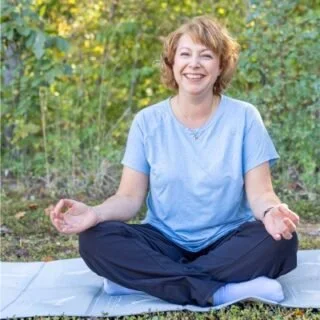
Chris McDonald, LCMHCS, is a Licensed Professional Counselor, holistic therapist, and Registered Yoga Teacher who integrates trauma-informed yoga into mental health therapy. Based in North Carolina, she runs Path to Hope Counseling and specializes in treating anxiety, trauma, and life transitions.
Chris is the host of Yoga in the Therapy Room: The Nontraditional Therapist’s Guide to Integrating Yoga into Your Therapy Practice, a podcast dedicated to helping therapists ethically and confidently bring yoga into their clinical work. She also offers courses and resources for clinicians, including her signature training on integrating yoga into therapy sessions.
As the author of Self-Care for the Counselor, Chris empowers fellow professionals with holistic tools to prevent burnout and support their own wellbeing. Her work blends movement, mindfulness, and mental health for real, lasting change—for clients and therapists alike.
Connect with Chris:

Meet Destiny - The host of The Chronic Illness Therapist Podcast and a licensed mental health therapist in the states of Georgia and Florida. Destiny offers traditional 50-minute therapy sessions as well as therapy intensives and monthly online workshops for the chronic illness community.