
What Therapy Actually Looks Like When You Have POTS
When you have POTS or dysautonomia, you've probably been told to "just manage your anxiety" more times than you can count. Maybe you've even been handed a referral to a psychiatrist after your ER visit came back "normal." And if you're anything like the people I work with, you're tired of being dismissed.
I sat down with Laurie Dos Santos, a clinical psychologist who specializes in dysautonomia and runs Evolvinn Therapy and Consulting, to talk about what therapy actually looks like when you're dealing with conditions like POTS, chronic fatigue syndrome, or long COVID. This conversation was full of real talk about what happens when providers finally take the time to listen, how community can be life-changing, and why hope isn't about finding a cure.

The First Chapter: Just Listen
Here's something that surprised me about Laurie's approach: the first part of therapy involves no strategies, no skills, no tools. Just listening.
She spends that initial phase getting to know each person's story. What has it been like to go from being an athlete to not being able to walk up a flight of stairs? What does it feel like to be dismissed repeatedly by doctors, family, friends, coworkers? What trauma has built up from being invalidated over and over?
And here's why that matters so much: most people with dysautonomia have been told their symptoms are "just anxiety" or "all in their head" for so long that they start to believe it themselves. That self-gaslighting becomes its own layer of suffering on top of the physical symptoms.
Laurie explained that one of her roles as a therapist is to become a team with her clients. To join them on their journey and validate their experience before anything else. Because when you've been dismissed by the medical system for years, having someone actually believe you is powerful.
The Misunderstandings That Keep Coming Up
One of the biggest themes Laurie sees is the invalidation around dynamic disability. You can have a great day one day and be completely bedbound the next. And people looking in from the outside don't get it. "But you were fine at dinner last night. How are you not okay to make it to that doctor's appointment today?"
This gets misunderstood as lying or faking to get out of things. And it's devastating.
Laurie normalizes this experience by reminding people that this is universal for dysautonomia. It's not just them. It's the nature of the condition. And even though 76% of our country now has at least one chronic illness, we're still living in a world that doesn't understand invisible, fluctuating symptoms.
I think part of it is that we need to see things to believe them. Maybe that's why some of the chronic pain programs that focus heavily on neuroscience education seem to work. When you can see what's happening inside your body, even if it's through a diagram or a model, it validates the experience in a way that makes it easier to accept and work with.

The Dance Between Rest and Push
One of the questions Laurie gets all the time—especially from parents—is: do I push or do I rest?
And the answer is: it's a dance. You have to figure it out together through trial and error.
She works with people to track their energy, identify triggers, and figure out how many "spoons" different activities use up. Then they do experiments. What happens if you push too hard? What happens if you rest completely? And here's where values come in: if something brings you joy but you know it's going to cause a crash, do you do a cost-benefit analysis and plan for it?
This is where therapists are particularly equipped for this work. Because pacing isn't just a physical calculation. The emotional and cognitive energy that goes into tasks matters too. Doing the dishes might be more draining than doing laundry simply because you don't like doing dishes. That's not a moral failing. It's just data.
Laurie also pointed out that sometimes the shame around certain tasks being harder makes them even more exhausting. Part of the work is acceptance: yeah, I just don't like this task. And that's okay.
The Problem With "Just Push Through"
We also talked about mobility aids and how often people are discouraged from using them because of fears about deconditioning.
Laurie's approach is to extinguish the shame and stigma. If a mobility aid helps you do the things that align with your values and bring you joy, why wouldn't you use it? It's a tool. A resource.
And here's what physical therapists might not always consider: if someone doesn't use a mobility aid, they're probably not going to use that muscle anyway. They're just going to stay home more. They're going to miss out on their social life. And if they are pushing through pain without support, whatever "conditioning" they think is happening probably isn't.
This is where the emotional assessment comes in. That's our job as therapists. And when we work collaboratively with PTs, psychiatrists, and medical providers who value that input, the progress can be incredible.
Community Changes Everything
Two and a half years ago, Laurie started a POTS support group. She thought it would be a 10-session short-term thing. By session eight, everyone was asking why it had to end.
The power of community was life-changing. Most of the people in her groups had never met another person with their diagnosis. Suddenly they were in a room with six or seven other people who got it. They didn't have to explain why mornings were so hard or why temperature sensitivity was a thing.
And here's what's unconventional: Laurie lets them have contact outside of group. They have group texts. They have game nights together. They still come back to the group every other week, but they're building real relationships.
Because here's the thing: we're dealing with chronic illness in an isolating, lonely way. Why wouldn't we encourage connection? Isn't that the whole goal?
Hope Isn't About a Cure
Laurie talked about how important it is to provide hope. Not false hope that everything will be fixed, but real hope that life can look different a week, a month, a year from now.
Symptoms can and do get better. Sometimes they go away completely. Sometimes they come back. Sometimes they improve enough that you can travel across the country on a plane for the first time in 10 years—even if you don't enjoy it. The point is: you did it. You can decide if you want to do it again. But now you know you're able to.
That's the kind of hope that matters. Not whether you're "cured," but whether you're learning to live a life worth living alongside your symptoms. And sometimes, through proper medical care and support, those symptoms reduce significantly.
It's a privilege to walk alongside people through that journey. And it's a reminder that healing isn't linear, but it is possible.
Disclaimer: Everything we discuss here is just meant to be general education and information. It's not intended as personal mental health or medical advice. If you have any questions related to your unique circumstances, please contact a licensed therapist or medical professional in your state of residence.
Destiny Davis, LPC CRC, is solely responsible for the content of this article. The views expressed herein may or may not necessarily reflect the opinions of the guest.
The content in this blog post comes directly from a real, human interview between Destiny and her guest on The Chronic Illness Therapist Podcast. This written version was formatted using AI. Listen to the full episode to hear the actual conversation.
Listen to my full conversation with Laurie Dos Santos on Ep 111: What Therapy Actually Looks Like When You Have POTS
-
Episode transcribed with AI and may contain errors that are not representative of the actual word or meaning of the sentence.
Laurie Dos Santos: [00:00:00] Thank you so much for inviting me, destiny. I appreciate it. Um, my name is Laurie Dos Santos. I'm a clinical psychologist, and I run, evolve in therapy and consulting. It's an all virtual private practice, , that works with clients of all ages across the country with chronic medical conditions and chronic health issues.
I really kind of fell into this work. , I had a little bit of a windy path to get there. I spent many years in the juvenile justice system and residential treatment working with complex. Youth who had significant trauma histories, doing assessments and treatment and in that more intense setting.
, And when I transitioned to a group private practice, , I started to do more work in the chronic illness realm of things. Um, and as I look back. Although they seem like very different populations on the surface, I think the tie between them is that they're often invalidated and misunderstood populations, that often get dismissed by other providers.
And I think that that's what [00:01:00] compels me to do this work is really to kind of take the time and energy and effort to get to know clients and, be able to understand, their story and their journey and validate that experience for them. So I started my own practice about three and a half years ago.
, Initially just to, , be able to have more autonomy and independence. And in the last two years have grown significantly. So we have seven psychologists on our team, soon to be nine. We have two more joining next month. And the common thread between us is all of us really focus on, on chronic illness.
The age differs and specialty areas differ, but we really work with chronic illness across the lifespan and work with clients all over the country.
Destiny: That's great. What is your particular specialty? What is may or maybe a condition that you really love working with?
Laurie Dos Santos: Yeah, so my specialty area in the chronic illness world is really kind of in the dysautonomia [00:02:00] umbrella and often the conditions that come with it. So pots, chronic fatigue syndrome, long COVID. S those cluster of conditions is really my area of specialty. And what I've spent, you know, the last probably close to 10 years, focused on.
Destiny: Yeah. What are you noticing about. The needs of this population. What is the mental health needs? You know, part of this podcast is to demystify what therapy looks like. Because so often people are told like, you're just anxious. Go and, and honestly, even now, like there's so many programs popping up around nervous system regulation, which also I think is very coded for like, manage your anxiety and then you'll get better. I would love to just talk a little bit about what you're seeing with the mental health overlap with pots and other dysautonomia conditions and how you start to help people through some of that.
Laurie Dos Santos: Yeah. Yeah. Thanks so much for asking. If you asked me this six years ago, pre [00:03:00] COVID, I think most people would not know what POTS is or what long COVID, of course, is. But just I think you know, the exposure of dysautonomia and POTS and chronic fatigue syndrome has become pretty pronounced I think since COVID and people's experience of having these lingering symptoms post COVID infection.
And so you know, the. The increase in exposure of you know, just publicity of physicians, providers you know, is still very, very small, but has grown significantly in the last few years as a result of COVID. One of the reasons why I love working with this population is I think so few people kind of.
Get it, give or offer a chance to really get to know clients who have dysautonomia and they're so often dismissed at the forefront of medical treatment, of mental health treatment. And like you said, it's anxiety. It's all in your head. Go see a [00:04:00] psychiatrist. Treat it for anxiety. You know, they get ruled out in the emergency room, there's nothing wrong.
Your EKG came back normal. And so it's very rare for a provider to really take the time and step back and listen to their story and their symptoms and their experiences and kind of follow along with them. And so. That's really kind of my first step of, of, with every client I work with, is to join them on that journey and to become a team with them and to listen and compassionately understand and validate and just like.
Learn what has come from these symptoms, from these life experiences, from being invalidated by their family or friends or coworkers, or how their life has changed so drastically. They used to be an athlete and now can't walk up a flight of stairs in their home. And just, just listen. I offer. No strategies, no skills, no tools in that first chapter of treatment.
It's just get to know each individual story. [00:05:00] And of course you see a lot of similar themes throughout, but really understanding each patient and what they bring to the table and what, what their narrative has been, what their experience with providers has been, what their mistrust of the system has been like, what their trauma has been.
And just really like stay in their story with them is just such a crucial part of it in the therapeutic work.
Destiny: Yeah. What are some of the common storylines that you hear, that you are realizing, like a common storyline that people are not being validated on, that you then have to spend a lot of time maybe validating because the rest of the world doesn't?
Laurie Dos Santos: Yeah. Yeah. Such a good question. One of the biggest things, well, there's so many things that just pop in my brain honestly. And so it's hard to even think about all the different ones, but some of the most common ones that I see, this idea that you can have a great day one day, and then the next day you could be in bed all day and cannot move.
And I think it's very difficult for an [00:06:00] outsider looking in to say, but you were okay to go to dinner last night. You were okay at the restaurant. How are you not okay to make it to that doctor's appointment today? And so it becomes very invalidating for clients to have that feedback from others around them.
Just the misunderstanding that goes into the fact that, yeah, you can be at your best one day and within 12 hours be in a total crash and flare up and you know, and, and that it is often misunderstood or attributed to lying or faking it in some way to get out of something that someone else perceives that that person doesn't wanna do.
Yeah.
Destiny: totally. Yes. I, I definitely that one. You know, what is it, what are some of the things that you maybe say to people to really like, help them understand, Hey, this is, I. I mean, way, I'm about to go into how I explain it, which is dynamic disability. I do a lot of education around that, but I would love to hear about your [00:07:00] language and, and kind of what you, how you work with clients on that.
Laurie Dos Santos: Yeah. Yeah. I think really providing lots of education, like you're saying. I often use the term dynamic disability too, so I can absolutely relate to that. I think in addition to that, normalizing that experience to say. I have an entire caseload in multiple groups filled with clients who have dysautonomia.
And I see this every day like this is an experience that is pretty universal for people who have dysautonomia or similar conditions. And it is often something that gets misunderstood by others around. And so I think normalizing but also. Like generalizing that experience of like, this isn't you, you're not alone in this.
This is a common universal experience among people who have dysautonomia.
Destiny: Why do you think it's something that universally. Lots of people are invalidated about, like why does the rest of the world, especially given that the newest statistic is that [00:08:00] 76% of our country has at least one chronic illness.
It used to be 60%. And so I'm just, it, that's what, like what's been baffling me the most over the last couple months, I would say, is like, why is this such an isolating experience still when literally three quarters of our country has a chronic illness?
Laurie Dos Santos: I know, I know that data really like, suggests that it should be so different at this point. Yeah, I think there's so many different reasons. I think one is like the invisible nature of it. And so the idea of like, if I can't see it, it's not there. Or people look for patterns and if they don't see a consistent pattern in somebody like brains.
Jump to these crazy conclusions around what might must be happening or secondary gains that someone must be experiencing as a result. But yeah, it, it is baffling. I think, especially like you said, when majority of people out there struggling with a chronic illness that is likely invisible in nature to most people.
To just not be able to [00:09:00] understand that concept. You see it in family members and friends and teachers and professors and medical doctors, right? Like, it does not discriminate at all. It's like you see that within every bit of cohort of people out there. And it's just, it's so devastating and it's so invalidating for someone's experience.
Experience. Yeah.
Destiny: think of, you know, we, we just need to believe, see things, to believe things. And maybe that's why with more science and more research and even like in a lot of the, chronic pain modalities, whether it's chronic pain for, for CBT for chronic pain or reprocessing therapy, which I've gone on enough tangents about in this podcast.
But you know, in these modalities, these neuroscience programs and plasticity programs. I think a lot of the change comes from the fact that they do so much psycho ed, so much education around what happens inside the body.
Laurie Dos Santos: Yeah.
Destiny: just like it [00:10:00] gives you this ability to kind of be a little bit more at ease or a little bit more at peace
Laurie Dos Santos: Yeah.
Destiny: though there's something, you know, hurtful still happening in your body to be able to see it validates it and we believe it better and yeah.
I wonder if that's really what one of the main drivers of what's working in those modalities.
Laurie Dos Santos: Yeah. Yeah, I, I absolutely think so. I think that that is a really interesting point. Definitely.
Destiny: know even when I
Laurie Dos Santos: Yeah.
Destiny: in pelvic floor therapy, like I wasn't able to really, really figure out how to breathe right until I saw it with a model. I was like, oh, that's what you've all been asking me to do for like 10 years. So yeah, we do, we need to see things, I think.
Laurie Dos Santos: Yes. Yes. Mm-hmm.
I think one of the other themes that comes up related to that is after you get those messages for so long, you start to believe them yourself, right? Like you internalize all that feedback and all that messaging. And so, you know, often working with these clients you know, there's a lot of self gass lighting that happens in, in these [00:11:00] situations.
And that's where. The, the support groups can be so powerful because peers can really challenge each other to say, wait a minute, what you just said to yourself? Would you say that to me? You would never say that to me. And so, how is it okay for you to say that to yourself internally? And that's been incredibly powerful as well.
But there's only so much messaging that gets sent to you repeatedly and consistently and from so many different people. You start to wonder and you start to believe it.
Destiny: Absolutely. Yeah. We need to see things to believe them, but also we need to. Have repeated exposure to them,
Laurie Dos Santos: Yeah.
Destiny: and so it just feels like a perpetual cycle. I, I think that is such, the beauty of group is that hopefully you're starting to get exposure to Yeah. Either seeing things outside of yourself, so you see someone else say the same belief that you've been saying to yourself, but now you hear it outside of you, so it's like, oh, wait, maybe I can question that a little bit more. Or you see people like actually going through their [00:12:00] own change if they're further along in the process, and then you have this model to work after and Yeah. Yeah. I.
Laurie Dos Santos: Yeah. And just like seeing it in others helps to externalize a little bit so that it helps to kind of work with it and challenge it and you know, kind of start to poke some holes at that belief system.
Destiny: Yeah.
Laurie Dos Santos: Yeah.
Destiny: you mentioned you know, kind of that first chapter of therapy is like a lot of validating no skills, no. Like, here's what you should do. Kind of what, what does the next chapter start to look like?
Laurie Dos Santos: So, yeah. Once we get to that point where there's a solid rapport, there's a level of trust, there's a level of understanding, there's a level of vulnerability that can show up in the therapy room is really where we kind of start to then introduce some tools. Slowly and carefully and gradually. And so I often say it's a little bit of a dance of like we take a step forward towards change and then I take a step back towards acceptance and we kind of do this back [00:13:00] and forth dance for a while.
I think it often looks different for each client depending on what they're going through and what other mental health pieces are present. But it's really kind of equipping with tools to. To manage life with a chronic illness, what is the new normal going to look like? What are your values? How do we start to integrate your values within your new world?
How do we start to cope ahead? We know that trip is going to possibly cause a flare up, and so what do we need to do ahead of time to start to think about it, to plan for it, to kind of talk through worst case scenario or who your supports are gonna be or how you're gonna get through that airport. You know, talking about everyday things like surviving a shower, which is often one of the most stressful things for someone with dysautonomia.
And so what are some tools and tips to be able to manage that shower in a way that's not gonna cause a flare up? Often there's a crash that happens after a very simple task, like a shower or [00:14:00] standing upright at a grocery store to grab the few things that you need. And so. We talk a lot about coping with everyday life.
Big picture, immediate, you know, short term day-to-day tasks, relationships. And so thinking about. Starting to date, how much do you share with a potential partner about chronic illness on the front end? Or, you know, you know, you're gonna be going to Thanksgiving dinner with great Aunt Sally, who you know, doesn't understand what you're going through or why you're using a mobility aid.
You know, and so just being able to navigate life. We talk a lot about trauma. We talk a lot about grief and loss and. Parts of life that you're grieving, whether that's physical activity, athletics, relationships, independence. There's so many pieces that often get lost with the chronic illness piece.
For many people, other people have been dealing with it throughout their lives. But sometimes with Justopia, [00:15:00] we see this before and after where there's this distinct period of time where. You, you had an onset of symptoms and before that you were an active athlete who was on competitive sports teams and after you can't even sit upright in bed anymore.
And so there's a lot that goes into kind of processing the entire experience. The. The grief, the acceptance of pieces that are really hard to accept, and then also how do we live a life worth living while also dealing with chronic illness and unpredictability and uncertainty. There's so many pieces to it.
Destiny: Yeah, definitely. Do you ever work with people on, did this come up for you where maybe a client is working with a physical therapist or some other. Practitioner who is kind of discouraging them from mobility aids because they feel like it's going to decondition them. Yeah. What is
Laurie Dos Santos: All the time.
Destiny: is, what does your work sound like on that?
Laurie Dos Santos: All the time. Yes.
Destiny: too.[00:16:00]
Laurie Dos Santos: Yeah, yeah. Really trying to, I mean, I, I feel like I kind of work against them in a lot of ways in terms of those other providers of like, you know, can we really extinguish the shame or the stigma associated with it? And think about like, how do we make your life more efficient?
And if you can have access to do the things that are in line with your values and bring you a sense of joy with a mobility aid. Why wouldn't you? Right. It's like a no-brainer in my mind. And again, another opportunity where the group is so immensely helpful in that regard where there's people at different stages who have had positive experiences with mobility aids and can provide that level of experience and insight to others in the group who are kind of on the fence or not sure.
But really trying to kind of, you know, provide lots of education and also just empowering them. You know, kind of advocating for themselves and, and recognizing like, okay, we wanna [00:17:00] get from point A to point B, literally and figuratively. And this is a tool, a resource, you know, to be able to help get you there.
Otherwise you're gonna have a crash two steps in. Right. And so it, you know, just thinking about the benefits and, and you know, the, the risks of doing it, not even risks, but just the benefits of being able to have that mobility aid is, is a game changer for folks.
Destiny: Yeah, I think this is where we, you know. Come in because a PT might not have the time or even the knowledge or the understanding of how to assess emotionally with a client. So does not using certain muscles decondition that muscle? Yes, but. Does not using a mobility aid increase the likelihood of them using that muscle? No, they're probably going to stay home more. They're also
Laurie Dos Santos: Yeah.
Destiny: not gonna be enjoying their social life. Also using a muscle while you're in pain. [00:18:00] and I wanna be careful with that. Like not all pain is the same, but, if you are pushing through the pain, not using a mobility aid, the whatever conditioning you think your muscle is getting is prob probably not happening.
But hey, that's outside of my scope. That's where the PT should come in.
Laurie Dos Santos: Yes.
Destiny: so yeah, this is how we start to, to work together. The emotional assessment and the values and the all of that is, is equally important to whatever is happening specifically in the physical muscle.
Laurie Dos Santos: Absolutely. Absolutely. Yeah. And I find too, like, you know, other providers too, like who. I think likely have good intentions in like advising clients with chronic illness in one direction or another are often like inadvertently, you know, just not, not helping or causing harm in some way. And you know, just.
I met with a client recently who shared with me that, you know, they had multiple other therapists that were like, just, just stay in bed, right? Just, just stay in bed all [00:19:00] day and rest right now. And they've never worked with someone with Dysautonomia or another therapist that reached out to me and said that she had a school refusal client with pops who she wanted to refer to the practice.
Can we not call it school refusal? Right. Like that's so hurtful and shaming and
Destiny: Rather
Laurie Dos Santos: like
Destiny: school's inaccessible, I cannot attend a school.
Laurie Dos Santos: Exactly. Exactly. Right.
Destiny: It's so
Laurie Dos Santos: And if someone. Yeah, someone has like blaring symptoms, like you're not gonna make it to school, right? So let's treat things on the medical side before we kind of think about the educational end of things. So, yeah, it's just, you know, I think providers often think that they're doing the right thing or saying the right words, or using terminology that they learned in other settings and trying to apply it to this population.
Destiny: Totally.
Laurie Dos Santos: Yeah.
Destiny: It was a while ago, I had Dr. [00:20:00] Antonia Rept on the podcast. She is a psychologist that does hypnotherapy with like GI conditions and, she disclosed that her mom like got her through high school by like. Make, so she was in bed for, she had she has a, an IBD condition and was in bed for months and like her mom helped her through that and brought her her schoolwork and was, and you know, what a blessing to have had that.
But imagine if that was just called school refusal. Like imagine if, like
Laurie Dos Santos: Exactly.
Destiny: yeah, these terms, I hope clients aren't hearing these terms as much as we hear them because they're like these clinical terms that, you know. and doctors tend to use, but there's no way that they're not absorbing at least the emotional
Laurie Dos Santos: Exactly.
Destiny: I think this is you just refusing to go to school and you know you should just buckle up and like, I know it's stressful. Like you might, they might even get that kind of messaging of like, I'm not denying that you're in pain,
Laurie Dos Santos: Right.
Destiny: go to school.
Laurie Dos Santos: Right.[00:21:00]
Destiny: okay, but how much damage is happening as a result of that
Laurie Dos Santos: Exactly.
Destiny: all
Laurie Dos Santos: Yeah.
Destiny: Accommodations, little to none. yeah.
Laurie Dos Santos: Absolutely. And it's that push through message of like, you know, just do it. Just push through. You gotta just keep pushing harder and harder. And yet they're having, you know, severe migraines and, you know, dysautonomia symptoms and fainting episodes and gi like the list is extensive, but just keep pushing through
Destiny: yeah.
What are some other. Themes that you see with pots. We talked a little bit about school and how school's affected. What does it look like work for adults?
Laurie Dos Santos: Yeah. So we see a lot of adults who are on a medical leave of absence from work, whether that's short-term disability, long-term disability, pausing, you know, term or resigning from a job in order to reassess. We see that very, very often. And I would say you know, the, the clients we see are [00:22:00] definitely on the more complex end and struggling to function day to day.
And so. We often kind of catch people as symptoms are increasing as they're trying to find resources, as they're taking a pause at work and then they're at this point of reevaluation to say like, can I go back? Is that realistic for me? And so, you know, as much as possible, we work to help clients.
Advocate for themselves in terms of accommodations and what they need. In an ideal world, we would have, you know, a very gradual transition back to work in those circumstances. You know, with as much flexibility as possible. Of course, you know, if they're able to start virtually, that's ideal. Shorter days later.
Start times, things like that. But it's often very difficult and I find like just a range of responses from workplaces around. How much accommodations they're willing to provide as well. So it becomes [00:23:00] very, very tricky. We also see a lot of clients grieving the fact that they can't work anymore and that they used to really enjoy and value, you know, the education they received, or, you know, the company they worked for, the work that they were doing.
Are often left with a void in their life in many ways without being able to work. And so that becomes, you know, a lot of grief and work that we end up doing.
Destiny: Yeah. What are some, maybe we can talk a little bit about this you had mentioned earlier, like, yeah, some therapists are like, okay, just rest all the time. Just stay in bed. And this is the really good point. How do we start to balance like rest without pushing?
Laurie Dos Santos: Yeah, it's always the question, and we often get this off with, from parents, like parents are like, what do I do? Right? Do I, do I push, do I rest? Like, do or do? Do I push or do I encourage my child to rest? Do I support what they're telling me they need? Do I keep pushing to the next goal? It is [00:24:00] so tricky, and I, I find that it's very much a dance that we have to do together, but I, I find us, you know, working with young adults and adults who you know.
Can really get in there to figure out like what are those triggers? What are the things you know that are gonna use up more spoons day to day? Like, how do we pace ourselves? And really it's somewhat trial and error to kind of figure that out. And you know, once we're able to kind of do some experiments together and, you know, take a look at their energy, their pacing, how many spoons they're using in different circumstances.
We can then figure out a little bit more like what the thresholds are or also what the consequences are going to be if they push too hard and balancing that out with values too. Like if something is really important and brings joy and fulfillment to them, but they know they're gonna have a crash, like how do we do a little cost benefit analysis to [00:25:00] say like.
Do we prepare for that? Do we cope ahead? Do we work that into the plan, knowing that it's gonna provide you that level of joy? And so I find it's, it's kind of this experiment in a way. This dance that we do, but also like gathering data and information to really kind of help figure out what are the moments we push and what are the moments that, you know, we rest.
Destiny: It makes me think how, again, as therapists we're particularly equipped for this kind of work, because again, I think pacing is a concept that a lot of physical therapists use. And also PTs who listen to this show know I absolutely love physical therapy, so I feel like I've only been negative in this episode. But I absolutely love pt. But I think that when it's just focused on this like. What can you do and how much, like when you're dealing with a dynamic disability and it changes so much, the emotional component can overshadow what, what, whatever the logical components might be. And then also I tend to [00:26:00] like, I tend to ask clients to think about the emotional components that contribute to that fatigue,
Laurie Dos Santos: Yes.
Destiny: They often have a lot of shame around 'cause it's like, oh, just because I don't like work doesn't mean it should, you know, I should. And it's like, yeah, but it is more exhausting than if you were going bowling. Like, it just, it just
Laurie Dos Santos: Right,
Destiny: maybe depending on
Laurie Dos Santos: right.
Yes.
Destiny: I actually dunno why I used bowling as an example. But yeah, it's, it's not, it, it is emotional. These emotional experiences can take a huge physical toll. On us. And part of that work can be some of our distress tolerance work that we do as therapists, but also a lot of it is just acceptance of like, yeah, I just, I simply don't like doing the dishes.
And so when I do the dishes, it's more draining than when I do the laundry. that can just be a blanket statement rather than a judgment or a,
Laurie Dos Santos: Yes.
Destiny: well, it shouldn't be that way.
Laurie Dos Santos: Right. Right. Exactly. Exactly. Yeah. And I think, you know, you mentioned that [00:27:00] emotional energy, which is an a great point. I think also like the cognitive energy in some of these tasks, whether it be work or, or other tasks that need to get done. Even sometimes creating a grocery list right, is like mentally exhausting, the cognitive energy that goes into that.
And so being extremely mindful I always say, how do we work smarter, not harder, right? So it's like. What are the corners we can cut sometimes to be able to save you some spoons to do something that you really enjoy doing? And yeah, how do we kind of work together as a team to figure all this out together?
Destiny: Yeah. Who else do you bring into the teamwork?
Laurie Dos Santos: Yeah, so it's so funny you brought that up 'cause that was gonna be my next point. Oftentimes you know, physical therapy for sure medical providers. So I often work closely with a handful of pot specialists who are very well equipped and knowledgeable and experts in the field. And so sometimes I even turn to them to say.
Here's some things I'm thinking, right? Is this too much right now? Or what [00:28:00] medication would be most helpful to take prior to that? And working collaboratively with them. Physical therapy for sure. Psychiatry is often really helpful to collaborate with. And then, you know, there's functional medicine and, you know, functional neurology and some other specialty areas.
And when someone is collaborative. It just makes the team so much stronger and the impact that we can have with clients so much greater.
Destiny: Yeah. I'm glad you brought that up because, it's, it is, it, it like of times when you live with a chronic illness, you're inundated with so many messages about if you just ate better or if you just
Laurie Dos Santos: Right.
Destiny: then you would feel better. And a lot of times the psychiatric medication or, or the other functional medicine and, and other as well contribute to whether or not you can do those things that are supposed to make you feel better in the first place.
Laurie Dos Santos: Exactly. Exactly. Yeah. And I don't know what your experience has been, but. When I [00:29:00] have a provider on the team who is not only open to collaborating, but actually values it, like the progress and the insights and the conceptualization, and just like treatment can make, can.
Destiny: Yeah.
Laurie Dos Santos: just like be expedited. I mean, it's unbelievable.
And so,
Destiny: Yep.
Laurie Dos Santos: there's some POTS providers I work with that very much value that input. And when we see clients on a weekly basis, we have a lot of information, you know, that we're gathering around symptoms or dynamics or, you know, just functioning that, you know, a doctor, seeing them twice a year is not gonna gather that level of insight.
And so being able to collaborate, of course with clients' permission. Has truly like has made some game changing decisions in a handful of my clients' lives where being able to offer that level of insight has changed the trajectory of their medical care in a way that's been incredibly powerful. Yeah.
Destiny: absolutely. I agree. It's been my experience as well. What [00:30:00] other topics come up that might be important for us to explore here? What do you hear maybe in, in group or in individual what themes tend to be an important part of helping somebody start to feel better alongside this teamwork that we're talking about?
Laurie Dos Santos: Yeah. Yeah, definitely. There's, there's so many. I think the isolation that often happens is, is significant. And initially I started to, I started two pots of support groups two and a half years ago, and my plan was to do a 10 session. I had no idea how it was gonna work. And really it was just a fantasy to bring a few of my clients together who had similar life experiences.
And I was like, how do I do this in an ethical way? And I was like, oh, you start a support group and you advertise it and you put it out there and we see who, who joins. And so two and a half years ago, I started with 10 sessions to the group and was like, everyone committed for those 10 every other week sessions and we got [00:31:00] to session.
Eight and nine, and everyone's like, why are we ending? Like the power of the community was life changing for them. And so many individuals who you know are, are just going through this alone, like literally have never met another person in their life who has a similar diagnosis or similar symptoms in some way.
And they're like. Wow. Now there's a virtual room of, you know, six, seven other people who get it. I don't have to explain why my mornings are so hard or why I have that temperature sensitivity, you know? And, and just having that experience was amazing. And so we transitioned those groups from short term groups to long-term groups and they are still going on.
And so we have majority of people who started two and a half years ago are still in that group. Today, and they have gotten to know each other so well, that the power of the relationship and the sense of community [00:32:00] and the relatability to each other has been beyond what I could have ever imagined for folks.
And, you know, they're, they're able to build relationships. One thing that I've done that. Probably some therapists out there might not agree with is allowed them to have contact outside of group. And I used to be in a DBT program where that was a big no-no, you don't do that. You don't have relationships outside of group.
But
Destiny: I
Laurie Dos Santos: here we are dealing with chronic illness in a very isolating, lonely way. How do I not encourage that? Right? Like isn't that the whole goal is to build relationships with people who get it and build the sense of community. So even though there's a group, group text and they have game nights together and they connect.
They still come back to the group every other week, and it's been amazing. So just building that sense of community, which you don't always get in a Facebook group where you're leaving posts here and there, like just knowing six or seven other [00:33:00] individuals in an extremely intimate way, sharing experiences, resources, validating each other, challenging each other, holding each other accountable.
Has like way surpassed what I could have ever imagined.
Destiny: I love that so much. Yes. Anything
Laurie Dos Santos: Yeah.
Destiny: This conversation that we, you wanna explore?
Laurie Dos Santos: Yeah. You know, one of the other things that comes up often is just providing hope to people, right. Of like, you know, there is hope out there, like. Your life can look different a week, a month, a year from now. And I think continuing to instill that hope in our clients is extremely powerful. Being able to, to make changes, being able to get in front of the right doctor, being able to start that new medicine.
And, you know, it's not just a, a single thing that changes people's trajectory. Is hope And, and seeing that progress and that journey firsthand, being able to offer that feedback to [00:34:00] clients is often very, very powerful.
Destiny: Yeah. What just came up for me as you were explaining that is, you know, I think there, I don't hear this debate so much anymore online, but there used to be, maybe there still is, maybe I'm just not in those spaces anymore, but there used to be so much argument between like. Whether something was chronic and therefore you could cure it or
Laurie Dos Santos: Yeah.
Destiny: And I, I definitely, I think that that's still out there, but the way that you just described that kind of eliminated it's not really about, so when it comes to things like chronic fatigue, pots, these symptoms can and do get better. And sometimes they are gone forever and sometimes they're, they're not.
And it just depends on, maybe you get hit with another virus or maybe you get hit with you know, a, a huge stressor in life and stress can, can knock you back down into some pots like symptoms or. Not like your typical stress. I wanna be careful. I, I don't like people to fear stress. And we can, we
Laurie Dos Santos: Right.
Destiny: it [00:35:00] and work through it and, but yeah, I think, I think that's important to, to, to point out is just that it, it's not really whether you're curing or not, but there is still a lot of hope around kind of some of your symptoms reducing. Part of it is learning how to live a life with the symptoms so that you can live your life before you feel better because we don't have a timeline for that. But then in the, in all of that, and through the proper medical care and
Laurie Dos Santos: Yes.
Destiny: A lot of times we, I am also seeing folks get better.
Laurie Dos Santos: Yes, absolutely. I've had the same exact experience and it's just a, a joy and a privilege to like be alongside of clients as they go through that, and then to also sometimes look back and reflect and zoom out. I'm like. Progress that they've made. And you know, I reminds me of a client recently that, you know, took a trip on a plane for the first time in like 10 years and she came back and she was like, it it, I didn't enjoy it.
And I was like, you [00:36:00] did it. Like, that's huge, right? So now you can decide if you wanna do it again. You don't have to, but you can. You're able to. Like that was, if I told you two years ago that you were gonna travel across country on this trip, you would've told me that I was lying. So it's just like, you know, being able to kind of look back and reflect and like also just reinforce the progress is just, it's a privilege to be in the seat and be able to do that.
Destiny: yeah, yeah,
Laurie Dos Santos: Yeah.
Destiny: Awesome. This was a good conversation. I think to remind people again of like. It takes a team.
Laurie Dos Santos: Yes.
Destiny: and it requires community. And that community can look so many different ways. Some it can be in your own kind of local community that isn't revolved around chronic illness. But also there are so many more groups now than ever before that are led by therapists, even if it's not a therapy group.
Which I think is really important because before the only people online were kind of like. People who had just maybe gone through it [00:37:00] themselves. They have no training in how to run a group. And a lot of harm I think was being done online still is, but now there are other options, whereas before there weren't.
So
Laurie Dos Santos: Mm-hmm.
Destiny: those services. People
Laurie Dos Santos: Yeah.
Destiny: you. I, your website Evolve, E-V-O-L-V-I-N n.com. Anywhere else that you wanna direct people to.
Laurie Dos Santos: Yeah, our Instagram handle is evolving therapy. And yeah, clients, if they're interested, can call, text, email, or submit a website inquiry in the name of accessibility. We will meet clients wherever they're at. Whatever communication is, is desired.
Destiny: Awesome. Thank
Laurie Dos Santos: Yeah. Yeah. Thanks so much for having me. Destiny.

Listen to Laurie’s interview with me, Destiny Davis, on Ep 111: What Therapy Actually Looks Like When You Have POTS
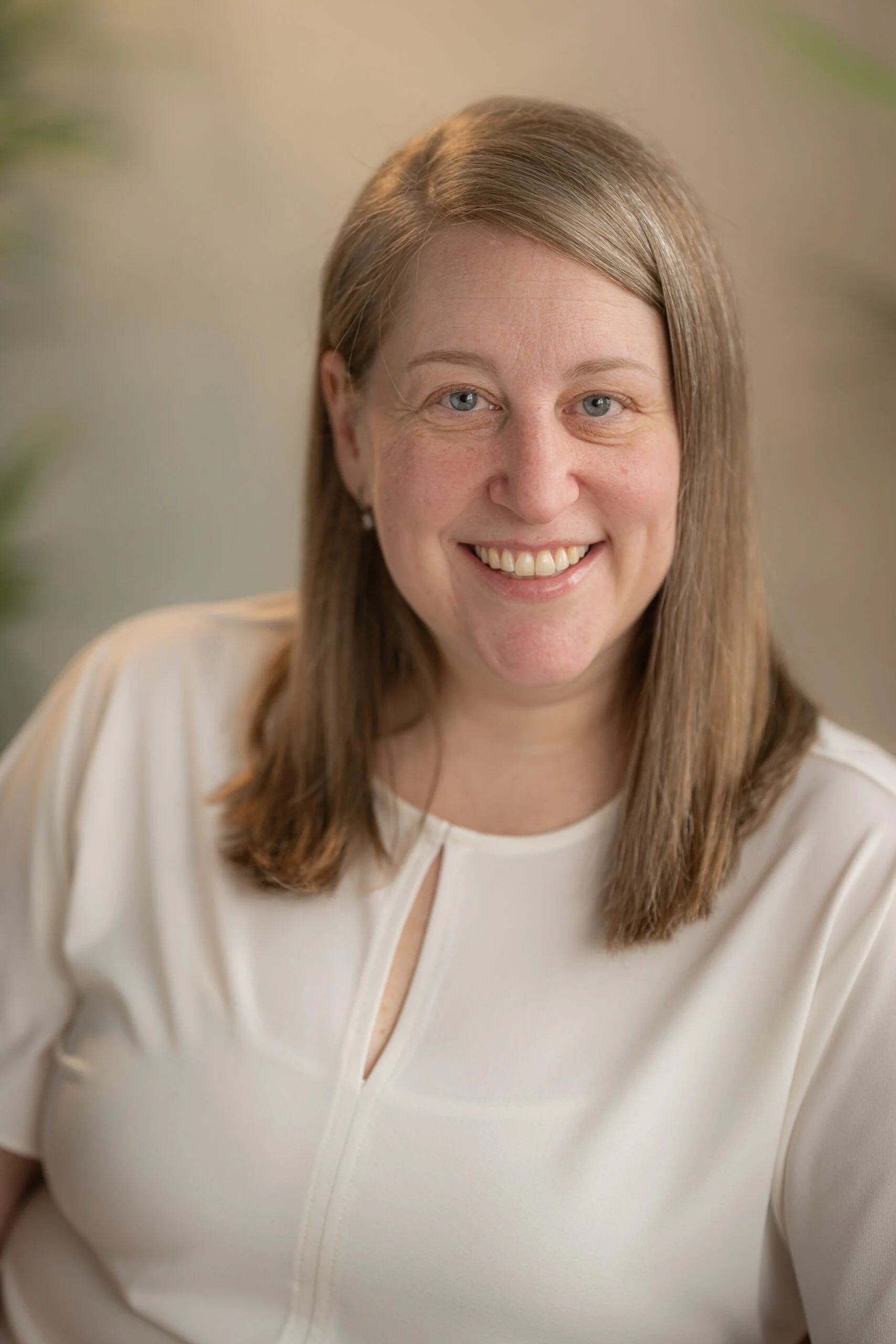
Dr. Laurie Dos Santos is a Clinical Psychologist licensed in DC, MD, VA, NY, and through PSYPACT, and is the founder of Evolvinn Therapy and Consulting. Over the past decade, she has specialized in working with individuals across the lifespan who have dysautonomia—including POTS, chronic fatigue syndrome, and long COVID. What started as a solo practice three and a half years ago has grown into a team of nine psychologists, all focused on providing mental health care to chronically ill populations across the country.
Laurie is particularly known for her POTS support groups and now runs 13 chronic illness support groups through her practice. She uses modalities including CBT, DBT, ACT, and SPACE. Evolve in Therapy and Consulting is a virtual, national practice that works with clients in 43 states.

Meet Destiny - The host of The Chronic Illness Therapist Podcast and a licensed mental health therapist in the states of Georgia and Florida. Destiny offers traditional 50-minute therapy sessions as well as therapy intensives and monthly online workshops for the chronic illness community.
Destiny Davis, LPC CRC, is solely responsible for the content of this article. The views expressed herein may or may not necessarily reflect the opinions of Dr. Laurie Dos Santos.