
"Just Move Differently" Is the Physical Therapy Version of "Just Think Positively"
If you've ever left a physical therapy appointment feeling like you got handed a printout of exercises and sent on your way, this one's for you.
I sat down with Dr. Megan Steele, a doctor of physical therapy and PhD candidate at Azusa Pacific University, where she's researching the connection between our visceral and musculoskeletal systems and how that impacts chronic pain. She also teaches in the DPT program at Mount St. Mary's University, which means she's actively shaping how the next generation of physical therapists think about pain. This conversation got into the science of chronic pain in a way that I think a lot of you have been waiting for — without dismissing the body, without reducing everything to psychology, and without making you feel like you're the problem.
When "Non-Organic" Got Twisted Into "Fake"
One of the first things Megan brought up was something called Waddell signs — a series of tests originally designed to predict who would succeed with low back surgery. The idea was to identify "non-organic" factors, meaning things beyond a structural cause, that might affect outcomes.
Here's where it went sideways. In many clinical settings, those tests got reframed to mean: if you test positive, you're probably exaggerating your symptoms. Malingering. Making it up.
And that's a problem.
Eighty-five percent of people with low back pain don't have an identifiable cause on imaging. That doesn't mean the pain isn't real. It means we haven't figured out how to test for it yet. Megan put it simply: we love to categorize things so they fit a diagnosis code. But biology, physiology, and psychology don't actually fit neatly into boxes.
I've lived this. The pain science world has, in my opinion, gone so far in one direction — "there's no structural cause, therefore this is sensitization" — that it ends up landing in the same place as the dismissive doctors: it's in your head. Just worded more kindly.

The Biopsychosocial Model Isn't a Theory. It's How Bodies Actually Work.
Here's what Megan said that I keep thinking about: "Everything affects everything affects everything."
She visualizes the biopsychosocial model as a pie chart — biology, psychology, and social factors each making up a piece. The question isn't which slice matters. It's which slice is the biggest driver right now, today, in this session. And that can shift, sometimes hour by hour or day by day.
That's what makes treating chronic pain so hard to teach. There's no formula. No if-this-then-that chart. The answer, as Megan says, is always: it depends.
What this means for you as a patient is that a good provider is constantly reassessing. They're not locked into one explanation or one intervention. And critically, they're not blaming you when their initial approach stops working.
What Happened When the Patient's Shoulder Looked Like a Fragile Piece of Plastic
Megan shared a story about a patient who came in after shoulder surgery — young, healthy, otherwise doing well. They made progress for a few weeks, and then hit a wall. When Megan asked him to close his eyes and describe what his shoulder looked like in his mind, he said it felt like a fragile piece of plastic about to break.
That image came directly from his surgeon, who had warned him during recovery that this was a complex surgery and that any wrong move could ruin it. Completely reasonable to say. But what it created was a nervous system on constant high alert around that joint.
This is where a lot of pain science gets it wrong. The older approach — think your way out of pain, tell yourself you're safe, ignore the sensation — is an oversimplification. Megan agrees. And I do too, strongly. You can't just decide your way into a new belief. That's the mental health equivalent of "just move differently."
What Megan did instead was meet that patient's nervous system with both honesty and biology. She explained what she actually knew about tissue healing timelines. At 12 weeks post-surgery, bone has already remodeled. That's not a platitude — it's physiology. And for this particular patient, who happened to work in a medical field, that information was the proof his subconscious needed to loosen its grip.
For other people, the visualization looks different. Sometimes it's imagining heat and redness cooling to blue. Sometimes it's picturing blood flow moving freely through a throbbing area. The specific image matters less than whether it's grounded in something true about what's happening in the body.
Why the Relationship Might Be Doing More Than the Treatment
There was a point in our conversation where Megan mentioned some salient research: when someone is given a pain stimulus while alone, they report it at a certain level. Give them that same stimulus with another person standing nearby — even a stranger — and they report it as lower.
That's not placebo. That's your nervous system doing exactly what it was designed to do. Safety, connection, and trust are physiological experiences, not just emotional ones.
Megan also shared that research comparing different PT approaches — explaining pain neuroscience versus explaining the biology — found similar outcomes across both. The underlying factor? The provider took time to explain. The patient felt heard. The threat detection system came down. And outcomes improved.
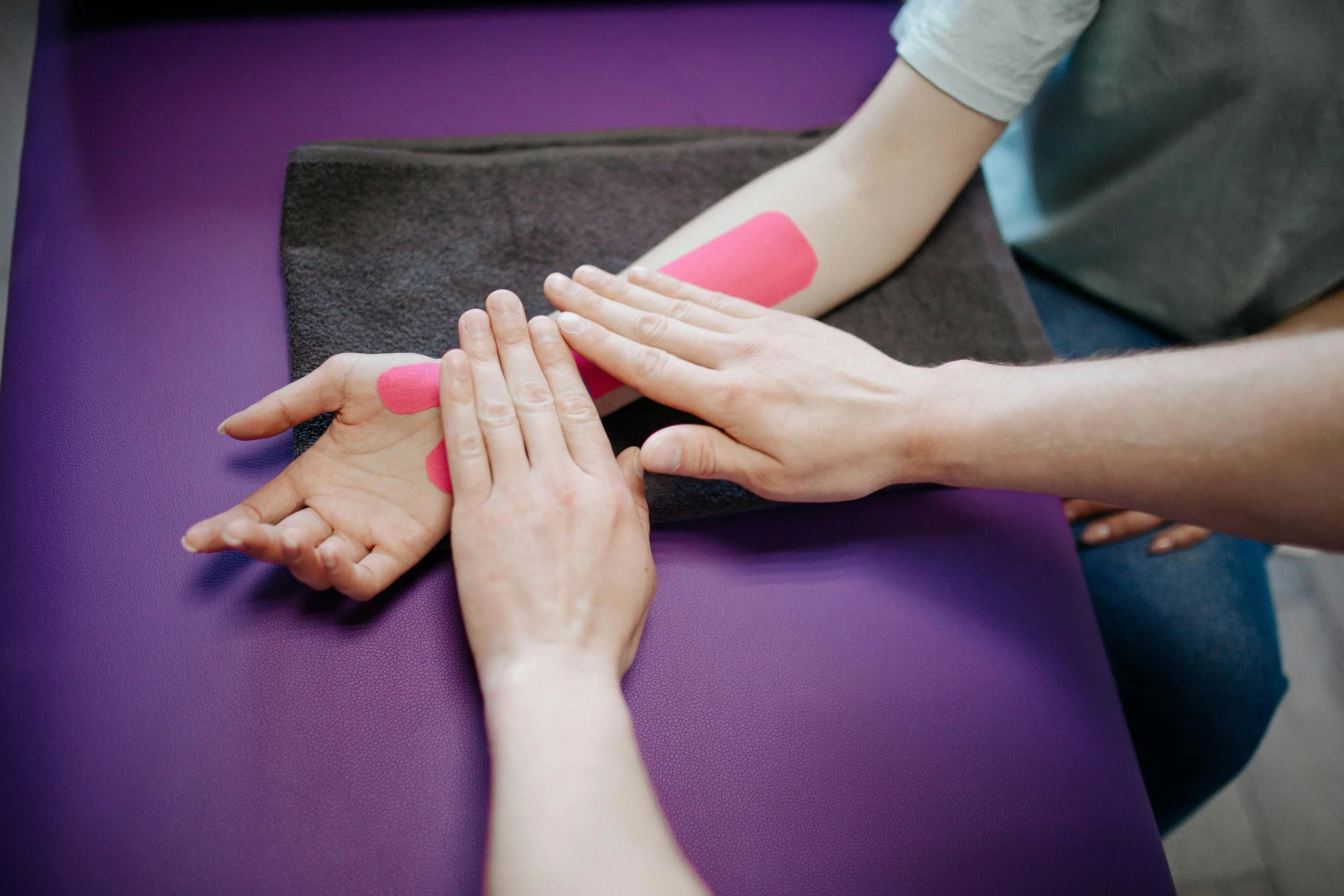
I've experienced this firsthand. When I go to PT and someone works on the knots in my neck, I can feel my nervous system shift. Maybe it's the physical release. Maybe it's the trust built over time. Probably both, and I think that's okay. Megan made a point I really appreciated: she sometimes uses manual therapy not to break up scar tissue or restructure muscles, but to talk to the subconscious, and I mean that in the most neuroscientific way. To give the nervous system proof that it's safe to move.
That proof is what allows everything else — the exercises, the strengthening, the motor control work — to actually land.
What This Means for Finding the Right PT
Megan and her husband built a directory/listing service for physical therapists — think of it as a Psychology Today for PT — because so many people have no idea how to find a provider who takes this approach. The APTA directory misses a lot of solopreneurs doing niche, relationship-based work who've opted out of the traditional system.
Here's what I'd add to that: when you're vetting a physical therapist, listen for how they talk about why your previous treatments didn't work. Do they imply you just weren't doing it right? Or do they ask what your experience was and try to understand what your nervous system was doing at the time?
The providers worth trusting — in PT, in therapy, anywhere — are the ones who can hold complexity. Who don't need to reduce you to a diagnosis code or a maladaptive belief. Who understand that if you could "just move differently," you already would have.
The Takeaway
Chronic pain is not a simple problem. It lives at the intersection of biology, psychology, and the relationships we have with our own bodies and our providers. The science is moving in a direction that validates what so many of us already knew: there are real physiological things happening that we just haven't developed the tools to test for yet. And in the meantime, the relationship you have with your care team might be one of the most underrated parts of your treatment.
If this episode resonated with you, I'd love to hear what came up. And if you've been sitting on the fence about trying PT again after a bad experience — I hope this gives you a framework for knowing what to look for this time.
Disclaimer: Everything we discuss here is just meant to be general education and information. It's not intended as personal mental health or medical advice. If you have any questions related to your unique circumstances, please contact a licensed therapist or medical professional in your state of residence.
Destiny Davis, LPC CRC, is solely responsible for the content of this article. The views expressed herein may or may not necessarily reflect the opinions of the guest.
The content in this blog post comes directly from a real, human interview between Destiny and her guest on The Chronic Illness Therapist Podcast. This written version was formatted using AI. Listen to the full episode to hear the actual conversation.
Listen to my full conversation with Dr. Megan Steele on Ep 126: Why "Just Move Differently" Is the Physical Therapy Version of "Just Think Positively"
-
Episode transcribed with AI and may contain errors that are not representative of the actual word or meaning of the sentence.
Today I am joined by Dr. Megan Steele, a doctor of physical therapy and PhD candidate at Azua Pacific University, where she's researching the connection between our visceral and musculoskeletal systems and how that impacts chronic pain. She also teaches in the DPT program at Mount St. Mary's University, which means she's actively shaping how the next generation of physical therapists think about pain. This conversation really gets into the science of chronic pain. We talk about why biology and psychology can't be separated. What's really happening when pain becomes chronic and why just move differently is the physical therapy equivalent of just think positively. If you've ever felt like your pain wasn't taken seriously or like you were being handed oversimplified answers, then this episode is for you.
The Chronic Illness Therapist Podcast is meant to be a place where people with chronic illnesses can come to feel, heard, seen, and safe. While listening to mental health therapists and other medical professionals talk about the realities of treating difficult conditions, this might be a new concept for you, one in which you never have to worry about someone inferring that it's [00:01:00] all in your head.
We dive deep into the human side of treating complex medical conditions and help you find professionals that leave you feeling hopeful for the future. I hope you love what you learned here, and please consider leaving a review or sharing this podcast with someone you love. This podcast is meant for educational purposes only.
For specific questions related to your unique circumstances, please contact a licensed medical professional in your state of resident.
Destiny Davis LPC CRC: Megan Steele received her doctorate, physical therapy degree from Mount St. Mary's University, where she now serves as a part-time faculty in their doctor of physical therapy program. Dr. Steele went on to pursue her PhD at Azua Pacific University, where she's currently studying the impact of
somato visceral systems on pain chronicity. Prior to becoming a physical therapist, Dr. Steele completed a Master's degree in exercise physiology and worked in an inpatient cardiac rehabilitation program. Dr. Steele has a keen interest in understanding the cognitive and subconscious features of chronic pain and her expertise visceral pain has earned her recognition both locally and nationally. She has presented on these topics at numerous local and national conferences and events, and her insights have helped many individuals suffering from chronic pain. Well, thank you so much for being here. Um, in fact, the reason I,
Megan Steele, PT, DPT, PhD(c): me.
Destiny Davis LPC CRC: yeah, I was just, you know, we were talking offline before, but.
The reason why I wanted to have you on was because I felt like you from the Instagram con content that you've been doing. Um, you do understand the difference between, like [00:02:00] you, you talk about pain, neuroscience, but you're not chalking it all up to it being in someone's head. Like you really balance that approach between, you know, here's what's happening in the body and here's how the fear is lighting up around that.
And here's what you maybe can do and maybe still can't do, and that's not because you're. Scared. It's because you have a, a thing happening in your body. So, um, that is, you know, why I invited you on. I'm really excited to talk about our work, uh, you know, how our work inter, uh, collides. And, um, I'd love to start with just having you kind of talk about maybe your practice and what you have going on these days.
Megan Steele, PT, DPT, PhD(c): Sure. Yeah. Well, every day is different, which I think keeps me. I like to say out of trouble. Um, and so like a day like today, I'm in the clinic and then doing things like this, podcasts and um, Monday I was teaching at Mount St. Mary's. Um, this semester I'm teaching [00:03:00] a orthopedic pathology course to the first years, and then I don't see the.
See them again until the third year when I teach them a pain science course, which is really kind of my bread and butter, my favorite thing to talk about. Um, and then on Thursday afternoons, I go to Azua because I am in the data collection portion of my PhD at the moment, and so I'm there collecting data on participants for my dissertation study.
Destiny Davis LPC CRC: That's awesome. Tell me, um, what is your dissertation on right now?
Megan Steele, PT, DPT, PhD(c): So the umbrella program that I'm in is Rehabilitation and movement Science, and it's a PhD that's designed for working professionals and we're all some form of rehab professionals. So there's, um, athletic trainers. Physical therapists. There's a chiropractor, occupational therapists, who already are working in the field and then are pursuing, um, a PhD in, in rehab and movement science. [00:04:00] there are four different tracks. There's, um, a performance art track. I'm on the pain science track, and so my dissertation specifically is looking at women who have pain during menstruation. And what I'm trying to do is connect the somato visceral system. So like all of our organs and our abdominal cavity and our pelvic cavity cavity also, um, comprise our visceral system connect that to the musculoskeletal system because so many women for so long have suffered from. Dysmenorrhea or pain during menstruation, and we don't know enough about it yet there it's very likely that there are multiple phenotypes of dysmenorrhea, and so some people will benefit from manual physical therapy. Some people benefit more from hormonal birth control. Some people from anti-inflammatories. We don't yet know who falls into which category, so it sort of just to start with. [00:05:00] Anti-inflammatories and hormonal birth control. If that doesn't work for you, then we go to the second line, you know? But it would be really fantastic, in my opinion, to see. Who falls into which category so that we can really target treatment for them so that their nervous system doesn't become sensitized, and then they don't ultimately fall into this chronic pelvic pain category because their nervous system has been trained over the years to become more sensitized and, and, um, send the, the pain signal with less and less stimulus.
Destiny Davis LPC CRC: This is fascinating. I feel blown away already. Like I'm a little bit speechless. I'm a little bit speechless because I feel like. That's so throughout, like as I was kind of explaining before we started recording, the pain science world is very much like there's no structural cause. There's no structural cause.
And so therefore this is now like in your head or, or on a nicer way of putting it, they do talk about sensitization and, and they will say, [00:06:00] you know, like your body has just become conditioned to be fearful of that sensation. And it's like, but. Where did the sensation come from? And if I have fibromyalgia or if I have now what you're describing.
So you know, previously it would be like, yeah, you get hormonal birth control, or I think one other intervention, and then if that doesn't work well then now that's just sensitization, rather than seeing it as like there are other things happening here that our science just hasn't yet caught on to be able to talk about in a physiological way.
And so it gets chalked up to psychological.
Megan Steele, PT, DPT, PhD(c): Yes, and I think Waddell signs are a great example of that. Are you familiar with Waddell signs? So. I learned when I was in PT school is a way to, it's a series of tests that you do for people with low back pain.
Destiny Davis LPC CRC: Okay.
Megan Steele, PT, DPT, PhD(c): the way that it was taught to me, the way that I learned it was you do these tests and if they're positive, then you know [00:07:00] that someone is malingering or. Exaggerating symptoms, it wasn't until I graduated and I started studying pain science that I learned. These were tests to determine who would succeed and who would not with a low back surgery. And so what they were trying to determine was these non-organic. Symptoms or the non-organic reasons why someone has back pain, not, you know, and then it got twisted in the biomedical world of like, well, if it's non-organic, then it's fake, right?
Destiny Davis LPC CRC: So much sense. Yeah.
Megan Steele, PT, DPT, PhD(c): And I think that was such an eye-opening thing for me to realize, wow, this is what I was taught in my, you know, evidence-based doctor of physical therapy program. And turns out you know, it's. One of those things that we just don't know why everyone has back pain. I think it's 85% of people [00:08:00] with low back pain don't have an identifiable cause, so we can't see it on a scan or on an image. that doesn't mean it's not real. That doesn't mean
Destiny Davis LPC CRC: Yeah.
Megan Steele, PT, DPT, PhD(c): in your head. That just means we haven't figured out a way to test for it You know, we, we just don't
Destiny Davis LPC CRC: Yeah.
Megan Steele, PT, DPT, PhD(c): And so I think we love to simplify things and categorize them and put them into boxes so that it fits an ICD nine diagnosis code, excuse me, ICD 10.
Destiny Davis LPC CRC: Yeah.
Megan Steele, PT, DPT, PhD(c): And it really doesn't work well for the way that biology and physiology and psychology all interact.
Destiny Davis LPC CRC: Yeah. This is so, it's like I am so glad that the science is moving in this direction. I think, um, as much as it's been so disastrous, um, I think long COVID has also brought in a lot, a lot more research for things like me, ccf, s and even a little bit of like chronic [00:09:00] Lyme, um, little bit. And, uh. Even with like me CCFs, there was a study I just read recently, really looking at some of the, the physiological, um, destruction that happens, uh, on a cellular level.
And now we understand things like PEM and um, post exertional malaise and, and how that's a physiological reaction. It's, it's actually something happening in the body that's creating and causing damage. Um. And is not just like you're just a little tired from working out or doing the dishes. Yeah.
Megan Steele, PT, DPT, PhD(c): Right, and that's where I feel like physiotherapy comes in. You know, sometimes people say to me like, well, you know, am I allowed to talk to people about their beliefs or their thoughts or their feelings or their social situation? And I say, treat physiology. these things create a physiological reaction. That [00:10:00] is our domain, that is our scope of practice. That is where we live. it's just, you know, I let, I'm hopeful and I like that you say that the science is going this way, and I mean, it really depends on who you talk to as to whether or not you, you feel the science is going this way.
Destiny Davis LPC CRC: No,
Megan Steele, PT, DPT, PhD(c): people that are saying, this is woo woo, this is nonsense.
This is, um. You know, I think a lot of the information that came out about Polyvagal theory recently kind of people say, I knew it, I told you. So, all of that's a bunch of nonsense. And um, you know, I'm either a neck down therapist or a neck up therapist and never the twain she'll meet. And,
Destiny Davis LPC CRC: Right.
Megan Steele, PT, DPT, PhD(c): you know, it's just feels like an uphill battle sometimes.
Destiny Davis LPC CRC: Yeah, well, I'm thinking of what is it? There was the me ccf s research that I was just looking at the other day was like really about [00:11:00] how, uh, the da, or maybe it was about the damage that happens during PEM and at a, at a mitochondrial level, the inflammation, the mi, like the mitochondria. And that is actually, I think the research that.
Is so important. Um, both sides are that the physi, the mental health, of course I'm a therapist. I'm 100% like that is so important. And, and then the pain science piece of like how, how the way that we think about things and the fear and, and, and you and I will talk a little bit more about that can actually exacerbate pain.
Um, and even further, you know, disability and, and I'll, I'll let you kind of articulate that, that more, but. To that point as we're talking this entire conversation, what I think will be important to have threaded through is that there are real physiological things happening in the body that we just have not been able to test for yet.
And I do think there's a lot of really promising research that's coming out about that. Um, and I hope that it continues to, to gain notoriety alongside the. [00:12:00] Mental, kind of cognitive and, and somatic experiences, um, that also deserve their, their research and understanding of how the two all connect.
Megan Steele, PT, DPT, PhD(c): Yeah, I completely agree, and it feels like, you know. The top down research and the bottom up research, you know, eventually we'll meet or you know, we'll kind of come to similar conclusions or working together. I feel like that's where the innovation lies is where these two specialties kind of meet and intersect and overlap.
Destiny Davis LPC CRC: Yeah, exactly. Tell me a little bit about, you know, you. I'm trying to think of a good starting point. 'cause I've watched so many of your, of your snippets on Instagram, and you do a really, really good job at explaining this. Like I was saying earlier, even when you're not explicitly saying, this is the body part and this is the emotional or the somatic part, or the.
[00:13:00] You really do really just meld it together in how you talk. So I think the example I I'm remembering is, you know, you had a patient with a shoulder issue and they felt like their shoulder was fragile, uh, of some sort. He had a, a kind of very specific phrase he used.
Megan Steele, PT, DPT, PhD(c): Mm-hmm. A fragile piece of plastic that's about to break
Destiny Davis LPC CRC: Yeah. Yeah. Right.
Megan Steele, PT, DPT, PhD(c): in my brain.
Destiny Davis LPC CRC: Yeah. And I was like, the way that you talked about it is you didn't just, you didn't just come at it of like, well, that's not true, so therefore let's keep moving your body. And you also didn't say like that this was a non-issue. Your shoulders fine. And so let's also talk about pain sensitization, like you explained it really well.
So would you like to recap for me.
Megan Steele, PT, DPT, PhD(c): Sure. Yeah. So this was a patient and I, that post was really about the fact that part of what makes. Practicing within a bio-psychosocial model. Challenging is the fact that it's a moving target. so for this person, he came [00:14:00] in eight weeks in a sling, just a stiff shoulder. Just a really stiff joint young guy. You know, we talked about. Dating in Los Angeles. Uh, you know, I mean, just like,
Destiny Davis LPC CRC: Yeah.
Megan Steele, PT, DPT, PhD(c): so grateful to not be in that situation. you know, it was a very, you know, pretty typical type of presentation. He's young, he's healthy, he's strong, otherwise he's just got a stiff joint. And so we worked on. body. We worked on the biology for a few weeks because this is a really stiff joint, and then he started to kind of have a plateau and I said, you know, this is a little bit different.
I'm noticing we're not making as much progress as we were before. I'm feeling a little bit of resistance from you when I'm working on your biology, and I said, what does it look like in your mind's eye if you were to just kind of close your eyes and go into your shoulder? And he said, it looks like a fragile piece of plastic that's about to [00:15:00] break.
And part of that came from his surgeon who said, you know, this is a very complex surgery and it was very complicated, and if you move, you're gonna just mess it up, you know? So there was a lot of fear created, rightfully so. You don't wanna mess that surgery up and have to have a redo. And so he had a really. Unbeknownst to me, protective posture around that shoulder. Once it got to a certain point, it got to a certain point where his threat detection system said, no dice, right? And he said, I am not gonna go that far. And so I said, wow. Well that's really interesting to me. I didn't quite realize we were talking about this terrible date that you had been on.
I thought we were, you know, feeling good. Um. so we took a minute and we said, let's do some visualization. Let's address that because that's the primary issue in this moment. [00:16:00] It's no longer a biological issue. And let's, let's start treating that and let's start working on that before we go back to the biology or before we start talking about other things.
Destiny Davis LPC CRC: What is the visualization that you would lead or that you did lead him into? I'm curious.
Megan Steele, PT, DPT, PhD(c): Um, that's a great question. Let me see if I can think about that.
Destiny Davis LPC CRC: Because my thinking is like when we, you know, especially as a therapist, without the understanding of the, the ability to work with, with the body, right? From a, a physio, from a lens of, you know, I can't do pt. I can't tell someone about their muscles or what's happening or not happening. Um, and I kind of feel like a visualization that would get somebody out of that fear response would be ineffective with.
Out that under, like it has to be based in truth. It has to be based in what you know about the body. It can't be just, you know, think your way out of [00:17:00] pain. It's like, and that's where like I really dislike some of the, especially the older pain science stuff, a lot of people will bring up like Dr. John Sarno's work and like stuff like that.
And I just, it has this language of, there's nothing wrong with you, this is all just learning how to. Force yourself to think you're safe. And
Megan Steele, PT, DPT, PhD(c): Yeah.
Destiny Davis LPC CRC: just not gonna,
Megan Steele, PT, DPT, PhD(c): it.
Destiny Davis LPC CRC: yeah.
Megan Steele, PT, DPT, PhD(c): Yeah. And I really don't, I agree with you. I, I think that's an oversimplification and I, I had someone in my comments once who was an MD who worked with, um, Sarno and then also Alan Gordon,
Destiny Davis LPC CRC: yeah,
Megan Steele, PT, DPT, PhD(c): is great.
Destiny Davis LPC CRC: yeah.
Megan Steele, PT, DPT, PhD(c): I think that's also an oversimplification. The
Destiny Davis LPC CRC: Yeah.
Megan Steele, PT, DPT, PhD(c): model is an oversimplification. Think your way out of pain is an oversimplification and, I don't know if you have to know exactly the biology, but. Because I also teach pathology. I talked about tissue healing times. We [00:18:00] know that soft tissue heals in six to eight weeks. We know that bone heals in eight to 10 weeks. At this point, he was 12 weeks out from surgery, so I know that that bone has grown around that. And so we talked about how that happens. And bone has the ability to remodel better than any other type of tissue in rp. If any of my students are listening to this, that might be on your midterm next week. Um, and so, you know, we, we talk about how that is most likely the truth, and then
Destiny Davis LPC CRC: Yeah.
Megan Steele, PT, DPT, PhD(c): think about what your most recent x-ray looked like. And we can even bring that in as a visual. and so sometimes I'll, I'll talk about the specific biology and, and that's great for some people. This. Kid actually happened to be in the medical field and so he really liked to talk about things like that. But for some people we're just talking about, [00:19:00] you know, it looks really red and hot in there.
And so are there things that you can do visually to think cooling it down and getting it to more of a blue color?
Destiny Davis LPC CRC: Yeah.
Megan Steele, PT, DPT, PhD(c): are if, is it expanding out and really throbbing? Can you get some kind of a visualization of. Um, allowing that blood flow to move through there, things like that, that, it doesn't need to be super, super specific for everyone. But, um, I do think that having that kind of physiology, biology background can be helpful for some patients.
Destiny Davis LPC CRC: Right. I mean, inflammation, I think that obviously inflammation and redness is something that even the majority of, you know, non-science people know. So that's kind of an easy one, but. Even still, I could imagine if I knew nothing about the body, being a little bit scared as a therapist to go there and to be like, you know, or to say something wrong if I don't know what the underlying biological.
Thing is that's [00:20:00] happening. So like, whether that's inflammation or, you know, maybe their tissue is, maybe this was like two or three weeks in and it's, you know, um, it is a little bit, uh, more fragile at that time and hasn't gotten better quite yet. So I think that's where our work just is. It's funny 'cause like I, um, Jason, he's been on this podcast a few times and he's speaking at the conference.
He's a pt and he, I think always, uh, kind of like. Dismisses his work, to be honest. Like, um, he, he kind of, he loves the work that we do as therapists, like the mental health side of things. And I'm like, I think that's just because you know so much about your work, you're maybe bored with it or something because um, it's, it feels like common knowledge to you or it feels like.
Megan Steele, PT, DPT, PhD(c): Right.
Destiny Davis LPC CRC: is your base level of understanding, but for someone in a different field or just, you know, or a patient who's not in the field at all, like that's can be really life changing in addition to, um, all the other stuff that we're working on.
Megan Steele, PT, DPT, PhD(c): Yeah, definitely. I mean, we're all so biased to our own knowledge base [00:21:00] that it's kind of hard to. Think like, wait, what do other people know versus what do I know? You know, it's
Destiny Davis LPC CRC: Yeah. Yeah.
Megan Steele, PT, DPT, PhD(c): where, where am I on the spectrum here? Excuse me.
Destiny Davis LPC CRC: Definitely,
Megan Steele, PT, DPT, PhD(c): a lot of our research in physical therapy for a while went to explaining pain and this was kind of like, oh my gosh, we. Have been missing this huge piece for so long and we've been explaining the biology to people this whole time. Whoops. You know, what
Destiny Davis LPC CRC: yeah.
Megan Steele, PT, DPT, PhD(c): And I talk about this in my classes, you know, explain pain from Lorimer Mosley has been around uh, in 2015. He wrote, 20 years on of explaining pain.
Destiny Davis LPC CRC: Yeah.
Megan Steele, PT, DPT, PhD(c): at that point. prevalence was 20% of the population had chronic pain.
Then pain prevalence is 20% of the population now. [00:22:00] So it wasn't really this panacea that we thought it
Destiny Davis LPC CRC: yeah.
Megan Steele, PT, DPT, PhD(c): And then a lot of research came out that said, well actually, neuroscience education needs to be part of your treatment plan. there was some interesting research that came out that showed, actually, even still, if you are explaining the biology and physiology to patients, they have a very similar outcome to when you're explaining pain to them. And the underlying thought there was. It's the relationship. It's the fact that you took the time to communicate to me what was going on. I trust you. My threat detection system has come down. And what do you know? My outcomes are better.
Destiny Davis LPC CRC: Exactly. There's a, um, I used to see a particular practitioner and they did, I don't, it's been a long time since I've done anything like that, but they [00:23:00] used to, um, take your heart rate your HRV when you came in and then do a like for baseline, but then retake it in 12 weeks. But I think it was interesting, like.
If I've been seeing you for 12 weeks and we've built a relationship, we do know that trust feels safe and safety brings your heart rate variability a little bit more. Um, uh, even. And so I'm like, we still don't know, like, was it this 12 weeks of this clinician doing something physically to me, or was it just this relationship that we've built and I feel safe coming here and I like coming here and, yeah.
Megan Steele, PT, DPT, PhD(c): right. Which is one of the reasons why it's so difficult to do research in physical therapy, do research in manual therapy. Um, I'm using a heart rate variability test for my study, but. You know, it's, it's really difficult to come to any kind of conclusion about it short term or long term because we just don't know enough yet.
We [00:24:00] haven't established norms and, um, there are a lot of unknowns. But I think more we, I mean, we don't have a better way to study someone's nervous system. So I think this is,
Destiny Davis LPC CRC: Yeah.
Megan Steele, PT, DPT, PhD(c): this seems like the best option at this point. And, and if we just continue to. Learn more about it. I think, um, over the next few years, maybe decade, get a lot better information.
Destiny Davis LPC CRC: Yeah. Yeah, I agree. I think we will. 'cause I think our, like I was saying, I think our research just continues to keep expanding despite, you know, um, our administration's every effort to make that not happen, but, um. Regardless. Again, I'm very hopeful about a lot of the research, the physiological side of things that's coming out.
Um, and also like, yeah, I know HRV is not, it's not the end all be all, but it's a really useful tool and if their HRV is improving while working with you through a specific, you know, uh, timeframe, [00:25:00] then. I mean, at the end of the day, and this I think comes down to some of the work that I do on that kind of lifestyle management piece, is how do we kind of live a life that is meaningful and joyful and, um, uh, is the life that you wanna live, even if you're still in pain?
Um, and that, so I think in that in and of itself is going to help that HRV, if we know that trust and communal being communal and, um, improves your HRV then. It all kind. That's how, you know, like you said, it is a moving target on, on what we're we're targeting, but it also always works together. So it's almost like moving target, but still within the same bullseye.
Like it's, it's within the same circle. It's not 10 different circles that you're jumping out of, which I think is maybe how it can feel when you're first learning this stuff.
Megan Steele, PT, DPT, PhD(c): Yes.
Destiny Davis LPC CRC: But the more and more you kind of, you do this. To me, that's the visualization that I, I have as like one circle and yeah, it's moving [00:26:00] around in this one circle, but it's not, you know, all over the place.
Megan Steele, PT, DPT, PhD(c): Mm-hmm. Mm-hmm. Yeah. I kind of visualize it as three pieces of a pie, like a pie chart, the bio cycle and the social, and
Destiny Davis LPC CRC: Yeah.
Megan Steele, PT, DPT, PhD(c): biggest piece today? What are you coming in and talking to me about? Because do, they come in and they say. So everything affects everything. Affects everything.
Destiny Davis LPC CRC: Yes.
Megan Steele, PT, DPT, PhD(c): You know, how, how do I approach this? And it, it can be very overwhelming and it is very difficult to teach people how to treat someone in chronic pain because it's never the same. I can't give you a formula. I can't give you an if this, then that type of chart that you go through. The answer is always, it depends, which in physical therapy school, luckily we're used to hearing that quite
Destiny Davis LPC CRC: Yeah, that's.
Megan Steele, PT, DPT, PhD(c): and so it helps. [00:27:00] But it is a lot. It's a lot to be thinking about. It's a lot to be tracking. It's a lot to understanding. I think my goal for my profession is that we start to. Take a step back and recognize that this person's been in pain for 10 years. Their tissue has healed. At this point, if, it's not somebody that's chronically something, if it's not
Destiny Davis LPC CRC: Yeah.
Megan Steele, PT, DPT, PhD(c): on chronic exacerbation, then we need to be looking at different pieces of the pie. You know, I, I think it's really hard for. New clinicians especially to say, okay, someone has had pain for 10 years. It's, you know, the, the falling hands. Where's the pain everywhere? Right? Where do I even start? How do I even [00:28:00] start to piece this puzzle together? And it is, it's very challenging for me. I, I tell them that I don't have a hundred percent success rate, and cases are challenging and they do require. A multidisciplinary approach. And so it is great to be able to talk to other types of providers and you know, especially when you're talking about the social piece and that connection and my lived experience with this condition, because that as physical therapist, is definitely a piece that we don't often address, don't often feel comfortable addressing. you
Destiny Davis LPC CRC: Yeah.
Megan Steele, PT, DPT, PhD(c): haven't had enough education in most cases to address, so it's really great to be able to partner with someone that you say, okay, primarily managing this piece of the pie. And, and at least we know that's covered. And I'm gonna check in on it, but [00:29:00] it's not my whole
Destiny Davis LPC CRC: Yeah.
Megan Steele, PT, DPT, PhD(c): to hold.
Destiny Davis LPC CRC: Yeah. I do think that's probably the piece where people get really scared about. Whether it's a therapist trying to do any part, any kind of breath work or body-based work in session, or a physical therapist trying to do some of the mental load of, you know, the, by the psychosocial part of it. Um, it does really, really help when you know that, that your, your client or your patient is working with another practitioner.
'cause you're like, I can say this one snippet and if it lands with you, great. And then you take that back. You continue working on it with the person who, who can spend the hour with you on that one thing. Um, yeah.
Megan Steele, PT, DPT, PhD(c): Yeah, definitely. It's interesting. When I first graduated from PT school, I was very orthopedic based because I spent the better part of nine years studying. physiology and biology [00:30:00] and you know, you have a certain level of success rate. Typically in physical therapy, you're at about 70% success rate when you treat biomedical model, which is, you know, a good, a good average, 70%. But you know, there are those of us that are a little more type A that are like, but you know, what do you mean a c? And so that's when I started pursuing. Other types of manual treatment. And I went to, uh, two years of, osteopathic coursework in the somato visceral system because, know, we're taught that we're operating under a connected system. And you're telling me that on the anterior side, from collarbone to pubic synthesis, that's not part of this connected system. And, you know, physical therapy school really we get about a week about a. Um, somato visceral system in PT school and cadaver lab. [00:31:00] So it's not a lot, and I started to have a little bit more of a success rate with who had a somato visceral component to their musculoskeletal presentation. And so then I think, okay, great.
I'm having a little bit more success. Things are going in the right direction. And then there's still that percentage that are not getting better. And so you're saying what else is going on? What else is out there? And I was lucky enough to have a mentor from physical therapy school who treated my chronic pain when I was in PT school. I had a fracture of my lower leg I was a senior in undergrad. And I had a a metal rod that was. Put inside my bone in the bone marrow area and some screws, and had pain for six years after that. I couldn't run. there were certain things I just couldn't stand for [00:32:00] long periods of time. And I went to probably four or five physical therapists and I got pretty much the same thing from all of them until I went and saw. This person who asked me different questions, asked me a lot about what I had done previously, and said, great, that's great news. We don't have to kind of go down those roads again. And, um, that's when I said, I wanna find out what this guy's doing. You know, I, need to get a little bit more information about this.
And so I made it a point to. Get one of my rotations at his clinic before I graduated and I, I just had to figure out what he was doing and how he was doing it differently. And he happened to be in his PhD program at the time and was learning more about pain science and has continued to study and research and [00:33:00] publish about pain science and, yeah, that's kind of how I then started to shift my practice and my understanding. My knowledge. And what's interesting is when I was really into the somato visceral work, I got a lot of referrals from, you know, gynecologists and gastroenterologists and, urologists and, you know, um, doctors who treat somato visceral issues. And now that I'm more of a pain science physical therapist, I guess you could say, which there really isn't as. specialty in our field yet of my referrals come from talk therapist.
Destiny Davis LPC CRC: Yeah, we do like to know when a, a medical professional can, like a body-based professional can. Is not scared of talking about the emotional, because even though we were just talking about, you know, working [00:34:00] collaboratively with one another, so you don't have to do a whole therapy session with these clients.
If I'm working on something from a mental emotional standpoint, and then you go into your PT and they're like, this is just blah, blah, blah, blah. You just need to, you just need to do your exercises, okay? And then we're gonna be good.
Megan Steele, PT, DPT, PhD(c): Mm-hmm. Mm-hmm.
Destiny Davis LPC CRC: I need to know that that's not the experience because that my client's gonna get, because then you're gonna really.
Undo a lot of our work.
Megan Steele, PT, DPT, PhD(c): Right? Yes. And that's a really hard thing. Even like I say, within our profession, I worked at a group practice where I had somebody that had 10 years of pain. It was a work comp injury. I really was kind of going down this pain science route with her and she ended up on someone else's schedule one day and he did a complete re-evaluation on her that was very biomedical I feel like completely undid so much of the work that we had done.
Destiny Davis LPC CRC: Yeah.
Megan Steele, PT, DPT, PhD(c): [00:35:00] And yeah, it, it is still a problem in our profession. I'm sure like your profession, there are different schools of thought that are sometimes contradictory
Destiny Davis LPC CRC: Mm-hmm.
Megan Steele, PT, DPT, PhD(c): and it, it becomes very challenging.
Destiny Davis LPC CRC: It does, it does. Um, how do you start to differentiate, like, you know, we did kind of talk a little bit about, you know, okay, if somebody's been injured for 10 years and we do know the tissue has healed, but how do you also maybe rule out or, or differentiate between, you know, chronic inflammation that is causing the pain or like.
Um, for example, we now know that this is something I, I have a lot of clients struggling with it now that we never used to check for, like pelvic congestion,
Megan Steele, PT, DPT, PhD(c): Mm.
Destiny Davis LPC CRC: venous congestion in your pelvis. And that's can be for some people, very painful. Um, and so. These are conditions where, again, like no one would've checked [00:36:00] that.
So it might've been 10 years with nothing wrong, but structurally. But maybe there, there is. And so people will talk about, well, you have to do a proper medical exam. But we're also lacking a lot in the ME proper quote, like you go do a physical with your P. That's not a physical at your PCP. That's not what we're talking about here.
I mean, how do you start to differentiate some of that?
Megan Steele, PT, DPT, PhD(c): Yeah, and I think that is part of the challenge. I think a big starting point for me is a thorough, thorough subjective exam.
Destiny Davis LPC CRC: Okay.
Megan Steele, PT, DPT, PhD(c): I'm lucky in the situation that I am in, where I am one-on-one with people for an hour. A lot of times for the initial evaluation, I book 90 minutes because I really wanna know all of it, like the whole
Destiny Davis LPC CRC: Yeah.
Megan Steele, PT, DPT, PhD(c): How this began, what has happened, you know, throughout, I, you know, sometimes people cringe when they see somebody coming in with a three ring binder of their medical history, and I'm just like, [00:37:00] yes,
Destiny Davis LPC CRC: Yeah.
Megan Steele, PT, DPT, PhD(c): It's in a, you know, there's files. There are tabs. I love it. You know,
Destiny Davis LPC CRC: Yeah.
Megan Steele, PT, DPT, PhD(c): so I, I think it has to, has to start with a very thorough subjectivism. And then I get a lot of information when I put my hands on someone. you, you can feel like a boggy joint. We're taught how to feel like end feels, and we're taught how to feel, um, like normal ligament laxity versus abnormal, kind of like you were saying in a hypermobile individual.
Destiny Davis LPC CRC: Yeah.
Megan Steele, PT, DPT, PhD(c): And, um, so my, my manual is a huge part of my physical, my physical therapy treatment, which. Unfortunately, a lot of physical therapists, believe it or not, are getting away from, part of the reason that's happening is because the research has really shifted more towards motor control, biomechanics, strength training, um, [00:38:00] neuromuscular reeducation, all of those types of things. my reasoning for, and so, you know, then they say, well, manual therapy just doesn't really do anything.
Right. We're not really. You're not breaking up scar tissue, you're not muscles, you're not, you know, people were claiming to do previously in with manual therapy. And I say that's not why I'm doing manual therapy.
Destiny Davis LPC CRC: Yeah.
Megan Steele, PT, DPT, PhD(c): doing manual therapy sometimes to create a trust relationship with my patient.
Destiny Davis LPC CRC: Yeah.
Megan Steele, PT, DPT, PhD(c): doing manual therapy to help their nervous system get into a better state so that healing can happen. And I'm doing, yeah. And I'm doing manual therapy to help some of this protective mechanism that's going on in their body so that they can move in a way that motor control person wants them to move.
You know, this ideal
Destiny Davis LPC CRC: Yeah,
Megan Steele, PT, DPT, PhD(c): And [00:39:00] I
Destiny Davis LPC CRC: that's right.
Megan Steele, PT, DPT, PhD(c): I in physical therapy, we just kind of, like you say, sometimes boil it down to like, well, you just need to move better. Well, you just need to get stronger. Well, you just need to stretch. You just need to strengthen. And my thought is if it was just that they would have done that already.
Destiny Davis LPC CRC: Exactly.
Megan Steele, PT, DPT, PhD(c): And
Destiny Davis LPC CRC: Yeah.
Megan Steele, PT, DPT, PhD(c): is it about their system that's not allowing that movement? I
Destiny Davis LPC CRC: Yeah.
Megan Steele, PT, DPT, PhD(c): what I'm asking myself is. the fear here? Where is this person detecting a threat so that they're not doing that movement or they're not activating that muscle, or they're not stabilizing in a way that you would expect?
Destiny Davis LPC CRC: Yeah. Yeah. I mean, it may, my brain does tend to go back into the, the bio of it all because maybe that's just, I. When you live with chronic pain, you do, you do, you do tend to want a biological [00:40:00] reason. Um, and so I will admit, I do still go there. 'cause even as you were saying, like. You know, as someone, I'm thinking when my own PT often starts at my neck and gets some knots out of my neck, like, and I do feel my nervous system relaxed.
Like I might come in a little bit on high alert, I might come in a little bit shaky, almost like I had coffee, even though I don't drink coffee anymore. Um, and as soon as that happens, you know, again, maybe. Maybe it was just the trust of somebody putting their hands on me. Maybe it was the knots that were actually, I mean, they're there when I walk in and they're not there when I walk out.
So I just think, you know, what do we need? Do we need more physiological understanding of what's happening there? For science to be like, this is legit. Um, that this is doing something. I just think there's, there's always a physiological, even if, even if it's, if it's reducing stress through trust, there has to be some kind of chemical cascade, higher oxytocin or, [00:41:00] uh, something like that.
Am I, tell me if I'm off base on any of that.
Megan Steele, PT, DPT, PhD(c): Yeah, no, you're absolutely right. And they've even done studies where they give people a pain stimulus while they're in an MRI and they see, you know, light up, somatosensory lights up, and all of that, and they report their pain at a certain level. Okay. And then they have someone stand next to them, even if it's someone they don't know, even if it's someone they don't have a relationship with, they give them that pain stimulus and they report it as lower. So that is a part of it. And sometimes I tell people that pain is a learned response, which can be a hard thing to say to someone. And I really talk about how. I really talk about the type of learning. When I give that explanation and I say, I'm talking about associative learning, I'm talking about the learning that happens when Pavlov rang the bell and gave [00:42:00] the dogs the food.
And so they learned that that bell meant food and you learned that moving in that certain way meant danger.
Destiny Davis LPC CRC: Yeah.
Megan Steele, PT, DPT, PhD(c): you know, that May was 20 years ago. That was maybe 30 years ago. Maybe you don't remember that. But there was a, a physiological component to this at one point. Maybe that's not the driver currently, but you also learn this physical therapist is safe.
They make me feel good. I have an expectation that I'm gonna have some
Destiny Davis LPC CRC: Yeah.
Megan Steele, PT, DPT, PhD(c): JI work
Destiny Davis LPC CRC: Yeah.
Megan Steele, PT, DPT, PhD(c): neck.
Destiny Davis LPC CRC: Yeah.
Megan Steele, PT, DPT, PhD(c): and so all of that gets into our nervous system and, and we take that with us and we say, oh, I know this is gonna feel great. I'm gonna walk outta here without knots and I'll feel good for, you know, whatever that period of time is.
Destiny Davis LPC CRC: Yeah. Yeah, I get that there's. I think there's the learned component [00:43:00] mixed with just the component of feeling safer when someone's next to you or you know, that that inherently just simply does something physiological to you. But the phys, the physiology of it wouldn't be enough though, um, to like sustain a, a calm state or to, that's where the, I think the, um, belief system can come in.
Like, but beliefs are, are formed not from. Some, I decided to believe this today. Beliefs are also a learned behavior. They're also something that is ingrained in you time, after time, after time. A lot of times unconscious and of no fault of anyone's. It's just the society you live in will form and shape your beliefs.
So I, I am a big fan of the, of uncovering kind of maladaptive beliefs. Just as long as we are not using that in a way of like. Again, oh, well your, you know, your labs are fine. So you just have this belief now that you're in danger and you're not in danger, and it's like,
Megan Steele, PT, DPT, PhD(c): [00:44:00] right.
Destiny Davis LPC CRC: that doesn't feel helpful when, again, it takes a very long time to get proper diagnoses.
And, um, there could be something structural or, or just, um, like, again, inflammation or, um, I'm thinking of like the ve the p, the, um. Pelvic congestion kind of syndromes, things like that, that just are physical, that are just not gonna be caught on on our average tests.
Megan Steele, PT, DPT, PhD(c): Right. I mean, I feel like just believe differently is the mental health equivalent of just move differently. You
Destiny Davis LPC CRC: Yeah, exactly.
Megan Steele, PT, DPT, PhD(c): uh, if I could, I would, I would
Destiny Davis LPC CRC: Yeah.
Megan Steele, PT, DPT, PhD(c): And you know, I've been presented with enough evidence that's, that shaped my belief system. Like you say, that I've learned. this equals that.
And so I'm not just gonna overnight decide like, you know what? You're right. You know?
Destiny Davis LPC CRC: Right. Yeah,
Megan Steele, PT, DPT, PhD(c): gonna change my whole belief system. Thank you so much. If only
Destiny Davis LPC CRC: yeah,
Megan Steele, PT, DPT, PhD(c): had just said that to me.[00:45:00]
Destiny Davis LPC CRC: exactly. Yeah. We really need that repetition and also to trust the information we're being told, which is why I think that relationship is so important too. Um.
Megan Steele, PT, DPT, PhD(c): And I also feel like the subconscious mind needs proof.
Destiny Davis LPC CRC: Yes.
Megan Steele, PT, DPT, PhD(c): if you tell me something and my experience is the complete opposite, you know, I, I just can't, can't grab onto that. I can't integrate that into my. Nervous system,
Destiny Davis LPC CRC: Yeah.
Megan Steele, PT, DPT, PhD(c): if you tell me that I see it, I feel it. So now I have some proof the opposite direction. I think that's when really people can kind of grab hold and, and I say, kind of grab that rung of the ladder and start to pull yourself
Destiny Davis LPC CRC: Yeah,
Megan Steele, PT, DPT, PhD(c): out.
Destiny Davis LPC CRC: yeah, yeah. And for some of us, um. From my own training as a therapist. I think what I bring to the table in this [00:46:00] conversation is that deeper understanding of personality types and the difference that you know. Somebody might need, like my husband, he needs information once, he just needs to hear it once and like if it makes sense, he's good.
Um, you know, and of course makes sense. We all have a different way in which we make sense of the world. So,
Megan Steele, PT, DPT, PhD(c): Sure.
Destiny Davis LPC CRC: you know, in his, in what he trusts and believes that the sources of information that he, you know, believes and trusts in, he needs to hear it. Once, even when I believe in trust in something, I still need to hear it several times before it really feels ingrained.
Um. And so in therapy and, and in physical therapy too, I think it's really important that we recognize that as legitimate, right? That there's just simply different personality types, different brain types, different, um, way of ways of learning. We understand pe some people. You know, um, learn better through hearing.
And some people learn better through writing and some people, you know, learn, learn better in different ways. But I [00:47:00] think we somehow have missed the mark when it comes to, some people need more repetition than others. Like we, we think that that person is, you know, just being stubborn or they're being dramatic, or whatever it is, rather than just seeing it as this kind of learning difference in your brain.
Megan Steele, PT, DPT, PhD(c): Definitely. And I talk to my students. We do a, an exercise where they teach pain science to different types of patients. So you teach it to an 8-year-old, you teach it to a 40-year-old computer programmer. teach it to a physician, you, you know, an 80-year-old woman, someone with English as a second language.
And so that's a really good point that we think about the different types of education that those people might need. But we don't necessarily always think about the different, um, personality types within the, you know, we're really kind
Destiny Davis LPC CRC: Yeah.
Megan Steele, PT, DPT, PhD(c): well, you're a 40-year-old computer programmer, you like a lot of detail, [00:48:00] right?
Destiny Davis LPC CRC: Right.
Megan Steele, PT, DPT, PhD(c): always the case,
Destiny Davis LPC CRC: Yeah.
Megan Steele, PT, DPT, PhD(c): can kind of make. Some generalizations, but, um, yeah, that's a really good point that I, I might have to think about how I can design a,
Destiny Davis LPC CRC: Yeah,
Megan Steele, PT, DPT, PhD(c): around that.
Destiny Davis LPC CRC: definitely. Yeah. Yeah. And also it brings me a little, you know, also hope to think about, um, especially as so many of us are going into private practice, um, I think. So sometimes I'm not sure I'm, I'm not sure how it is in your field. Sometimes in my field, it can feel very competitive and I, I hate competition.
Like I'm not a competitive person at all. When I feel it, it like, makes me shrink. But, um, so I try to like, I try to push that far away. Um, but if you think back to, you know, before technology really, um, we used to only know like around 150 people from the day we were born until the day we died.
Megan Steele, PT, DPT, PhD(c): Is that
Destiny Davis LPC CRC: And so.
Yeah. Now, like you can hear 150 different [00:49:00] opinions, literally in an hour on TikTok if you're just scrolling fast enough.
Megan Steele, PT, DPT, PhD(c): Yeah.
Destiny Davis LPC CRC: And so it makes me think that, you know, these private practices, like we don't need to have these huge competitions of, you know, how many patients can you work with or how much it's like it.
We need these kind of small little villages where. Like 10 of us in this one town might, you know, I live in a big city, but you know, there might be, there's room for dozens of us in this city, uh, to, to all know this information and to all be the best for our patients. Um, we don't need to be seeing 150 people, um, you know, a week.
We need to be seeing a few, um, or yeah, it's not a fully fleshed out kind of opinion, but it's something I've been thinking about, like. When you can focus on these small groups, then I think you can be of so much better service. 'cause you get to know them and their personality and like, rather than just this kind of, what does the textbook say?
[00:50:00] And then let me help as many people with what this textbook says. Yeah.
Megan Steele, PT, DPT, PhD(c): Yeah, I think about that, um, a lot. I, I had to take an ethics class as part of my PhD program, and I think about it as kind of like the difference between like utilitarianism versus like a feminine ethics kind of a model where, you help the people that are in your circle and you do it as well as you possibly can.
And if everyone does that, everyone's covered versus. Let's give everybody 15 minutes of pain, science education and throw it at the wall, see what sticks. Um, yeah, I mean, physical therapy is personal and just like talk therapy is so incredibly personal and that relationship is such a large component of someone better or not? And that's why my husband and I created. A listing service for physical[00:51:00]
Destiny Davis LPC CRC: Yeah.
Megan Steele, PT, DPT, PhD(c): Um, shameless plug here, by
Destiny Davis LPC CRC: Yes, please talk about it. Yeah.
Megan Steele, PT, DPT, PhD(c): it, we're calling it like the Psychology today
Destiny Davis LPC CRC: Yeah.
Megan Steele, PT, DPT, PhD(c): because there really wasn't something like that
Destiny Davis LPC CRC: Yeah.
Megan Steele, PT, DPT, PhD(c): like, there's the APTA has, you know, a listing service, but it, you know, a lot of these solopreneurs who are, have these very niche practices that are kind of one off on their own. Aren't APTA members because they don't really see a lot of benefit outta paying $600 a year for something I'm, you know, kind of outta the system. But
Destiny Davis LPC CRC: Yeah.
Megan Steele, PT, DPT, PhD(c): having that community, having to say, I specialize in this and these are the types of people that would benefit the most from me, not only great for a patient to be able to find, but a practitioner to be able to say. You know, I'm really not the best person for you, which I know is hard for all of us,
Destiny Davis LPC CRC: [00:52:00] Important.
Megan Steele, PT, DPT, PhD(c): and important. Yes, absolutely. And um, but I'm on this listing service and I see this person that's not that far from you and it seems like they might be a better fit. And I think, I think that's
Destiny Davis LPC CRC: Absolutely.
Megan Steele, PT, DPT, PhD(c): Ideally where I'd like to see our profession going. I, it seems like we're going very much more towards the private practice. I mean, been fighting this reimbursement from insurance for so long and we just, it just continues to be a losing battle I know so many other, um, practitioners in all of healthcare are feeling very similarly that, you know, it just so
Destiny Davis LPC CRC: know we have a bad as well, but you guys I think take the cake like insurance. I really, really bad for pt. Um,
Megan Steele, PT, DPT, PhD(c): It's really bad.
Destiny Davis LPC CRC: yeah, it's, it's [00:53:00] very insulting.
Megan Steele, PT, DPT, PhD(c): It is, and I think for a long time, physical therapy thought, well, if we can just prove it. If we can
Destiny Davis LPC CRC: Yeah.
Megan Steele, PT, DPT, PhD(c): literature that we're as good or better than surgery.
Destiny Davis LPC CRC: Yeah.
Megan Steele, PT, DPT, PhD(c): done that over the
Destiny Davis LPC CRC: Yeah.
Megan Steele, PT, DPT, PhD(c): years, maybe even 20 years. There have been so much, so much research that comes out that shows the efficacy and the cost savings and the outcomes, and yet the insurance says, eh, that's nice. Can't help you.
Destiny Davis LPC CRC: It's gotta be lobbying. Yeah. Yeah. I've heard even lower, like 32. Crazy. For, for an hour long visit, like,
Megan Steele, PT, DPT, PhD(c): Not
Destiny Davis LPC CRC: um, I would imagine whoever builds the machinery for surgeries. Probably has a stake in the lobbying for reimbursement rates
Megan Steele, PT, DPT, PhD(c): I wouldn't doubt it. I would not doubt it. Yeah.
Destiny Davis LPC CRC: and I mean,[00:54:00]
Megan Steele, PT, DPT, PhD(c): seeing these insurance companies testify before Congress, I was just
Destiny Davis LPC CRC: yeah,
Megan Steele, PT, DPT, PhD(c): you know,
Destiny Davis LPC CRC: it's, it's awful.
Megan Steele, PT, DPT, PhD(c): It is awful. So I think there are some reforms coming because honestly, this is just such an unsustainable model that we're all living in. I mean, from every aspect of healthcare, there are people that are just burning out at record rates,
Destiny Davis LPC CRC: Yeah.
Megan Steele, PT, DPT, PhD(c): so I think they've got to do something in order for
Destiny Davis LPC CRC: Right.
Megan Steele, PT, DPT, PhD(c): to be sustainable.
Destiny Davis LPC CRC: Anything else feels important to you? Before we end today, is there anything we haven't covered that you know you want people to know?
Megan Steele, PT, DPT, PhD(c): I might just wanna say another thing about manual therapy.
Destiny Davis LPC CRC: Yeah, I.
Megan Steele, PT, DPT, PhD(c): So I think another reason that I use manual therapy in my practice is that a lot of the research is showing us [00:55:00] that as pain chronifies or becomes more chronic, the, it becomes, it goes deeper into our brains, right? And so it's less about the somatosensory, my cognitive thinking brain, and more into my reflexive, reactive, um, self-protective preservation brain.
Destiny Davis LPC CRC: Yeah.
Megan Steele, PT, DPT, PhD(c): really difficult to access through education, through talking. And so if I knew how to hypnotize people, I would do that. I understand that's a great way to get into someone's subconscious, but I also use manual therapy to do that. So there are types of manual therapy that you can use that help talk, I say talk to someone subconscious so that some of that reflexive protective mechanism is lowered and, and like you say. Some of that manual therapy lasts for a short period, [00:56:00] if I can get your protective mechanism to come down a bit,
Destiny Davis LPC CRC: Yeah,
Megan Steele, PT, DPT, PhD(c): much more likely to try movement. You're much more likely to try and exercise that and have success.
Destiny Davis LPC CRC: Yes, that's been my experience a hundred percent because I know that if I hurt something or if I, you know, whatever, um, that I can, like, I'm gonna go to PT and whether it's, whether it's in my head or it's actually something physical, either way I'm gonna walk out of there feeling better, which allows me to then go try that movement.
Um,
Megan Steele, PT, DPT, PhD(c): Yeah.
Destiny Davis LPC CRC: yeah. Yeah. Well, thank you so much. I'm so glad to know that you're teaching this stuff, um, to other PTs. Yes, because it is really. We went from like biomechanic to pain science, forget about the body kind of thing. Like, and, uh, we need both. So, [00:57:00] so importantly, we don't wanna throw the baby out with the bath water.
That doesn't help anybody. And I, again, I just get that from your content whenever I watch it. So I'm so glad that you're doing this.
Megan Steele, PT, DPT, PhD(c): Oh, wonderful, thank you. Some people are getting, they throw the baby out with the bath water and they get really mad at me in the comment section, so I'm glad that someone is not, that
Destiny Davis LPC CRC: I think,
Megan Steele, PT, DPT, PhD(c): always the case.
Destiny Davis LPC CRC: no, it's not. It's not at all. And you know, Instagram is 30 to 90 seconds and people need to listen to more than one thing to really feel like they can have an opinion about what somebody thinks or doesn't think. So.
Megan Steele, PT, DPT, PhD(c): Absolutely. And that's why I'm so grateful to you, I mean, to have this long form content is to be able to kind of like expand these topics and I think that's a really important for patients and clinicians to hear as well. So
Destiny Davis LPC CRC: Yeah.
Megan Steele, PT, DPT, PhD(c): much for having me.
Destiny Davis LPC CRC: Yeah, absolutely. Well, thank you.
Thanks for listening. If you learned something new today, consider writing it down in your phone notes or journal and [00:58:00] make that new neural pathway light up. Better yet, I'd love to hear from you. Send me a DM on Instagram, email me or leave a voice memo for us to play on the next show. The way you summarize your takeaways can be the perfect little soundbite that someone else might need.
And lastly, leaving a review really helps others find this podcast, so please do. If you found this episode helpful, NPS clicking subscribe ensures you'll be here for the next episode. See you then.

Listen to Megan’s interview with me, Destiny Davis, on Ep 126: "Just Move Differently" Is the Physical Therapy Version of "Just Think Positively"
Dr. Megan Steele is a doctor of physical therapy and PhD candidate at Azusa Pacific University, where she's researching how somatovisceral systems impact pain chronicity. She received her DPT from Mount St. Mary's University, where she now serves as part-time faculty, and holds a master's degree in exercise physiology with a background in inpatient cardiac rehabilitation.
Dr. Steele specializes in the cognitive and subconscious features of chronic pain and has earned recognition locally and nationally for her work in somatovisceral pain. She's passionate about one thing above all: helping people understand that pain is influenced by far more than the physical body — and pushing back against the oversimplification of chronic conditions with treatments designed for acute injuries.

Meet Destiny - The host of The Chronic Illness Therapist Podcast and a licensed mental health therapist in the states of Georgia and Florida. Destiny offers traditional 50-minute therapy sessions as well as therapy intensives and monthly online workshops for the chronic illness community.
Destiny Davis, LPC CRC, is solely responsible for the content of this article. The views expressed herein may or may not necessarily reflect the opinions of Dr. Heather Olivier.