
Dealing with struggles is a part of life that cannot always be avoided. Strengthening the connection between the mind, body, and spirit takes effort. Indeed, it’s not possible to be truly healthy if there is an issue with the mind, body, or spirit. Holistic healing addresses all three in various ways that are natural and noninvasive
Embracing Integrative Modalities
Michelle's integrative approach is a tapestry of modalities that address both the mind and body. At the heart of her practice is Acceptance and Commitment Therapy (ACT), which empowers individuals to find meaning and happiness despite their suffering. This method, particularly effective for chronic pain, guides clients in embracing their current circumstances and finding acceptance within them. Incorporating process work modalities, Michelle employs techniques like brain spotting and internal family systems. These approaches offer a deeper exploration of trauma processing and internal dynamics, enabling clients to uncover and heal from unconscious issues.
Energetic Healing and Mindfulness
Michelle also draws upon the power of energetic healing practices, including reiki and psychoenergetic support. These techniques involve working with the body's energy field, an often-overlooked aspect of holistic wellness. By engaging with the body's energy centers, known as chakras, clients can restore balance, release negativity, and enhance their overall sense of well-being. Michelle's approach extends to guided meditation and mindfulness practices, which promote relaxation, self-awareness, and present-moment focus.
Chakra Work and Meridian Treatment
Michelle integrates the principles of meridian treatment, a concept rooted in Chinese medicine and acupuncture. By tapping into the body's energy pathways, known as meridians, Michelle facilitates a connection between physical and mental experiences. This practice accelerates healing, promoting emotional freedom and holistic well-being. Drawing parallels between the root chakra and the basic needs required for survival, she explains how an unstable root chakra can manifest as chronic pain and illness. Emotional regulation, self-confidence, and an overall sense of security are intricately tied to the stability of this vital energy center.
Integrating Reiki and Touch into Therapy
Michelle discusses the integration of Reiki and touch within therapeutic sessions, emphasizing the importance of consent and creating a safe space for clients. While Reiki involves the channeling of healing energy, the power of touch extends to embracing oneself. Michelle explores innovative approaches to touch, including self-touch exercises that mirror practitioner touch, thereby creating a tangible bridge to self-nurturing and safety.
The Power of Relationship
Michelle reiterates the healing potential of relationships, whether they are with doctors, therapists, friends, or partners. Extensive research shows that the therapeutic modality matters less than the strength of the relationship. Trust and connection between client and therapist are crucial for finding relief and fostering emotional well-being. She encourages individuals to shift their language to create a more empowering narrative. Instead of identifying with pain, using objective descriptions of sensations can help individuals distance themselves from discomfort and create a sense of safety within their bodies.
Conclusion
In this enlightening conversation, Michelle shares her integrative approach to healing, emphasizing the profound connection between relationships, mindfulness, and well-being. Through her expertise, she guides us on a journey to nurture our root chakra, promoting a sense of safety and stability, especially for those navigating the challenges of chronic illness. Michelle's insights remind us that healing is a collaborative process, with therapists, self-nurturing rituals, and mindfulness practices serving as powerful tools along the way. By embracing this holistic approach, we can foster a deeper connection with ourselves and the world around us.
Disclaimer: Everything we discuss here is just meant to be general education and information. It's not intended as personal mental health or medical advice. If you have any questions related to your unique circumstances, please contact a licensed therapist or medical professional in your state of residence.
Destiny Davis, LPC CRC, is solely responsible for the content of this article. The views expressed herein may or may not necessarily reflect the opinions of the guest.
The content in this blog post comes directly from a real, human interview between Destiny and her guest on The Chronic Illness Therapist Podcast. This written version was formatted using AI. Listen to the full episode to hear the actual conversation.
Listen to my full conversation with Michelle Shlafman on Ep 32: The Root Chakra’s Role in Chronic Pain w/ Michelle Shlafman, MS, LPC, DCEP, BCHHC
-
Episode transcribed with AI and may contain errors that are not representative of the actual word or meaning of the sentence.
I'm starting a new membership for people who. Are just kind of looking to learn the basics of acceptance work. What does it mean and what skills can help you lean into acceptance. You know, we talk a lot about acceptance on this podcast and what it is and what it isn't, so I won't repeat that all here.
But if you'd like to sign up for this membership I'm still kind of figuring out exactly what it's going to entail, but I know it will at least have videos, training videos, in a transcription with each video, as well as , Some worksheets, one applicable. Uh, and eventually the goal is to have a community where, you know, people can chat with each other and kind of like a Facebook group, but I don't think it'll be on Facebook.
I think it'll be, on a different platform. So I'll keep you updated on that. If you're interested in learning more about that as I learn more about it and Exactly. You know, what it's going to be. Then sign up for the email list and I'll, the link will be in the show notes and yeah, I won't spam you with lots of emails, but just updates, about what's going on in the membership and, and what it all entails.
So thanks.
Michelle is a holistic psychotherapist here in Georgia and she believes in the mind body, soul connection. She provides a heart-centered integrative approach through the lens of holistic health, compassion, and wellness. She facilitates client growth and transformation in a safe and non-judgmental environment by assisting individuals to find acceptance and awareness of their true being. She brings extensive training and holistic healing modalities rooted in eastern medicine philosophies experientially.
She spent over a year and a half living in numerous foreign countries where she acquired a deeper knowledge of multicultural sensitivity and emotional experiences, as well as deep inner understanding of communication variables. Michelle is a certified natural health practitioner and has studied holistic nutrition and supplements, foundation of health, and shares knowledge and sessions when appropriate to support her client's mental wellness from a natural health perspective.
Michelle is also a trained diplomat in comprehensive energy psychology and incorporates energy medicine and reiki in sessions upon clients requests for chakra alignment, biofield cleansing, and other forms of energy lifting practices to recharge the body, release negative energy and ground into the core self off.
Michelle specializes in working with professional actors, film and TV creatives, musicians and artists.
She has a love for the world of entertainment and understands the dynamics behind the scenes of an artist's lifestyle. She also has familiarity in supporting individuals who experience chronic illness, autoimmune conditions, or chronic pain, and utilizes the natural health background to work through the challenges that these complex physical conditions often produce mentally and spiritually.
Michelle supports those who have experienced various forms of anxiety and hyper arousal, self-esteem, and self-image issues, stress and overwhelm, breakups, tendencies towards perfectionism, high achievers, giftedness, spiritual discoveries and transitions and dissolving, limited beliefs and emotional blockages, trauma and chronic illness and pain.
First, why don't you start by telling us a little bit about you, where you practice and.
What your kind of main interests are lately in practice. Mm-hmm. So I practice at Prospective Center for Holistic Therapy, which is a, a private practice specializing in integrative therapies. I have been there for the last, almost five years now, as of March, and I'm the clinical program director there. So I supervise, um, master level interns as they're moving through their.
And, uh, soon to supervise APCs as well through their track of licensure. And my primary focus, really the last couple of years, is on anxiety and chronic pain and illness over, over everything. So over stress, over worry, over anxiousness, um, overthink. And I also work with a lot of people in the film and television industry, which kind of, uh, joins in that principle of anxiety and performance.
Um, and age range. I work anywhere from teen populations to older adults. It really depends, so don't really have a preference. It's kind of whatever the client brings in and, uh, making sure that it's a good fit for both of. Awesome. And what do you find yourself, what kind of modalities, I know you, you work integrative, so maybe you can tell us a little bit about all the modalities that you use, like which ones you use, and then maybe what your favorites are or what you find yourself leaning toward the most.
Mm-hmm. Yeah, so I come from a person-centered approach, just, you know, client to therapist, very personal. I love to use act, which I find is a great method for chronic pain. It's, uh, how can you make meaning out of your world even if you're experiencing suffering. So basically, how can you be happy and accept where you are with what you have, even if it's not always what you want?
Um, and then, Really a lot of the process work modalities I utilize are brain spotting, which is great for trauma processing and internal family systems. So a lot of parts work. I do trauma incident reduction, which is a great form of questioning techniques that help you exhaust or get to the unconscious issue of the problem or the.
I use energy psychology, uh, and holistic practices for reiki, um, psycho energetic support, basically working with your energy field and, um, what's happening around you in that system that we often don't focus on or pay attention to. Cuz a lot of people don't know we have it. Um, and I do a lot of guided meditation and mindfulness work as.
Can you say more about the energetic work and like not realizing that we have Yeah. Can we dive into that a little bit? Yeah, of course. So it's the idea, and of course this is only if it resonates with one's belief system. Um, Because it is a different method of observing your body. So some people believe we have energy.
Most, most everyone believes we have energy. We're atoms or molecules because we do, we're moving living beings that are energetic. Uh, but the foundation of energetic works sometimes not everyone believes in that. So I'll speak from two sides. So, If we're speaking from the side of shocker elements, it's just more so moving into the different energy centers that we have, which are seven.
Some people say we have 12. Some people say we have many more than that, and each center carries, um, a certain texture and flavor and idea. So just to give one example, um, a lot of people that have. Chronic pain tend to be very wavering in their root chakra, which is in the pelvic region. And it holds our sense of safety and stability and security.
So often when people are worried about chronic pain, they don't trust their own body and so they don't feel secure with who they are because they don't necessarily know what's gonna happen. So it's hard to feel safe. So, um, Working with the shockers, that's a method of psycho energetic work. And uh, inside of that there's also the energy psychology principal, which is several forms of energy work.
So we have the chakra work and then we also have another thought or school of thought, which is more so Donna Eden's work and it. It deals with, um, meridian treatment, Meridian treatment points, which are frequencies of the body. And um, if you think about ACU pressure or acupuncture, it uses the same type of meridian treatment.
So we tap on those and that kind of allows our body to understand the physical nature of experience connected with the mental nature of experience, and it really helps speed up the healing. So there's emotional freedom. Called tapping. And there's also biofuel integration, which is working with the energy outside of your body.
And then there's shocker breathing, which is breathing with the shockers that I talked about earlier. So there are a whole bunch of methods. The shocker work, the energy psychology, the reiki, which is ASU Reiki, different hand positions on the body and you just hold the positions there. Um, and many more than that.
But those are the ones that I usually practice. Yeah. And is there work that has to be done with clients? Well, for one, you did specify already, like you do this work with people that it resonates with, so it's already a part of their belief system. Or maybe they're. They're very, very open. And so you can educate and then they're op, they're ready.
But is there any other pre-work that has to be done creating safety or, um, you know, like in somatic experiencing, we resource and um, we just really set, set the stage before we dive into that work. So I'm just curious what that looks like for you. Yeah, I would say it depends upon the person. So some people that practice a lot of spirituality and believe in.
A higher source of power and whatever it might be. We always invite the presence of that energy, whether it's their own inner power or whether it's a higher power that they believe in outside of themselves. So we might say, um, You know, before we practice, we invite all energies just to be present, um, to be nurturing and loving and, uh, to support us for our highest good.
So sometimes there's a bit of, um, an invitation for other energies to be present, and other times it's just the, the practice of mindfulness, which is just being grounded, similar to resourcing, but, um, you know, orienting to the room, uh, tapping into the five sentences, noticing the heart rate arriving and setting an intention for the practice.
Yeah. I love that. Um, can you speak a little bit more about the root chakra and instability, uh, especially as it relates to chronic pain and chronic illness? Mm-hmm. So the root chakra is the foundation of all of our energetic systems, uh, or so they say in the beic texts, and when I'm speaking, it's from the veic text.
So again, that's the source of where the knowledge comes from. It's been adapted over the years, but um, that's the primary origin. So the root is really how everything else survives. So if we don't have a strong root, uh, everything else in life is gonna be a bit more challenging. If we think of someone who might be homeless, their world is pretty, can be at times pretty torn up.
A lack of resources for food, um, shelter, which are basic, primary needs to survive even. So if we move into the idea of root shock room chronic pain, well, our bodies sustain us for our everyday life. And if we don't have our bodies, we don't live, you know,
so we actually need our bodies in order to survive. Obviously we can, we can have a brain and we can think, but what encapsulates us and keeps us living every single day is our, our system. So, um, with the root chakra, if we are in chronic pain or chronic illness, It's not functioning well. And if that's not functioning well, we lose our sense sometimes of emotional regulation.
We lose our sense of feeling confident within ourselves. So insecurities come up, which these are other chakras that I'm talking about now. But if the root chakra is not stable, the other chakras will also wave waiver. So, uh, in. To kind of nurture that root shocker. We do a lot of grounding work and a lot of stability work, a lot of safety work.
What, um, what are things about our bodies that we need to accept? What are areas that we can change? What is in our control, what isn't in our control? So even using a little, a little bit of C B T and Act to work with the thought patterns there, which is more western medicine, right? So even though there's.
Foundation of Eastern medicine, the western medicine principle of the clinical psychology portion comes into play because we do think, and that's how we assassin and analyze everything in our body. So that's how the root chakra really deals with chronic pain and illness is, most of the time it's not gonna be stable, but if you have a root chakra with chronic illness and pain, that is stable.
You can still live a life that feels really good. Even if you have cancer and are in chemo, even if you have, you know, degenerative disc disease and are in pain every single time you walk. If there's something that you can do to make yourself feel safe in your body, chances are you're gonna think differently about your experience of chronic pain or illness.
That makes a lot of sense. Yeah, and I was gonna ask like. If it sounds like pretty much like everything else where it's bidirectional, so your root chakra, if it's unstable, can cause excess symptoms or even just excess suffering around your symptoms. Um, and so we can work on that. But also if I'm wondering if you are, let's see, working with like working with a medical professional just in the physical stuff and things are starting to kind of resolve physically, would that.
Be able to, um, impact the root chakra and even Yeah. Bring it back. Absolutely. Mm-hmm. And the root, any of, okay. The, our energy centers, I'm trying to think of how to explain this. Our energy centers are affected by anything and everything, so, I mean, it sounds so silly, but I'm just gonna use this as an example.
I am drinking a delicious green, healthy smoothie. I sip this smoothie. Mm. Wonderful. That moment in time affects my, affects my energy centers. It affects my ability to feel healthy because it makes me feel healthy, which also main means I'm taking care of myself. I am feeling nourished, I'm having a hit of dopamine because it actually tastes good.
Like there's so many things that happen in that one movement. So, With medicine practitioners. Yeah. If you start to feel better, it will contribute to your root shocker. If you start to feel safer, if you start to understand more around what's happening, and I think that's something with chronic pain and illness, it's, it's very hard to understand.
Sometimes when you first get a diagnosis, you're very confused. You're very uncertain what the prognosis is, how long it's gonna take, is it gonna heal? But if it doesn't heal, So, um, really advocating your for yourself inside of your time with your doctor and asking as many questions as possible is important because it feeds that root chakra.
It feeds your sense of stability. Yes. Yeah. We've talked about this on the podcast about being, um, talking to your doctors, asking questions just for your own sense of stability or safety or security within that relationship. That it's truly a relationship. Even though a lot of times we get these 15 appointments and it's, you know, very medicalized, like insurance based, kind of very limited time.
But the more that you can talk with your pro, your, um, medical professionals, It has a greater likelihood of bringing safety to that relationship and then therefore the, the protocol that you're doing with them as well. And what you just said is so important too, that it brings safety to the relationship that you have with your doctor.
It is so important to trust your doctor. And sometimes in energy work, what I invite clients to do as well is to think about their provider before they actually meet with them. So like, imagine. You connecting with the person that's supposed to help you and just facilitating that relationship, saying thank you, thank you for being able to support me and wanting what's for my best and highest good and my healing and in my health, and I am, I'm so ready and open.
Yeah. And then that already energetically across time, dimensions, space and reality creates just a little bit of rapport, even if it's just within yourself, even if you don't think that the other person receives it. Right. If that's the. Still in your belief in, in your presence, you have already initiated this feeling of.
Which can change the nature of the relationship. Yeah. Or even Yes. That, and just by, by bringing that feeling in, because I think people sometimes get stuck sometimes with like the truth of something, um, you know, are, and how the other person's gonna respond to us. But by you bringing in that sense of security or safety for yourself through visualization or feeling it now, you're, you are more open to even seeing just that maybe the doctor has just semblance.
Compassion, and you might have missed it otherwise, but because you brought that in, now your mind is, is more able to see it. Absolutely. Yep. I think about, um, like kids under one, have a greater ability to hear more sounds, so that's why they should be, um, exposed to as many languages as possible before the age of one.
You know, it just gives them a greater chance of either learning languages in the future or whatever. Um, and then after one, their ability to hear these different sounds kind of start to get diminished. But again, if you expose 'em early, it can change that, that trajectory. So I think it's a, and it's not even about, I guess if you put a timeframe on it like that before one, it can feel a bit restrictive, but, I still think like, you know, even if it's past one, let's say you're in year one to two and you are exposed to all these different languages, that's gonna help you hear the, hear the words more, hear the sounds more, and then later on be able to pick up on that sound.
So I just think it's, it's a similar concept. That's fascinating. Yeah. I didn't know that. That's really cool. Yeah, I have a one year old. So now just you're learning the things. All the things. All the things. Um, yeah.
What else feels important about the root chakra or just, um, energy in general. So I'll kind of move into a different form of the energy medicine that I was talking about and bring it back to the root chakra.
They're all really sisters. Everything's energetic in this world. And reiki is a practice that is sometimes in our field of counseling, viewed as, Hmm, what are we doing here? So, To put it nicely, put it nicely. Um, Reiki is a practice of just channeling energy through the hands to the body, and I have seen so many people, whether it's mentally or spiritually or physically, received so much relief.
Now, I'm not talking, your pain has gone forever type of relief. I'm talking, the body feels like it's had. An adjustment of some sort, um, some sort of relief from the idea of it being forever, some sort of relief. And I have done something for my body that's kind and loving and compassionate. So basically what Reiki is and what I do for some clients and differently for others is for some clients, um, I have them sign a consent.
To make sure they feel comfortable with me touching certain parts of their body, the head, the shoulders, inside of the elbows, wrists. And then I just do the knees and the feet. I, I stay away from the torso just because of, you know, the idea of a slippery slope in our field because we are not supposed to touch, although it doesn't say that within our code of ethics.
And with Ussu Reiki, Some clients I touch, I always tell them, if you feel uncomfortable at any point in time, let me know. That's completely okay. I will hover my hands where we can stop. You know, just really, really making it known that this does not have to continue if there's any sort of discomfort, and so between either the hands touching the head or the hands hovering above the head.
We just stay there in different positions for a long period of time, like three to five minutes. And the interesting thing about energy medicine and touch itself is that we never like C, can you imagine just someone hugging you for five minutes, right? And. We never do that. We don't, we don't actually intentionally think about someone doing that to us or with us or holding our own hand for five minutes or putting our own hand over our heart for five minutes.
Um, and yet we know, like we know oxytocin is released, your heart rate variability stabilizes, like all these things with touch. I remember hearing years ago, it's like America's like one of the only countries where, you know, touch is like, is so taboo that we actually pay people to. Touch us, like massage or gosh, washing your, like getting your hair washed.
And it's just like the best experience because we don't condone touching in this country. Exactly. And it, it's, I mean, it's so interesting sometimes you bringing up the idea of a baby, I mean, In order for a baby to survive, it has to be touched, it has to be nurtured, it has to be loved and coddled and smiled at.
And we don't do that to one another. And I'm not saying that, you know, I'm gonna touch a human like a baby and Reiki, but what I am saying is there's something so wonderful inside of that experience. Um, Just holding space for a point on the body, and there's something very healing about that. So I love to bring Reiki in for any, for almost any client.
And I say that because there are some clients that I would never do reiki on just because, um, I want it to feel appropriate for the client if they had sexual trauma or if they didn't feel comfortable with touch. I would have them sit where they were and sit where I am and I would hold my body in certain parts and I would invite them to do the same to their body.
So they would touch themselves as I would touch myself in that position. It sounds, it probably sounds really funny without. The visuals? No, I, nothing Visuals in that. Yeah. Touching of the head, touching of the face, touching of the heart. You know, if we're, if we really wanna be clear. Yeah. Um. Because, you know, in that moment it's like there's this exchange of energy and uh, and, and bringing it back to the root, right, that's safety.
When we, when we touch ourselves and embrace ourselves and embody ourselves, um, that's safety like the butterfly, you know, that's a sense of safety. Right. Or like rubbing our hands together when we're cold or when we're worried. That's a sense of safety. Oh no. Right? Putting the hands on the heart, that's a sense of safety and worry.
So we always invite touch in, but very rarely do we have other people do that for us. So in supporting the root chakra, Reikis a great practice for that. It works with all the other chakras as well. Um, but I would highly suggest that for people who are really searching for that, um, stabilized. Yeah. Yeah, that's, um, a really great, I think, I think it's really great to talk about this, especially from an integrative, approach.
Because again, people hear this, they hear reiki, they hear energy work, and they hear either like, yes, and this heals everything and cures everything, or no, that's, Witchcraft demonic stuff like, and they have these terrible kind of ideas about, about it when it truly has been a healing modality for centuries and centuries and other countries and, and it really, at the end of the day, it just comes down to relationship and community.
Absolutely. You know, I had an experience with my chiropractor who you. As well. Um, both of them really. But it was with network spine analysis, um, Dr. Andrew Wright, and he put his hand, I, I'd had a really challenging thing come up for me and I laid on the table and he put his hand on my back and he just left it there and then just moved it around g.
And then just left it there and I started to cry like a baby because there was something about that nurturing energy. And so I say that because. You know, forget the energy component touch itself. If you don't believe in ener, any energy work, touch itself is so healing. Massage therapy is so healing.
Chiropractic care is so healing. Um, and why not include it in a form of psychotherapy? Of course, within parameters of safety with what you are, um, trained to do. Like I'm a trained reiki master. I have a code of ethics that I abide by, you know, Along that same line, I was just gonna say, you know, we really do forget, especially lately with like insurance and therapists being able to take insurance, I'm getting a lot more clients recently who, um, have language around like, It makes me feel like I'm, like, they think I'm a medical doctor or like a ver like a, I'm going to diagnose their problem and, and their, their illness, their mental illness.
And at the end of the day, what heals is a relationship. We know this, we know this with doctors, we know this with therapists. The research is very clear that the modality almost doesn't even matter. If the relationship is there, you will find relief. And so to the point of, you know, Making sure you're using touch appropriately.
When you are genuinely in relationship and you know the parameters of your relationship. It doesn't even matter if I'm your therapist or your friend or your partner. We know what touch, like we, it's about consent. Like we're constantly figuring out what is appropriate for us in our relationship. Um, yeah, that thought just came to.
Yeah, relationship is vital, I think, to the therapeutic setting. And you know, I have clients that have come in before and said, I just, it just hasn't worked out with me and prior therapists. I just don't feel that connection and I, and I say, well, keep looking until you find it. You know, it's really important that you trust your therapist and.
I think a relationship, the relationship between client and therapist is one of the most important aspects of their healing journey. Yeah. And you know, sometimes that relationship, it, it, I've got clients, we, we form an alliance in two sessions, three se first session. It's like, wow, amazing. Like, Been looking for a therapeutic relation, like ship for this, like this for a while.
Other clients like it takes a lot longer and it's either, sometimes it's actually just a matter of goodness of fit. Like maybe our personalities weren't exactly what you needed for your particular healing needs in this moment. Other times it's because there is either so much trauma or just a lack of someone didn't grow up with learning how to build relationships and relationships.
Don. Come with a lot of trust. So it takes six months, eight months, sometimes a year before you really can get into deep dive problems with clients. Mm-hmm. Yeah, it does. And to trust the process. You know, to be able to trust the process of trust, the client's process, I suppose. And I do, and I think you do too.
It's just, it, it's a matter of personality and where they are in their healing journey. And sometimes it does take a lot longer for them to be able to open up and feel comfortable, but when they do, it's so beautiful. Yeah. It starts to flow and it just feels like, I mean, Yeah, it's energy. Like I, I'm glad how, I like how you, um, differentiated it at the beginning, um, and how energy is energy no matter what, but then how you use it is the really where the belief system comes in.
Yeah. And no one, you know, no one has to believe in chakras or you know, that there's an or field around you or, you know, you don't have to believe in that. But we are beings of energy. I mean, a light is energy. Uh, everything is energy. Like that's how our world operates. Yeah. So there, there's no denying that.
So sometimes it's, it's interesting how. Like for instance, you know when people walk into a room and energetically they're like, oh, I don't wanna be here anymore, but they have no idea why. Well, that's energy, that's old energy that's just moved around and is stagnant and is still there and someone doesn't like it.
How do you intuitively know that You just do, you know? Yeah. So, um, It's a great example. Yeah. Or just, you know, when you don't click with somebody and it's like, I don't like this person, but I don't know why. Or, I really like this person and I don't know why exactly. It's just about, you know, hobbies or interests or similarities.
It's, there's an energy there, energy resonance, there's, you know, there's, I think there's so many different words, um, to be able to describe it, but I think the term that just is easiest to capture everything inside of his. Mm, I think that's good. Um, what questions do people come in with about this work for you?
Mm-hmm. What are some of the common questions you get? What is it? Can you tell me more? Uh, can you describe what it would look like for me if I were to do it? In what way do you practice it? Because each person practices it a little bit differently where they have different ways to infuse their, multiple modalities of healing.
So I kind of just describe for them what I do and when we can utilize it. When is a good time to move through it? Uh, would I typically say, For the sessions with my clients is, you know, first it's gonna be probably the first three sessions are talk therapy, right? Meeting me, getting to know you and understanding your background and developmental history and what your goals are and what you wanna get out of therapy.
And then after that, it's, it's really a mix between talk therapy and process work and grounding and, you know, exploring when there are moments to go deeper. And in those moments to go deeper. That's where I usually offer. A variety of different modalities like reiki or brain spotting, and inside of the more in-depth process, we would probably do that for about 30 minutes, and then we would close with a reflection of what their experience was the last seven minutes or so, and then in the session.
But a lot of clients ask. What, what it's going to look like because they really don't know, because each therapist provides a different source of therapy. Yeah, that's, I mean, and I think that's what's so cool about our world is that there's so many different ways to do it. No, I know in a lot of Eastern, um, philosophy, there's a lot of just rituals, you know, like you mentioned closing out with a meditation or, or, um, something of that nature.
Do you have rituals that you use? Pretty consist. Mm-hmm. What I usually say to most of my clients at the end of session is, what intention would you like to set for your week ahead? Or what would you like to bring with you inside of it? Or what would you like to let go of? Um, and that's usually at the end of most sessions.
Uh, In the beginning of most sessions, sometimes I'll offer grounding. If the client comes in and I notice their energy is kind of either sad or all over the place or distracted, I'll check in and ask if they just want to practice a bit of mindfulness to just arrive. Um, and then also set an intention for whatever they want out of their therapeutic session.
So I use a lot of intention work, which is a mindfulness practice. Yeah. Yeah. And. Uh, can you expand actually on what that, like, we've defined mindfulness a few times on this show, but if you can kinda Yeah. Define it for you. Yeah, from, from my training, mindfulness is a very, Present awareness of what's happening in the here and the now.
So for instance, if my client has been at work and had a horrible day with their boss and they went to Starbucks and they got the wrong coffee, and then they've driven in traffic and they've arrived at their session, chances are they're gonna be totally haywire and it's gonna be very hard for them to move into a session smoothly.
Um, which is fine. There's nothing wrong with. However, uh, to kind of recalibrate their body, we invite mindfulness in, which is the practice of being in the here and now. Well, now you're not at Starbucks. Now you're not with your boss at your work. Now you're in this space with me for you. So let's orient to the room.
Let's just notice what this space looks like and let's notice the five senses, or notice your heartbeat. Let's feel your feet on the ground. Let's allow the energy to travel through you from the top part of your head all the way through your body inviting white light. And if that feels good for you, moving any of that tense energy out your feet and into the center of the earth and being present here.
And let's set an intention for today if you have one. If you don't have one, let's just be present and just invite whatever needs to come forth to come forth. That's what I would do. And that's kind of the practice of mindfulness. It's really being in the here and now, non-judgmentally with whatever has happened, you have arrived and we accept all that is.
And for people who are hearing, um, you just mentioned like the white light and kinda energy moving through you, and for people who are still. If you're still listening to this episode and you, um, are still like, you don't really understand energy work and, and it's just a very foreign concept to you, just consider it a visualization practice.
That's my advice. You, maybe you would have, um, better advice. No, I would say the same thing. And if visualization is something that's hard for you, forget the white light. Forget the word energy. Just be present with your surroundings and your senses. Just be in the here and now. Verbally say, I am here. Now I say, See a picture in front of me with birds.
Like, you know, if the other feels uncomfortable, you can still practice mindfulness because it still is mindfulness, but there are many different variations of mindfulness that exists. You choose the one that works best for you. Yeah, and I think too, the thing about mindfulness is that, you know, um, the founder of Somatic experiencing, he often talks.
Needing to be with people in order to heal. Um, if you think about animals in the wild, like if you are left alone, you are very, and you're hurt, you're very likely to not make it. You need your pack. Um, and so when we're doing, when we're practicing mindfulness, you know, there's all these apps, there's all these like practices that people can do on their own, and that's fine if that works for you, but.
A big part of this is doing it with somebody who is probably a little bit more experienced than you too, and who can teach that you can receive from, I think people with chronic illness. We are very, a lot of us are very, very, not adept at receiving. Mm-hmm. I think that's a part of a part of the issue, uh, overgiving and which can sound very like virtuous and moral, but actually there's.
There's nothing better than being in a give and take relationship. So I just think that's an important point to kind of, this is not about just go do some practice and then you're gonna get some desired result. It really is about the relationship and no better, no better person than someone you trust, such as a therapist or a mentor or someone in your spiritual community or an elder in your community.
Um, yeah, I wholeheartedly believe that too. Chronic illness and chronic pain is a very isolated experience. And you know, the app curable really, um, spoke to me in many ways because it would talk often about that and it would kind of share the idea of not being alone inside of your experience that many people are with you in it.
And knowing that that many people, even though it might not be the exact same experience, have probably the same fears and worries and struggles is so comforting. And a part of it's sad too, right? Because we don't want others to hurt around us. We don't ever want others to have to go through what we're going through.
And yet that's part of our reality is that we are not the only one going through it. That there are other people experiencing significant distress. But how beautiful is it?
Connect with them and to know that you're not alone. I, and I think another really beautiful concept, and I don't remember, I might have heard it from curable, but was to send others thoughts, kind of like the meta prayer and in its own way of love and kindness to send others around you or even just to the world when you're suffering.
Thoughts of, I wish you. Peace and wellness, and I wish you, you know, safety and security and I wish you health and happiness and all of those things that, even that thought, even if there is no one around you, that, you know, sending it to people who may be experiencing a similar thing or a similar, similar condition can be very, um, comforting as well.
Yeah. Yeah. What we give out comes back to us. Mm-hmm. Yeah. Are there any, um, rituals that you can think of or that you often recommend to clients with chronic pain? Maybe even specific to the root chakra, but doesn't have to be, but what kind of, we've already talked a lot about just safety and that alone kind of affecting the root chakra, but are there any rituals that you'd like to share that can help people, um, as they're really suffering with maybe.
Instability, the feeling of instability while living with a chronic illness. Mm-hmm. I love touch, obviously, so I invite clients to practice, whether they consider it touch or reiki. Or intentional touch, whatever it might be to their own bodies and, and systems. So, um, for instance, let's say, let's say Sally has been diagnosed with an autoimmune condition.
Um, And maybe even Ms. And she is just devastated and her body's doing all kinds of, you know, things. Maybe her vision's a little bit tricky when she wakes up in the morning where she's feeling more shaky than usual. Well, if she can invite touch and awareness into her body, maybe she holds her hands over her eyes for three minutes and says Eyes.
However you are in this moment, I love you and I appreciate you, and I see you and I feel you. And I'm with. I support you no matter what kind of day you have. I'm here for you. Same thing with maybe the trembling in the body. Maybe Sally holds her arms or her elbows each elbow and just embraces herself and just says a very similar kind of construct of I, I love you.
I'm present with you. If you need to shake today, do whatever it is that you need to do. If you need to ask for additional support, whether it be from a family member or from a doctor, if this is new for you, do. I'm with you. I encourage you. So it's really being, I guess the ritual is, um, seeing yourself for however you are inside of that mindfulness experience and acknowledging however it is that you feel, but with so much nurturing, you know, nurturing energy and nurturing offerings, uh, And the other thing that I would invite to for people with chronic pain, same concept, and to, to change the language around it, which sometimes I love to shift the language of, oh my God, I'm in so much pain today.
Okay. Yeah. I, I acknowledge that. And what if we can replace the word with I have. A really tense sensation in my back today, because then that's not, and I'm sure you guys have talked about, you know, different verbiage for, um, chronic pain, but I like to work with the language because energetically speaking with your nervous system and with your root chakra, you're not saying I'm in pain.
You're saying you have an uncomfortable sensation, which the body receives that much differently than the other. It's less dangerous. So those are the Yes. Yeah, that's the piece. The state reds around safety. I wanna. Just for a moment, clarify that like, it's not just about changing your beliefs or changing your, you know, trying to bypass harder feelings.
It's, it's literally just trying to remind your body that you are safe, even when uncomfortable or even painful sensations are occurring. Um, And so by telling your, by being a little bit more objective, like this is a X sensation, you know, this is a hard sensa, um, you know, a sharp sensation fuzzy, um, vibrating.
And this is really uncomfortable, but we don't make a ton of meaning about it. We don't pretend to know what the body is exactly trying to tell us. We just say, I'm here and I'm listening, and I might not. That's okay. I trust you. Which is a hard place to get to, like, to trust. It's like it's it's not, it's not about, you are not failing if you can't do this.
In fact, that's why therapy exists and that's why this podcast exists, is to find therapists who can help you learn to trust despite really hard bodily sensations. Because it's, it's not just about changing your thoughts, so I, I am always really, really clear about that on this podcast. Yeah. I love that.
It's an important thing to recognize. Yeah. Do you have anything else that you wanna share before we hop off today? Which I'm sure many people say on here, but you're not alone. You're not alone in your experience. There are many ways to support whatever it is that you're going through and to do your research.
Look at different therapists and see if what they do is what you would want date. You know, like as in d, play the dating game with therapists. Do do your due diligence, interview them. And make sure that it's a good fit for you. Cuz there are a lot of different options, not just with therapy, but with body work too.
There's reflexology, there's chiropractic, you know, blah, blah blah. There's so many different options. Um, but it's all worth checking into. Yes. Yes. I think sometimes we have, um, a little bit too many options. Uhhuh, it's actually, it's nice to hear. I think what I enjoyed most about our talk today was how many different things you've studied and used yet you, you are very clear.
You come back to like the main thread. It's not all over the place. It's, it's all of these things work together, which takes. It does take a while to, even as a practitioner, kind of, you're learning all these different things and modalities and you wanna try it this way and that way, but we have to be able to come back to a centered place where we are still doing the same thing regardless of the modality.
We're just kind of using, it's like using different seasonings in a dish. Like it's, it's still, you know, a Thai dish, but some might use this much seasoning and that much seasoning and. Thank you so much for sharing all of that. I'm really looking forward to putting this out, um, this podcast out. You are very welcome.
I enjoyed being here. Thanks for such good questions. Awesome.
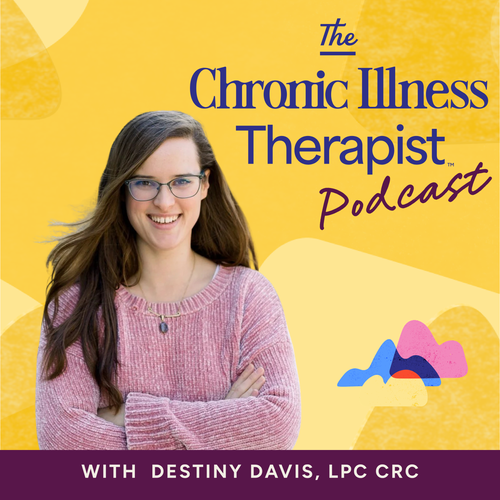
Listen to Michelle’s interview with me, Destiny Davis, on Ep 32: The Root Chakra’s Role in Chronic Pain w/ Michelle Shlafman, MS, LPC, DCEP, BCHHC
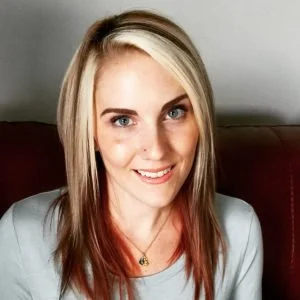
Michelle Shlafman, a dedicated holistic psychotherapist based in Georgia, is a firm believer in the intricate connection between the mind, body, and soul. Her practice revolves around a heart-centered integrative approach that places holistic health, compassion, and overall wellness at the forefront. Through her work, Michelle guides her clients on a transformative journey toward self-discovery, acceptance, and personal growth within a safe and non-judgmental environment. Michelle draws upon her extensive training and holistic modalities grounded in Eastern medicine philosophies.
Connect with Michelle:

Meet Destiny - The host of The Chronic Illness Therapist Podcast and a licensed mental health therapist in the states of Georgia and Florida. Destiny offers traditional 50-minute therapy sessions as well as therapy intensives and monthly online workshops for the chronic illness community.