
Exploring the Science of Sleep: A Conversation with Dr. Robin McFarlane
Insomnia: The Silent Struggle
Dr. McFarlane emphasizes that chronic insomnia is not the occasional sleepless night but a persistent pattern of inadequate sleep that can lead to distress and a range of health issues. Many individuals experiencing insomnia turn to quick fixes like medications and over-the-counter remedies, only to find that these solutions are often short-lived and come with side effects.
Cognitive Behavioral Therapy for Insomnia (CBTI): A Game Changer:
Dr. McFarlane introduces Cognitive Behavioral Therapy for Insomnia (CBTI) as the front-line treatment for chronic insomnia. Unlike medication, which may offer temporary relief, CBTI aims to address the root causes of sleep disturbances. The American Academy of Physicians recognized CBTI as the primary treatment for insomnia in 2017 due to its proven long-term efficacy.
Dispelling Misconceptions About CBTI
The conversation takes an interesting turn as Dr. McFarlane addresses common misconceptions about Cognitive Behavioral Therapy (CBT). She acknowledges that some therapists may oversimplify CBT and apply it in a way that feels invalidating to the individual. Dr. McFarlane highlights the importance of therapists fully understanding their clients and building a strong therapeutic relationship before implementing any treatment approach.
CBTI: The Complex Solution to Insomnia
CBTI is not a one-size-fits-all solution. Dr. McFarlane stresses that while CBTI can be challenging to learn as a practitioner, its long-term benefits far outweigh the initial difficulties. She encourages those struggling with insomnia to seek out trained CBTI therapists who can guide them through the process.
Seeking Help: A Vital Step
Dr. McFarlane encourages anyone dealing with chronic insomnia to take the first step toward better sleep. She suggests searching for CBTI practitioners in their area, stressing that a well-trained therapist can provide the support and guidance needed to conquer insomnia and regain restorative sleep.
Building Meaningful Connections
Dr. McFarlane emphasized the significance of building a strong rapport with your therapist when seeking treatment for insomnia or chronic illness. She highlighted the importance of feeling comfortable and connected with your therapist, as this plays a pivotal role in the overall success of therapy.
The Value of Treating Insomnia
Treating insomnia isn't just about addressing sleep problems—it can have a positive impact on overall well-being. Dr. McFarlane encourages that improved sleep can make managing chronic illnesses or mental health conditions more manageable and lead to an enhanced quality of life.
The Link Between Anxiety and Sleep
The therapist shared their affinity for working with anxiety, highlighting that anxiety is a normal part of the human experience. They discussed how therapy for insomnia can be a condensed form of anxiety therapy, focusing on sleep-related anxiety.
Why Seek Professional Help
Dr. McFarlane highlights the importance of seeking professional help, particularly for chronic sleep issues and insomnia. Rather than relying on marketed products or self-help methods, consulting a trained specialist can provide personalized solutions and support.
We hope you enjoyed this episode of our podcast. Stay tuned for more enlightening conversations with experts in the field of mental health and well-being. Remember, a good night's sleep is a vital component of a healthy life, and you deserve to experience it to the fullest.
Disclaimer: Everything we discuss here is just meant to be general education and information. It's not intended as personal mental health or medical advice. If you have any questions related to your unique circumstances, please contact a licensed therapist or medical professional in your state of residence.
Destiny Davis, LPC CRC, is solely responsible for the content of this article. The views expressed herein may or may not necessarily reflect the opinions of the guest.
The content in this blog post comes directly from a real, human interview between Destiny and her guest on The Chronic Illness Therapist Podcast. This written version was formatted using AI. Listen to the full episode to hear the actual conversation.
Listen to my full conversation with Dr. Robin McFarlane on Ep 17: If Insomnia Is Causing Hopelessness, Here's The Best Gift You Can Give Yourself
-
Episode transcribed with AI and may contain errors that are not representative of the actual word or meaning of the sentence.
In this episode, Dr. Robin McFarlane will be discussing insomnia and how sleeplessness is caused by and causes many other issues in the mind. And. You'll walk away from this episode, feeling like a total badass that you are because the passion Robin has for helping people live in live their lives to the fullest is really evident in how she speaks.
Dr. McFarland has worked in hospitals for the government, for colleges and universities, and is now on private practice. She started out treating anxiety and depression, but now she mostly helps people sleep better. She loves seeing people develop confidence in their abilities to get restorative sleep.
They need. After years of sleeplessness, she's been a licensed clinical psychologist for over 20 years was a super, was a supervisor for Columbia. For Columbia university's clinical psychology program and an adjunct professor of assessment at the city college of New York city is contracted as an expert in psychological assessments for individuals in law enforcement and aviation, and is a P post-doctoral fellow at Cornell medical college.
I am really excited to welcome Dr. Robin McFarland to the. Hi. Yes. So glad to see you here. Um, so tell us a little bit about what you do in private practice. What kind of clients you see and what is lighting you up these days? Oh, sure. Um, well, I see people who have trouble sleeping and I love seeing these people, not because, um, I'm, I'm.
I'm like nasty and like people that have trouble sleeping, but I like seeing them because I feel like the, the type of treatment I, I do can really help. And, um, as we know, there's, there's like a million different things marketed for sleep problems, like all kinds of medication, all kinds of like over the counter crap and, and, you know, and, and that really doesn't work.
Um, This type of treatment, it's called C B T I, and there's great evidence that it works. And I, I think that anybody who's having a real, real serious problem with insomnia should, should seek out that treatment. Um, Can you tell me a little bit about C B T I, because my, I will be 100% upfront and honest with you.
I have such a bias against C B T, and I'm working on it. because to me, C B T is like change your thoughts, change your life. And so can you dispel that myth for us? Yes. Look, I've been a C B T person for a long time. And I don't think that the fault of C B T is C B T I think sometimes therapists, they learn it and they just apply it in a way that, so that doesn't.
That's not very thoughtful. Cause I'll tell you, I'll tell you one thing that I, that, that I noticed, like people with chronic illnesses. Okay. Like he, you know, let let's face it. It sucks. Okay. It just, it, it really, it's harder to live your life and interface with the world when you have a chronic illness, it just is.
And sometimes C B T therapy can be used in a way that's a little bit invalidating where the therapist will say something like, oh, you know, you think it sucks? Well, maybe it doesn't suck. Well, I don't. Uh, you know, that, is that why you have a bias against C, B T? Yeah. And I think that's like a, a more like blunt way.
I think that it can even sound really great, but I think you're right, like in how the therapist does it. I think sometimes it's like, okay, you have chronic pain and. You feel like, um, life sucks and you're never gonna get out of this hole. And so then the, they, they might jump to like, well, have you thought about it this way?
Like, or where's the evidence for that? And it's like, well, I can tell you the evidence I've been in pain for the last five years. I have lost friends. I've like, right. So, so I think that that kind of thing happens. And then you leave the session feeling like, oh, damn, like I'm feeling bad because, uh, I like have a thinking problem and.
I think you're right. Like, I think the more I've kind of, especially during this podcast, I'm talking to so many different clinicians and, and people who have different practices. So I was like, okay, I need to really get, get comfortable with exploring this bias of mine. Mm-hmm and I am realizing that C B T has a much, uh, more appropriate place in this work than I originally thought before.
Yeah. And, and, and you. and I think the, the, the important thing about any kind of therapy is you first have to be a really good therapist and that involves really like comp you really understanding the person before you jump into any kind of treatment. Um, and, and, you know, that's, that's where I think C, B T can fall apart.
Um, that makes sense. It's well, meaning they wanna jump in and help, but until you really get where the person is, I think it's premature sometimes to jump in. Um, I think that's what happens. Yeah. And I, that can happen in any therapy. Right. We wanna fix and we wanna provide the solution and. Chronic pain.
It's like a chronic illness. It's just like, uh, I've I've been through all the solutions. They don't work. That is why I'm here. So, um, yeah, I think you're right. I mean, the research is clear too, that it's, it's not about the technique. It's about the, the client therapist relationship and, and how that, that is going.
Yeah. So tell me more then about like C, B T I, what is it? How do you sure. How do yeah, how do you see it help and, yeah, sure. Yeah. Um, well, first right off the bat, because I think that there, there are a lot of people who have insomnia, like, and, and insomnia, I don't mean like one or two nights here and there of not sleeping.
That's a, that's acute insomnia. That's actually normal. We all go through, like, I think there was a study that like, uh, over the span of every two years, the average person has at least two weeks where they have really crappy nights. Insomnia is like a little bit normal, but when somebody is having night after night of not sleeping and they're worried about sleep and they're very distressed and you know, it takes them, you know, more than 30 minutes to fall asleep or they wake up in the night or they wake up too early.
And it's night after night, then they should probably seek out help. Um, and, and, and mostly the, the average person will go to a GP and say, you know, I'm having a lot of problems sleeping. And sometimes the GP will give them some medication, um, and sleeping meds. Um, they do work, but they work in the short term over the long term.
Their efficacy tends to fall apart. Um, short term, they're great long term. It can be sometimes a problem. Um, and this particular type of therapy, um, is interesting because in the short term, it's kind of hard to get the hang of doing it. But then in the long term, it tends to be very, very effective for insomnia.
Um, it's so effective that as of 2017, the American academy of physicians said that this is the frontline treatment for insomnia, not medicines. Um, but C B T C B T. I, um, I could just go on and on, but I . I love that. No, I, I absolutely love that. It feels, um, I'm already feeling a little bit hopeful, you know?
Uh, yeah, because yeah, there's so many side effects of these medications. Yes. And hope is what this is all about because people within insomnia feel hopeless. Yeah, I really feel hopeless. It's like they try everything and nothing works. Right. And, and I'll tell you something and there's, and you know, we were talking earlier about marketing of wellness and there is a huge billion dollar industry marketing towards sleep.
And they mark they'll, everything is marketed as helping you sleep. Yeah. And this, this is what happens when people have insomnia. They have insomnia and they're like, oh, I saw an advertisement for this. Or my friend said that this, uh, that this, uh, that this, you know, app helps them sleep. Or, you know, this, this type of relaxation is supposed to help and they try stuff thinking it's gonna work.
They go all in and then it doesn't work and they feel hopeless. And the amount of energy they put in. Yes. It's like, we all can work really hard if the reward is at the end. And I think that's what happens in so many different areas of wellness sleep diet. Like, yeah, I can do this in insane diet if it's gonna work, but it falls short.
And then we've just wasted all of our energy and feel really hopeless. And, and that's why I started to do C, B T. Because there's data showing that this really works better than almost anything else. And it's like, when you, when you lead people down a path and you say, okay, if you do this, this and this, you wanna say that there's something good at the end and that, and you know, it's like supported by research.
You know, you hate to lead people down a difficult path that, that you don't have. Evidence is really gonna work for them. But, but this does have evidence. And so I feel very comfortable, right. Um, leading people down this path, and you mentioned something earlier that it's difficult to learn, but then long term, um, C B T I difficult to learn as the practitioner, but then long term it's, um, I don't know if you said easier or, but it's, it's, it's beneficial and it's, it's doable.
Yeah. Yeah. I love that because I think C, B T when we were talking about earlier and like the misperceptions of it is. I think it it's like so simplified and that's where we fall. It's like, oh, here's this simple answer. And so it sounds like C, B T I has a more complex kind of underpinning and you have to learn that really well as a clinician in order to be effective.
Can you tell me a little bit more about the process or, you know, what comes up for you? I would love to, but like first I wanna say, look, if somebody is out there and they're struggling with insomnia and they, they hear about like, well, you know, try this, you know, relax. So herb or, you know, there's so much marketing.
Um, please do yourself a favor and just Google C B T I directory. And that will lead you to a directory of people, you know, therapists who practice C, B T I, and it's like state by state, you just click it in your state and names will come up of people who can help you, who can do this therapy with you.
Some take insurance, some don't, um, there are various different types of practitioners who do this, everybody from, you know, nurse practitioners to psychologists, um, you know, all kinds of people, but please do yourself a favor and check it out. Um, are there any questions that you would say for someone to ask when they're looking for a practitioner?
You know what I like the old, Hey, how many of these have you done? how many people have you helped with this? Um, sometimes that's worthwhile. Uh, however, I gotta say sometimes there's like new people who are really, really good. Um, but, but I think that's sort of like a good indication of, of. You know how good somebody is gonna be.
And I also think, you know, you just gotta talk to the person and feel like you can work with them. Um, there are really, there are really very smart people out there who have done great research in C, B T I and who know it backwards and forwards. Um, but if you don't have a connection with that person, it's, I think it's hard to.
To work with them. So it's like, number one, you gotta get somebody who's, who's good at what they're doing, who, you know, knows this kind of treatment. Um, and you know, is listed like in a directory or something like that. And number two, you gotta feel a connection with them. You know, you gotta feel like you can talk to them, tell them how it is and you know, that kind of thing.
So I think those two things are, are pretty good. Yeah. Perfect. Yeah. What is some of the first things that you do with clients? Um, aside from relationship building, that's an incredibly important part of it. And then what are some of the techniques that you tend to go into? Well, you know, the, the first thing that that I do with people is I get them to keep a sleep diary.
Which, you know, it's, it's a little bit hard sometimes to keep a sleep diary. It's a pain, but I tell them this, look do it in the morning. do it when you get up, because believe it or not, research shows that like your memory of what happened the night before. Four is really good in the morning. So if you just take like a minute in the morning to fill out this diary about what happened the night before you're gonna be, you're gonna get really good data.
You're gonna record your night's sleep or nons sleep as it were really, really well. Is it just pen and paper, or do you have an app? Like, is it their apps that people use. Well, you know what I use the old fashioned pen and paper, but I also have, um, people who like to do it on a, uh, spreadsheet. They do it that way.
And there is in the works an app for it. And I can't wait for that app to come out. yeah. I have a, um, a four month old and I track her sleep on, on a baby app. And so I. You could just, you could easily use that if there's, if there's no actual adult app for tracking sleep, I'd have to check, but I don't know of one mm-hmm
Yeah. Um, so you do so you have them track their sleep. Yeah. Have them track their sleep and it's, and, and then I get the good, the bad, the ugly, you know, the first week or so. And I get like a, like a baseline of how their sleep is, and then. You know, this is where, when we were talking about relationship building and the, you know, the, the trade off between, you know, building a relationship with somebody and telling 'em what to do, , you know, like I'm pretty directive.
I'll look at their sleep and I'll say, look. I want, I think you should change this or that usually, you know, things like waking up at the same time every day, or, um, getting out of bed rather than struggling in the bed with anxiety and angst. Um, or, you know, I think you should be going to bed a little bit later.
Things like this. I tell people what to do. But, um, but it's always a collaborative thing. Um, and you know, I'm never gonna say, I, I always say, say to people, you know what, I'm never gonna tell you what to do without you fully understanding why you should be doing it, how it can help and how to do it. So I act like a college professor a lot.
I use a lot of like graphs and charts and explanatory things and explain to people like, okay, you know, see, one of the things I'm telling you to do is I'm telling you to get up at the same time every day. So here's why, and I pull up all these graphs about circadian rhythm and, uh, you know, all this stuff, cuz I want, I.
I want the people who I work with to really like be on board and I want it to be theirs. You know, I want them to feel like an expert on their own sleep. Um, yeah, that's the project. That's. I mean, when somebody feels like they get what's going on and they get how to help themselves, and then it works.
It's like, oh crap, this is wonderful. You know? And that's, that's why I love this treatment. Um, because, you know, I get to, I get to be a bit of a college professor, which I kind of am. I am, and, and, you know, and people really learn it and they get it and they feel like it's their, they're now the expert. And then they go out and they tell their family what to do.
that's what I, that's why I love this. I love to, you know, share this share research. Good research based stuff that I know works with people, um, and, and have them really get it and take it themselves and feel like the expert that's it's so wonderful. Yeah. Um, I love that. I, I also use the circadian rhythm with a lot of clients and especially for females are.
Hormonal 40, um, 28 day cycle. That plays a part into it too. Mm-hmm and it's so much about education, um, which is hard if you don't. So like, as the therapist, you have to really, really know this stuff so that you can then educate about it in a way that. Comes across clear and, and also so that you can troubleshoot, you know, if you're, if you kind of just know a little bit here and there, then, um, if a client comes across an obstacle, then maybe it's gonna be hard to overcome that obstacle, which is why I think maybe, um, and I'm saying all this, because.
As therapists. Uh, we, I think historically are really scared to talk about anything with the body because we work with the mind. And, um, when you're a chronic illness therapist, whether that's for chronic insomnia or chronic pain or anything, we have to have this education ready in our own brains and then help our clients learn it too.
And, and education is key in and letting someone then take it and, and it's their own, like you said,
yep. So that's sort of like, that's, that's sort of like in a nutshell, what I do, um, You know, and then we get into more complex things like a sleep window, like the ideal sleep window. And what's your real sleep need. Do you really need, do you really need eight hours a night? Like they tell you, you need, I don't know.
Let's, let's look at this. Um, so it's, it's, it's a deep dive into sleep and making sleep better. Um, So, yeah. What are some other kind of myths that you might dispel? Like the way you don't all need eight hours and, you know, there's a way to figure that out. What other kind of things come up, right? Oh boy. I think, look, I think the biggest myth is that, you know, when you, when you, when you hear about things marketed to sleep, um, I think the biggest myth is that you.
Sort of like question that like, like, do you really, you know, is it really gonna be a mattress? Is it really gonna be block out blinds? Is it really gonna be white noise? I don't know. I don't know that those things really work, but they're marketed. Like this is the, this is the answer. This is the key. And that always bugs me because I, I see a lot of people who go through countless things like that.
And all it does is number one, not work. And number two, make a more hopeless. Um, so I think the biggest myth is that, you know, don't buy all the stuff don't, don't buy literally and figuratively, all the stuff that's marketed toward. Good sleep. Um, yeah. You mentioned waking up at the same time every day. I know that's incredibly important for melatonin production later on at night, you got it.
What? Yeah. Can you speak a little more to that? So kind of provide a little bit of that education for listeners so they can kind of understand, or even, um, maybe other pieces as well. Yeah. I, I think you hit the nail on the head destiny because that's the only piece of advice that I like to give to people.
I don't know. Gotcha. Because sometimes if you throw out other pieces or quote, sleep tips, it just feeds into the cycle of hopelessness. Mm-hmm , you know, they said, well, I tried this and I tried that and, and it didn't work well, it's it, it won't, you know, I don't wanna feed into the cycle of hopelessness, so I almost never will give out quote, sleep tips.
Got it. Yeah. That's great. The only one thing that I say. Getting up at the same time every day is sort of like a superhero for sleep because insomnia is a 24 hour problem, you know, and it starts in the morning. And, and that's one change that I think is, is important for, um, for people who have sleeping problems to consider making is, you know, just, just make an effort to get up sort of at the same time every day.
Um, that, that, you know, that's like a, that that's like the only piece of advice that I like to really give. Yeah. I can appreciate that. Um, I think a lot of times we're really quick to try to give like tips and advice, and I know it's the tr the trendy thing to do. So I, I love that transparency. Um, it. Work with a professional who's trained in this stuff because your unique circumstances are just that they're unique.
And if you give the wrong tip to the wrong person, yeah. It feeds into this cycle of hopelessness, like you said. Yeah. Yeah, yeah. Yeah. Can you tell us a little bit about what drew you to working with this population? Oh, thank you for asking that I, you know, for, for a long time I was an assessment. I, or I still am an assessment psychologist, which means I give, I, I, I give people a lot of tests and personality, ish things and diagnostic things.
And I love doing that. And, um, assessing sleep is. Type of assessment. So you have to really get like, like almost like on a granular level, how people sleep with the sleep diary and all this stuff. And I love that. So first my love of assessment. Um, and then my second thing that I really love is anxiety. I know it's bizarre to hear somebody say they love anxiety.
Um, But I, I do, because I think anxiety is something it's part of the human condition. They're all supposed to be anxious about stuff. Um, so for a long time, I've loved therapy for anxiety. Um, And doing sleep therapy is a way for me to sort of like, um, kind of condense anxiety into sleep anxiety. Like it's a small area of anxiety that, that, that you can sort of like work on and, and get better at.
Um, so I like doing that. So that's, that's sort of like what drew me to it and then, oh my gosh. The third thing was the data, the evidence that it works, I fell in love with that. Um, so those, I think those three things really drew me to, to, um, To insomnia treatment. I like what you said about, um, anxiety and how it's normal.
It's a natural part of life. Yes. It actually gives us data to tell us what's important to us. And so if you can, then if you can accept it and acknowledge it first, then you can kind of start working through it. It sounds like that's what you do. Yes. Yes. Um, you know, and, and like some of the, the newer treatments for anxiety, like, like we were talking about C, B T earlier, and like, oh, you gotta question your thoughts and all this, some of the newer, like C B T type, well, C B T type treatments.
Are you don't even question your thoughts? You just sort of let 'em come there. It is. Okay. Hello. There's my, uh, anxiety thought about, um, the presentation I'm gonna give at work today. There it is. Hello, anxiety thought, how are you doing? you know? Yes. You just let it sort of be there. Yeah. And you accept it and, and, you know, um, It's really great to be able to learn about all these new approaches to anxiety, cuz those work too.
Yeah. That's exactly how I practice. I practice from acceptance and commitment therapy. Oh yeah. So it's, that's good stuff. A lot of thought observation and, and for people listening there's skills that you can learn, it's not just as simple as like, oh, so, you know, just acknowledge, just, just throw my thoughts over to the side.
No, we practice some skills that help you get there, but um, yeah. Yeah. I gotta say, even though I'm a big fan, obviously of C B T I most people who practice C B T I actually also know about accept commitment therapy for insomnia. , um, it was sounding like that as you were talking about, I'm like, okay, there's a lot of overlap here.
And I know this third wave of, of cognitive behavioral therapy. Um, you know, there's mindfulness based C, B T there's, you know, they're bringing in more of, um, those components. So I think it is a lot less change. Your thoughts, change your life and more like there's like more acceptance weaved within it. Um, which is really helpful.
Yeah. And really kind of fun. Dare I say it. I mean, it can. You know, you know, really, and that's another thing that I think is important about the therapy piece of working with somebody on about, on, on insomnia is insomnia is, is a horror for people. It's a horror, you know, it's a nightly horror. And to be able to finally talk to a therapist all about this particular horror is so relieving.
and to actually have that therapist sort of like go into that world with you and recharacterize it as something that you can actually sort of like, welcome what, like that's bizarre, but that's, that's what I like to invite people to do, cuz it's there anyway. That's exactly. We're we're living in it. And so the more you fight it, the more it grows.
Right. Right. It's ironic, but it is ironic cuz you, of course we all, we're all taught to fight things off and um, to a certain extent you can't fight off your own mind. Um, you know, so, so that's, that's one thing that, that I love to work with people on, um, And, and once they get to the point where they sort of like are more accepting, it becomes a lot easier.
Ironically, it's ironic. It's so ironic. I know. And I always just think about Carl Rogers quote, the curious paradox is that the more that I accept who I am, the more I can change. It's like, that's one of my favorites. Yeah, it it's perfect. It is. It really is. Yeah, it's, it is so hard to wrap your head around when you're brand new to this idea.
Um, and I think the idea itself can even feel invalidating because we are taught to fight everything. That's what our country was founded on. That's what is kind of systemically in this entire. This, this whole system that we're in, it's like work hard. If you work hard, your dreams will come true. If you work hard, your life will be great.
If you work hard, like if you just put the work in, this will work out. And I think the human experience is, so that is not true. I mean, things happen, right? You can do everything quote, right. And then tragedy strikes or, you know, um, and so yes, we do try to. Do what we can, and we do need to work hard in a lot of areas, but sometimes working hard is actually counterproductive to the outcome that we're trying to achieve.
Yes. Yes. And, you know, as, as you know, like you can, if you're in a, if you're in a hole and you have a shovel and all you're doing is digging with the shovel, , you know, you just gotta dig a deeper hole. Yeah. Sometimes you gotta change it up. Right. Um, and,
and not fight so hard and try so hard. Yeah. So can you tell us L um, can you tell us about why sleep is so important, especially when it comes to chronic illnesses, insomnia, it can be chronic in and of itself, but can you just talk a little bit about the education behind why sleep is so important for the body?
Oh boy. Well, I mean, Sleep just makes you feel better to simp to really put it simply. Um, I like that that's, that's, that's the bottom line. It just makes you feel better. Um, and you know, there, there was in, in the field of, in the field of like mental health, it was commonly thought that, Hey, you know, if you're depressed, if you're anxious or if you have a chronic illness, You cope with that?
You, you treat the depression, you treat the chronic illness and then the insomnia will just sort of like go away. Um, and that's actually not exactly true. Um, but the odd thing is, uh, the data show that like, if you treat the insomnia, if you help people sleep better, it kind of makes everything better. You know, a little bit, not a lot.
It doesn't make the chronic go away, but it makes it just a little better to deal with if, if you're sleeping better. Um, so, you know, it's, it's real simple sleep just makes you feel a little better, you know? Um, It's. Yeah. And, and you know, there, of course you can say, oh, well, it makes, you know, it makes the, the cortisol levels.
Even it makes this or that. Okay. Let's just get simple. It just makes you feel better. I like that. Yeah. You're right. Bring it back to basics. I think sometimes we get caught up in all the complexity. I think also sometimes people. Need a little bit more of that complexity in order to like, resonate with the treatment.
You know, if it doesn't feel complex, then, then they feel like it's they're, it's not right, because they're so used to everything being so complicated. There's so much marketing out there that gives us so much information. But yeah, at the end of the day, I mean, I think. That's why I like your one tip of like get up early every morning.
Cuz a lot of, I mean, not early every morning, it's certainly early. Yeah. Yeah. I said that wrong. Same you pick is your time. It could be, it could be 3:00 PM if that's your time, you know, just make sure it's the same around the same time every day is that? Yeah. And, and I think what we, a lot of us hear is like go to bed at the same time.
Every. And that's so, but that troubles me for, um, people within insomnia, because sometimes the, the worst is like, oh, I have to go to bed at 10:00 PM because I have a big day ahead and, and I have to do this and I have to do that. And then that feeds into the cycle of like anxiety and struggling to sleep.
Right. And, and, oh boy. So I don't, I don't get hung up on bedtime. I love that. When you're getting up around the same time every day, your circadian clock can start to do what it needs to do and, and get you on a rhythm, um, which I'm sure takes time and, and lots of other tools go into that, but sounds like a really great starting point.
Yeah. Yeah. Is there anything else that you have, um, in regard to sleep or chronic illness that feels like, you know, important for people to know? Oh gosh. Well, the first thing is, Hey, you know, check. C B T I go to a directory, just Google C B T. I. Directory and you'll get one of two directories. Um, one is put out by, um, uh, the university of Pennsylvania sleep medicine and they have a directory of people who practice C B T I.
Um, the second one is put out by the, um, society for behavioral sleep medicine and they have a similar directory state by state, even international, where you can plug in your state. And, you know, some practitioners will come up who practice C B T. I. Um, you also could, um, consult any kind of sleep medicine center, um, sleep medicine centers, however, are geared toward, uh, diagnosis and treatment of sleep apnea a lot and narcolepsy and the more a cult sleep disorders.
So it's not bad to go there. Um, but if. And also, um, you know, they can sometimes have, they do sometimes have C, B T I practitioners who can help with that too. So, so you know what, don't try the next Relaxo herb that comes that, that is marketed to you please, you know, seek out, you know, a professional who knows how to deal with sleep issues.
Yeah. That's, that's the best thing. That's great advice. Um, Yeah. There's so much marketing for everything with chronic illness. It's so overwhelming. I know, I know. And I, and I too, like you, I get angry when, um, I see marketing toward people with chronic illnesses or like mental illness. And they act like, oh, well, this is the thing that's gonna help you.
This is the, this is the, the key. That's gonna turn the lock. That's gonna make everything different for you. And it really annoys me because I. You know, people look, Hey, anybody with any kind of chronic problem is sort of like looking for that, whether we wanna admit it to ourselves or not, you know, we're all looking for the magic.
Right? Right. So feed slick marketing will marketing will fool the most will fool everybody. yeah. You know, it, it, it can be for sure. Um, yeah. I, I think that's, that's great advice. Um, and lastly, can you kind of give us, maybe leave us with a little bit of like, what keeps you just feeling fresh and alive and hopeful?
Um, for some, and, and maybe in the context is for someone who's living with a chronic illness or how, you know, how you help your clients do that. Wow. Boy. I don't know. , you know, that's, that's a hard question, but it's a good question, you know, um, I think, you know what we were talking earlier about acceptance, um, and I think that, you know, it's such a simple thing, but just to accept who you are and where things are at for you now, um, It sounds like completely easy.
But on the other hand, I think it's the struggle of our lifetimes. Like just to accept ourselves and say, Hey, this is, this is who I am. This is what I've got. And without shame, interact with the world as you are, whether you have a chronic illness or not, or whatever, you know, Um, yeah, that acceptance piece.
It does. It brings a lot of hope. That's why it's the main tenant of my work as well. Um, it it's and you're right. It sounds so simple, but that's why I. It's not at all. Like, and I get that. So the last thing I ever wanna do is give a tip or a trick or advice and, and say to someone, you know, well, if you just accept or if you just, then you will feel X, Y, and Z, um, it's again, like I said earlier, we have, we have tools that we teach within our, our therapy modalities that help you get there.
And that's really what therapy's all about. Mm-hmm. Yeah. And it's, it's very hard to accept yourself because the world wants to push us into like what's convenient for the world. Um, and we have to constantly advocate for what's convenient for us in a way that's nice and respectful of everybody else. You know, , it's hard.
Yeah. That's hard. It is. It's a good. Yeah. Well, yeah. Thank you so much. Um, for coming on. Is there anything else that you, that you wanna say before we hop off? Um, You know, just, you know, if, if you're struggling with sleep, um, you know, look, look at C B T I directory, Google that, see what comes up and find somebody in your state who can help you go to a sleep center, um, and, and, you know, seek out, you know, professional help.
Um, and don't get hopeless if you've tried a lot of stuff and it hasn't worked. Yeah, it's easy to get hopeless. Um, sounds like the main takeaway from today is don't DIY your sleep to a certain sometimes Hey, sometimes D sometimes doing that can help a little bit, you know, really. Yeah. I understand why people do it, you know, but, but if you're, but if you do it and you feel hopeless after.
Then you might wanna consider professional help and then no longer de no longer do it yourself. Yeah. That's a good sign. Yeah. Every once in a while, like, Hey, if there's a piece of sleep advice and you take it and it works, that's, that's cool. Yeah. But if, but if you're taking sleep advice over and over and you try all kinds of stuff and it's not working and you're feeling hopeless.
And it's like that hopeless feeling then, oh my gosh, reach out. Cuz none of us are meant to do stuff alone. I like that. I like that because you just, that actually is a, a tip, right? Is that if what you're trying makes you feel hopeless. Yes. That is the sign that you need. Some professional help. You gotta take, you gotta take somebody's hand.
Yes. Love that. Thank you so much, Dr. McFarland. Um, this was a pleasure. It was a pleasure. Yeah, it really was nice to talk to you.
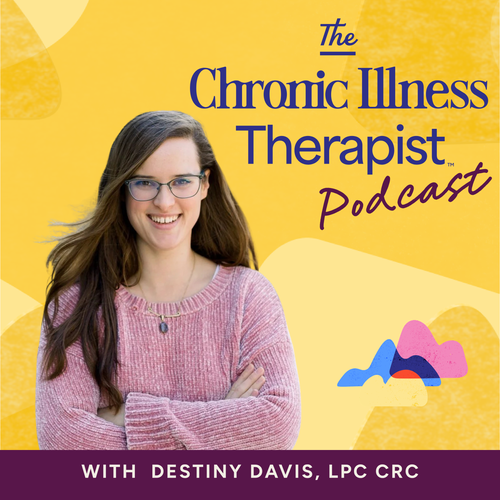
Listen to Dr. Robin’s interview with me, Destiny Davis, on Ep 17: If Insomnia Is Causing Hopelessness, Here's The Best Gift You Can Give Yourself

Meet Dr. Robin McFarlane: An Expert in Sleep and Psychology. Dr. McFarlane's extensive career has been nothing short of remarkable. From supervising Columbia University's clinical psychology program to her role as an adjunct professor at the City College of New York City, her contributions to the field of psychology are truly impressive. Furthermore, she is a contracted expert in psychological assessments for individuals in law enforcement and aviation and holds a post-doctoral fellowship at Cornell Medical College.
Connect with Dr. Robin:

Meet Destiny - The host of The Chronic Illness Therapist Podcast and a licensed mental health therapist in the states of Georgia and Florida. Destiny offers traditional 50-minute therapy sessions as well as therapy intensives and monthly online workshops for the chronic illness community.