
When Past Injuries Cause Current Problems w/ Rick Olderman
The Story That Changes Everything
Picture this: A man breaks his ankle at 20. Gets it fixed, moves on with life. No pain. Thirty years later, he's dealing with chronic back pain, sciatica, and now a hamstring tear. Three separate problems, right?
Not likely.
This was one of the patient stories that physical therapist Rick Olderman shared in our interview on The Chronic Illness Therapists Podcast, and it perfectly illustrates why we've been thinking about chronic pain all wrong. That ankle injury from decades ago just might have been the first domino in a chain reaction that led to every single one of his current pain issues.
This isn't some mystical mind-body woo. This is biomechanics. This is systems thinking. And it might just change how you understand your own pain.

The Medical System's Blind Spot
Here's what I've learned from working with people in chronic pain for years: if you've been dealing with pain for more than three months, you've probably been told one of two things.
Either: "Nothing's wrong with you. Your scans are clean. Maybe try therapy for the psychological component."
Or: "Here's another structural issue we found. Let's treat this specific thing."
Both approaches miss the bigger picture. As Rick explained, our medical system excels at component thinking - breaking the body down into individual tissues and treating what's broken. This works beautifully for acute injuries. You break your arm, we fix your arm. Done.
But chronic pain doesn't work that way. Chronic pain is a systems problem, not a component problem.
The Ankle-to-Back Pain Highway
Let me walk you through how that 20-year-old ankle injury created 30 years of compensation patterns.
When the ankle healed, it lost 50% of its range of motion. The man didn't notice because he wasn't in pain. But here's what his body was doing every single day:
When he walked, his ankle couldn't bend properly. So the force that should have been absorbed by the ankle joint had to go somewhere. It traveled up the chain to his knee, causing it to lock. When the knee locks, it turns off the glute muscle. When the glute turns off, a deeper muscle called the piriformis takes over - and that's what was pinching his sciatic nerve.
His brain started shifting his weight off that leg to compensate for the pain that would’ve occurred had he been bearing weight on it. This created an elevated pelvis on one side, which pulled down his ribcage, increasing compression on his spine right where the sciatic nerve roots exit.
One ankle injury. Multiple compensation patterns. Years of accumulated dysfunction. And not a single healthcare provider connected the dots because they were all looking at individual components instead of the whole system.

The Physical Reality of Emotional Pain
But here's where it gets really interesting - and where the mind-body connection becomes more than just a buzzword.
In the episode, Rick introduced us to something called myofibroblasts. These are specialized connective tissue cells that get laid down in areas of mechanical stress. Unlike regular muscle tissue that responds to nerve signals from your brain, myofibroblasts respond to chemical signals in your bloodstream.
And what triggers those chemical signals? Stress. Anxiety. Emotional trauma.
When you're under chronic stress, your body releases cytokines (specifically something called transforming growth factor beta one) that circulate through your bloodstream and cause myofibroblasts to contract. These tissues have a longer lead time to contract and a longer tail to release than regular muscle.
This means your body can literally hold tension patterns from emotional states, and it takes time and conscious awareness to release them.
In my opinion this means that chronic pain MUST have a physical and a cognitive component to treatment. This is a real, physical mechanism by which emotional states create physical tension patterns in your body. Your lower back, where these myofibroblasts are most concentrated due to natural mechanical stress points, becomes a storage site for both physical and emotional tension.
Why You're Not Broken
If you're someone who's been told "nothing's wrong" while living with very real pain, what I’m about to say should be validating: Your pain isn't imaginary. It's just that the traditional medical model isn't designed to see systems problems.
Think about it this way: you can have bulging discs and no pain (this happens to 90% of people over 70). You can also have massive systems dysfunction causing significant pain with completely normal imaging. Neither scenario means you're broken - it just means we need to look at how your body is functioning as a whole.
As Rick put it, some people can compensate around structural issues for decades without feeling it.
“But if you’re someone who feels everything - if you’ve had chronic pain from a young age - that’s not a character flaw. That’s information. Your body is giving you feedback about compensation patterns and dysfunction that might take others years to notice.”
The Chess Master Approach
Rick described his approach to treatment like a chess master seeing the entire board. Instead of looking at individual pieces (your shoulder, your hip, your neck), he sees the patterns, the connections, the flow from past moves to future possibilities.
This is what's missing in most chronic pain treatment. We need practitioners who can step back and see the whole picture - how that old ankle injury connects to your current back pain, how your stress patterns are literally wired into your fascia, how your walking pattern is setting up tomorrow's problems.
Moving Forward with Systems Thinking
The beauty of understanding pain as a systems problem is that it gives you agency. Instead of being told "nothing's wrong" or "learn to live with it," you can start asking different questions:
What compensation patterns might I have developed over the years?
How is my body moving as a whole system?
Where are my areas of mechanical stress, and how might my emotional state be affecting them?
What tests can help me understand my specific deficits?
This doesn't mean every chronic pain problem has a simple fix. But it does mean there are often concrete, addressable reasons for your pain - even when traditional tests come back normal.

The Path Forward
If this resonates with you, Rick's YouTube channel offers free videos that walk you through the tests from his book "Pain Patterns." You can start understanding your own body's systems and compensation patterns.
But more importantly, you can start looking for practitioners who think this way. Who see the connections. Who understand that your decade-old car accident might be related to your current neck pain, even if your neck "looks fine" on imaging.
Your pain is real. Your body is giving you information. And there are people out there who know how to listen to what it's trying to tell you.
The conversation around chronic pain is shifting from "it's all physical" or "it's all mental" to "it's all connected." And that connection isn't mystical - it's mechanical, chemical, and completely addressable when we finally start looking at the whole picture.
Disclaimer: Everything we discuss here is just meant to be general education and information. It's not intended as personal mental health or medical advice. If you have any questions related to your unique circumstances, please contact a licensed therapist or medical professional in your state of residence.
Destiny Davis, LPC CRC, is solely responsible for the content of this article. The views expressed herein may or may not necessarily reflect the opinions of the guest.
The content in this blog post comes directly from a real, human interview between Destiny and her guest on The Chronic Illness Therapist Podcast. This written version was formatted using AI. Listen to the full episode to hear the actual conversation.
Want to listen to the podcast interview? Listen to Rick’s interview with me, Destiny Davis, on Ep 101: When Past Injuries Cause Current Problems
-
Episode transcribed with AI and may contain errors that are not representative of the actual word or meaning of the sentence.
rick olderman: [00:00:00] signals are released during times when our sympathetic nervous system is activated during times of stress, anxiety, and so forth. So if we are undergoing chronic stress, anxiety, or other types of emotional trauma, causes a steady release of the cytokines. The particular cytokine is called transforming growth factor beta one that circulates through our bloodstream and then triggers the myofibroblasts to contract. So while our brain may say, okay, muscles, you can relax now, I'm done using you. If you are not, if you are under chronic stress anxiety. And so. Those signals, the myofibroblast doesn't shut down because it works under a different system.
that was Rick Derman, a physical therapist who just gave an amazing interview with me. All about thinking in systems, rather in components for chronic pain. And if you live with chronic pain, then you know it's almost never just one area, even when it's a result of an injury [00:01:00] from a past area.
If you. Have been living with this long enough, you'll realize that there's probably a lot of different parts of your body that hurt for maybe seemingly unexplained reasons. And that's what this interview is about. I find it fascinating. I love learning about the body. so I hope you enjoy the episode and then this Saturday, September 27th, 2025 at noon is our next monthly workshop
it is going to be creating a restorative home, environmental and sensory support for chronic illness recovery. And Giovanna Akins is a therapist here in Atlanta who's going to be helping explain all about how different elements in your home can really help reduce the stress levels in your life, especially when you have a chronic illness and your home becomes your sanctuary.
So please join us. As always, there's coupon codes in the description for those who need financial assistance and every dollar that you can give towards these workshops does help pay our speakers.
I'm looking forward to seeing you there. .
Destiny Davis LPC CRC (2): The Chronic Illness Therapist podcast is meant to be a place where [00:02:00] people with chronic illnesses can come to feel heard, seen, and safe. While listening to mental health therapists and other medical professionals talk about the realities of treating difficult conditions, this might be a new concept for you, one in which you never have to worry about someone inferring that it's all in your head.
We dive deep into the human side of treating complex medical conditions and help you find professionals that leave you feeling hopeful for the future. I hope you love what you learned here, and please consider leaving a review or sharing this podcast with someone you love. This podcast is meant for educational purposes only for specific questions related to your unique circumstances.
Please contact a licensed medical professional in your state of residence.
Destiny Davis LPC CRC: Rick Olderman is a sports and orthopedic physical therapist with almost 30 years of clinical experience, award-winning author and speaker living in Denver, Colorado. He specializes in difficult, chronic, or nagging injuries, and in his books and downloadable programs, [00:03:00] Rick demonstrates the connections between the brain, emotional states, biomechanics and pain that have healed and invigorated thousands of his clients and readers across the globe.
Understanding these connections helps his patients understand such vexing questions like, why does this function in one area of the body result in pain in a completely different area? How do you stress and emotional issues increase pain? Why do certain problems return again and again, and perhaps even years later?
Rick's other books can be found at rickolderman.com and people can also check out his YouTube channel that features many tests and explanations to help you understand your pain. All exercises and tests found in Rick's books can be accessed for free as videos on his website. Thank you so much, Rick, for being here and for all of the resources that you have available for people.
Um, I think physical therapy is, something that a lot of people have a lot of negative experiences with, and I would say in the beginning I didn't trust it either. And now, like I don't know where I would be without my own physical [00:04:00] therapist and it's been such a p pivotal part of my own journey. So, um, I'm excited to talk to you today.
Tell us a little bit about the book you wrote and how did you kind of come to the, the structure that's in the book, the, um, you know, the laying it out in such an easy and clear way, given that there are so many, like, there's so many factors in the human body and the psyche and everything that plays together, but you've written in your book very clearly, like how this kind of all plays together without overcomplicating it.
rick olderman: Yeah. Well, uh, thank you. Um, and you know, it, it came out of just years of practice. This is my ninth book, so why I had eight others to practice trying to get the message right.
Destiny Davis LPC CRC: Yeah.
rick olderman: then, um, the, I sold my clinic about three years ago, and so I've been doing mostly just And things like that. And, um, so it's helped me, uh, condense my message and [00:05:00] edit it down so that it makes sense. And so, uh, seeing all all of these people via video and explaining this to them, it made me realize, uh, it made me look back at how I was practicing in the clinic because, uh, practicing via video is different than practicing hands-on in a clinic. And so this helped me distill my message in theory down even further when I was in the clinic. And I thought, you know what? This is called like a blueprint, that I'm trying, that I'm thinking about, that I need to lay out for people. In my previous books, I gave them, you know, exercise, explain things and gave 'em exercises to do and all that kinda stuff, but I didn't give them, uh, tests to understand what their particular deficits were. And so that's where the workbook session section of this book comes in. just thought that was critical to help people.
Destiny Davis LPC CRC: Yeah. So are you even thinking that your online work helped you to [00:06:00] ask those questions differently because you couldn't touch and you couldn't see like be right there?
rick olderman: Uh, you're absolutely correct. So, you know, when, and you probably know this in your clinical work, you almost start to work subconsciously or unconsciously, know, and because of your experience, it guides you in what to look, look at, and you know how to proceed and so forth. without that, by stepping out of that, it forced me to really consciously think about what I'm doing rather than unconsciously doing it
Destiny Davis LPC CRC: Yeah.
rick olderman: through so much practice. And so that's, that's where all of this came from. It's just like, oh my gosh. I think at fir at first. So I have an online training program for practitioners, there's this little neurophysiology paper I wrote in there. It's a 10 page paper. About Hannah Somatics and how that works and so forth. And we can get into that if you want to.
But, uh, I, I thought, you know what, no one's really commented on this [00:07:00] neurophysiology paper and I think this is a real key issue. And so I thought, you know what, I'm just gonna expand that a little bit and maybe release that as a free PDF or a booklet or something like that to help people understand what's going on. And then I thought, oh, well, this is getting a little bit longer than I anticipated. And then I'm just like, my gosh, I think I'm writing another book. And so that's, that's basically how all this came together is, you know, through telehealth and that neurophysiology paper.
Destiny Davis LPC CRC: Amazing. I would love to talk about Hannah. So Madox, um, can you tell us a little bit about the, like, how that informs your work? And then maybe we can get into some of the, the like pillars of pain and things like that, that you write about in your book.
rick olderman: Sure. Uh, so I, I stumbled on Hannah Semantics and, and basically my, my whole career has been stumbling along and trying to figure things out. so, you know, I realized after I graduated that I wasn't very good at helping people with chronic pain and, uh, I needed to try and figure this out or quit what I [00:08:00] was doing.
And so I just decided, you know what? I just need to try and figure this out. assumption was when I graduated that all of this had been figured out, so
Destiny Davis LPC CRC: Yeah.
rick olderman: was how naive I was. And so, uh, that's when I started looking around and I found Dr. Shirley Mann's information about movement patterns and biomechanics that influenced strongly, uh, our back and satic pain and other difficult pain problems. And that helped a lot of people, but not everyone. And then forced me to look further, and that's when I discovered fascia and, uh, explored that for a few years. That, again, led me to another level of being able to help really difficult patients. But still not everyone. And then this finally in, in my mind, something in our bodies or brains was causing us to behave the way that we were behaving was causing pain. And that's when I stumbled on Hannah Somatics and [00:09:00] that was like the jelly to my peanut butter and jelly treatment sandwich. That, that just held, that, that held, it tied everything together for me.
Destiny Davis LPC CRC: Yeah. Yeah. Um, I, you know, I, I need to really learn more about it 'cause it seems so powerful. But, um, we had one therapist on the show last year and she used it, but we didn't go deep into like, what it is and then how, how it works. So, um, you know, yeah. Maybe you can give just a snippet of that. Like, so it sounds like it's about a lot of movements in the body.
Does it incorporate, is it about defensive movements? Is it about, um, yeah, maybe you can explain a little bit more on that.
rick olderman: Yeah. So, we have these mechanical receptors in our muscles, uh, and joints, and one of those is called a muscle spindle, that monitors the length and tension of our muscles. Well, what I found from treatment was it, I said the brain is behind a lot of this movement, the brain seemed to be holding these people in these [00:10:00] faulty movement patterns and tension patterns, and I didn't have the tools to unravel that. So, h somatics, it simply does is it helps us reset these muscle spindles so that we can gain more optimal length and tension in our muscle rather than this unconscious tension holding pattern that either our emotional states or our movement habits or biomechanics or past history or diet or all of the above has created has, has manifested in our body. And so that's general, generally what it does. And I'll, I'll give you a quick example. Uh, if, if we were to bend our elbow. And if I apply a light load to that, that bending and then pull my brain, okay, now slowly release that tension while I'm exerting that same load throughout the entire range of motion brings conscious awareness to the muscle spindle reset. And so instead of that being unconsciously [00:11:00] held in a certain tension, now I've brought that particular muscle group into a conscious awareness and taught it to release that tension. And so now it's will be reset to a new length tension relationship. Now that's nice for biceps.
Destiny Davis LPC CRC: like.
rick olderman: Oh, go ahead.
Destiny Davis LPC CRC: I was gonna say, it's just, it sounds like the, the mindfulness component of it, and I always like to repeat this on the podcast, but mindfulness is, it's, it's not a thing that gets rid of, but it brings more attention so that you can then know better what you need to do, uh, move differently.
Maybe you notice your bracing a little bit differently, um, and then you can, then you can work with it. 'cause now you're aware of something you weren't previously aware of.
rick olderman: Absolutely. Um, and this is, you know, it's funny, destiny, I mean, you know, you've probably encountered this for years, but you know, everyone has always talked about the mind body connection, But,
Destiny Davis LPC CRC: Yeah,
rick olderman: explained what that connection is. What is the
Destiny Davis LPC CRC: exactly.
rick olderman: how the mind gets [00:12:00] manifested in the body? And
Destiny Davis LPC CRC: Yep.
rick olderman: that's what the second chapter of my book is about is fascia. I believe at least one of the pathways that this happens is through this, tissue in our body called fascia, which is connective tissue. there's a certain type of. Connective tissue in particular myo fibroblasts that help us manifest our mental into our physical state.
Or if, if not manifesting into, maybe that's the wrong way of putting it. Maybe it's, it's more like associating a mental state with a physical tension pattern.
Destiny Davis LPC CRC: I love the way you just worded that, and that was why I was really excited as I was reading your book, because a lot of times right now, especially in the pain science world, it's, you know, neuroplastic pain is really big and the mind body stuff is really big, but the way people talk about it is very much like.
It, no matter how much they try to say, we're not saying it's in your head. It feels like they're saying it's in your [00:13:00] head. And when I was reading your book, it just so clearly was like, no, like the mind, like this is what happens to your mind as a result of, of these patterns and movements. And so then here's how what we can do to kind of, it was just very practical in like the most insightful way.
Um, and I just don't, right now, I don't see a lot of that. I see a lot of like, your mind creates your reality and like it's just too, um, one sided. Even though they're trying to talk about the connection, they just stay in the like, and it just sounds like it's, people are making a choice to stay in pain.
rick olderman: Right. And, and so it, it's like this mysterious black box. So I've listened to a lot of doctors talk about, you know, solving emotional problems help solve back pain, right? they don't, there's, they don't talk about where that connection is. How does
Destiny Davis LPC CRC: Yeah,
rick olderman: And so
Destiny Davis LPC CRC: exactly.
rick olderman: to one of these doctors, he sounded very open and all, I sent him a copy of my [00:14:00] book and I said, you know, I'd love to hear your thoughts on it.
And he says, I have a problem with anyone who says that the mind is is, you know, expressed in the body. I'm just like, well, that's what your whole podcast episode was about. That's what all of your research is about. What do you, I don't
Destiny Davis LPC CRC: Interesting.
rick olderman: what, what,
Destiny Davis LPC CRC: Wow.
rick olderman: your research.
This is, this is a pathway. So, and I, I get this time and time again, and, and what I've learned, destiny, is that researchers and doctors and practitioners, you know, like physical therapists or massage therapists or social workers or psychologists, we all have our internal biases about how we believe things happen for our patients. And so the patient is the one that misses out on this. if we have our biases, that means that we're shutting out certain types of information that don't fit our paradigm. this is why patients have to go around, millions of practitioners to [00:15:00] find someone who will finally help them, is because of this internal bias that we all have. Fortunately, I was so bad at what I did early on in my career, being unable to help physical, you know, people with chronic pain, I was completely open looking at anything that would help that 25% of patients that don't seem to respond to all of the stuff that we're taught in school. Right? And that's what led me on this journey, and that's what led me to hanna somatics and understanding fascia and movement patterns and putting all this information together.
Destiny Davis LPC CRC: Yes. Um, what's coming up for me specifically, uh, is conditions like ehler's danlos syndrome, and, um, some of these like conditions that we're just now learning a whole lot more about. And can you maybe explain, it sounds like the way, so whenever we're talking about mindfulness, anything, it really does tend to apply to so many things because if you're mindful, then [00:16:00] you get more intentional about what's happening in your own body.
So it doesn't matter if it's EDS or IBS or low back pain, you're forming this awareness around your body and then you can do what needs to happen with that. But can you maybe talk a little bit more about a condition like EDS and how your work applies to that? Thinking hypermobility or even just ti, you know, issues with the, um, connective tissue in the body.
rick olderman: so, uh, EDS, Marfan Syndrome, you know, hypermobility syndrome, you know, those are some of the toughest. Things to treat, and I'm, I'm not pretending like I can cure EDF or I can cure Marfan Syndrome or anything like that. Uh, you
Destiny Davis LPC CRC: Yeah.
rick olderman: what what I do is I look at how people are moving and I look for their tension patterns. so what I do is I, is I help solve faulty mechanics and movement patterns that may be stressing [00:17:00] an already vulnerable tissue
Destiny Davis LPC CRC: Yep.
rick olderman: that those conditions create because of the hypermobility aspect of it and therefore causing inflammation. So I'm not
Destiny Davis LPC CRC: Yeah.
rick olderman: EDS, treating movement patterns that may cause EDS to be painful.
Destiny Davis LPC CRC: That's right. That's right. I was really gathering that as I was reading your book and I just don't know why, but no one is talking about this stuff the way you're talking about it right now. Again, it's like very much like cure or this fixes this and like it just misses out on what's actually happening in the body.
So one, thank you so much for saying it the way you're saying it. Um,
rick olderman: Yeah. And, and frankly, that's how I approach every, I don't care what you have, migraines, low back pain, sciatica. That's what I do. I'm always on the lookout to look for red flags. That might mean that there's a dietary or emotional component to
Destiny Davis LPC CRC: mm-hmm.
rick olderman: but my, my first thrust is always [00:18:00] understanding the movement patterns that are stressing the tissues.
Destiny Davis LPC CRC: Yep. And that's what I do with the brain. We're looking at defense patterns, we're looking at, you know, but then the body shows up in that and that's where a really good physical therapist can help, with that connection, because it is a connection and, and we are just working together on both sides of that coin.
So, you know, you're kind of challenging the medical model in a way, in a way, what you're saying is, it is a culmination of what I've read always about the bio-psychosocial model, but at the same time, like you are still explaining it in such a clear and concise way, which I hear has come from lots of experiences of maybe not saying it right to begin with, but can you walk us what led you to realize that you've been looking at pain all wrong?
Was it just, you know, that you, you had a difficult time treating some of these patients was, you know, maybe tell us a little more bit more of that, that story that got you here.
rick olderman: Well, my very first job out of PT school in an orthopedic clinic, literally half of my patients had chronic. And [00:19:00] none of the things I was taught in school helped them. So I, I was sunk into a very deep depression for years because I felt that I was a terrible physical therapist when I, in reality, it was really about how we were, are trained in medicine, which is why we're failing in medicine to help these, this population of people. what I realized, you know, these past few years is that really we're trained in component thinking. And I bring this up in the book in medicine where we we're really good at helping people with acute problems. You know, you've got a broken bone, you've got a, a herniated disc, you know, you've got something like that.
We're great at that. But if a problem becomes chronic, meaning it lasts longer than three months, the, and, and the, the reason we're good at acute problems is 'cause we are breaking the body down into tissues, scanning that tissue, touching that tissue, and treating that tissue to help it heal. That model does not work for [00:20:00] chronic pain. Chronic pain is a systems problem, not a component problem. There may be components that are not working along that system, but we're so trained to identify, oh, you got shoulder pain, let me look at your shoulder. Right? And which makes sense on an acute level. So I'm not dissing medicine. I, I just feel in our current approach, it does great for acute issues. This is, this is the problem. This is why we have so much chronic pain in the world, because we are not trained to understand the body from a systems standpoint. that's what this book is about, is my understanding of systems.
Destiny Davis LPC CRC: Yeah. This probably will sound so simple to you. And, and it is, but it's like, again, people just, I feel like are not connecting that dot, so then it just sounds so epiphany when you see it written so clearly. But if someone experiences pain after that mysterious three month window, we then begin to suspect that something is impeding or blocking this healing [00:21:00] process.
In this situation, more tests are ordered, x-rays, MRI, et cetera, to reveal potential structural sources that weren't considered before, like arthritis, et cetera. To date, we have no single test that identifies why tissues are damaged in chronic pain cases. And this is where your systems thinking approach came.
And I don't, you know, again, like. We spend either so much time saying that there's no structural issue and this is just a, a mindset problem, or, okay, let's keep finding structural issue after structural issue after structural issue. And then we do know that there are people with bulging discs that never experience pain around it.
Why is that? Things like that. Do you have any, do you have any quick thoughts on the bolding disc studies?
rick olderman: Oh
Destiny Davis LPC CRC: Why some people? Yeah.
rick olderman: Uh, have lots of thoughts, destiny, but, but the one, the take home for your listeners is that there's a lot of studies that show that, you know, you can have bulging discs, have no pain at all, and the older that you [00:22:00] become, more structural changes you'll have in your body that have no, incidents of
Destiny Davis LPC CRC: Yeah.
rick olderman: So the younger you are with a bulging disc, the more likely it is that you might have pain, but even that is maybe 30% of the population. Once you get up to like 70 you have a bulging disc, it's like 90% of the population has bulging disc and has no pain at all. So
Destiny Davis LPC CRC: Yeah,
rick olderman: just really, to me, this speaks to the beauty of our architecture we can get around. And this is also part of the reason why chronic pain happens, is that we have so many redundant systems that allow us to get around these minor issues, at some point we have to pay the piper. And so at some point there's a straw that breaks the camel's back, and then we have to walk back and see where that original issue was that initiated the cascade of events that led to your current pain. That's what systems [00:23:00] treatment
Destiny Davis LPC CRC: following. Yeah. Yeah. And, and then the, the healing work that maybe should have ha like should have happened at the onset of that, that didn't happen. And now you are not only dealing with that initial injury, you're also dealing with all of the. The follow up. This might be where the micro blasts come into play.
rick olderman: Myofibroblasts, you mean? Yes. And, and so, uh, yes. And so, uh, this is the, the blessing and the curse of being young is that you, you are basically immortal. You can have almost any injury and recover from it, right?
Destiny Davis LPC CRC: Yeah,
rick olderman: what we've mistakenly assumed is that because we don't have pain, that we must be functioning properly. But because of these redundant systems, we can function just fine.
Destiny Davis LPC CRC: yeah.
rick olderman: even though we may have insidious problems that are away at our function for decades. Whether
Destiny Davis LPC CRC: we don't even know,
rick olderman: those could be mental issues,
Destiny Davis LPC CRC: I.
rick olderman: be dietary, they could be [00:24:00] physical, they could be all three.
Destiny Davis LPC CRC: And then, you know, and yes. And that kind of, I think hopefully is validating for my audience, who actually is the opposite of, we feel everything and we, you know, have chronic pain usually from a very young age. And, um, maybe we can talk more about why that happens and how that happens. But it, the reason I think it's validating to hear some people go all this time having the same issues we're having, but they just don't feel it or notice it or it's validating.
'cause it's like, there's not something wrong with you, with me for having, um, this abnormal structural kind of issue. Now let, now I can kind of focus in on, okay, so now why do I feel it so much more? Um, it's, it's not a broken thing. It's, it's like a, it's empowering because it gives me information. My body is hurting period, and I can't change that, but I can kind of figure out why without the shame.
rick olderman: E. Exactly. There, know, the shame should be on our medical system. For not
Destiny Davis LPC CRC: Yeah.
rick olderman: [00:25:00] stuff earlier. Right. But we're just not trained to think like this. This is the, this is the problem. And so, you know, I, and I can't tell you, I mean, I have examples in the book, you know, where, where I have patient stories, where, you know, people's pain started 30 years ago, unbeknownst to them.
And I just had a guy here, you know, just the other day, chronic satic back pain, now hamstring strain hair on the same leg as his, we traced it all the way back to when he was 20 and broke his ankle. Right? Yeah. Okay. So he, he, it was reconstructed, no pain ever since, which means nothing. And you know, you can compensate around that. And the way he was compensating was the thing that set up his chronic back sciatic and now hamstring tear on the same side. So.
Destiny Davis LPC CRC: I think the idea of compensation has also been really validating in my own life because when you live with all these like chronic pain things, it can start to feel like, why is my pain just jumping around? I'm, [00:26:00] I'm always gonna be broken. I'm always gonna be like, there's always gonna be some new mysterious thing that nobody knows how to figure out.
But yeah, when you look at it through the system's approach or through the biomechanics of it, you can easily see how your hamstring was strained because of the way you were compensating on your foot because your foot hurt to walk on, but it didn't hurt when you compensated. But it to put too much strain on your hamstring, that is like, it's really, I think, eye-opening.
rick olderman: yeah. Ev to me, I look at it as, as every patient is a storybook I get to unravel their history and their story when I evaluate them. And it's so funny, like, and this is what always happens, destiny, is that we're so trained as people in pain not to think of our past as having a significant influence on our present. For instance, this guy started with, oh, well let me just start, you know, with my history, I've had back pain and sciatic pain for the last five years. I'm just like, nice. Okay. What [00:27:00] about other aches and pains? Uh, not, not really anything else. And it's only after dragging, you know, that out. And then I test people and I find all these deficiencies and they're just like, oh, that reminds me, I, I broke my ankle when I was 20, you know, and Oh, okay.
So we're not trained to think, go back in our
Destiny Davis LPC CRC: Yeah,
rick olderman: and see it as significant in our current, uh, because that previous issue didn't hurt anymore.
Destiny Davis LPC CRC: yeah.
rick olderman: has
Destiny Davis LPC CRC: I,
rick olderman: with it.
Destiny Davis LPC CRC: yeah, yeah, yeah. I. I wanna flip the presentation a little bit and hear your thoughts on this. So my own experience , I actually felt the pain here in this thing. And because the imaging was clear, or, you know, it had been six months and, um, it should supposedly have healed.
And, and maybe the, the labs all say it healed, so, but we can hyper fixate on the pain that's there and then we don't let it [00:28:00] go. But then we go years and years and years of medical experiences of saying nothing's wrong, nothing's wrong, nothing wrong. And it increases our anxiety because we feel something is wrong.
And that's where a lot of the pain science research I feel is going. That they're the pain, especially pain reprocessing therapy and things like that, they're trying to kind of get us to basically stop thinking about it so that we can just, uh. Live our life as normal, but you can't do that if you just go into compensating for the pain because you've been told to ignore it.
So what do you do with that presentation? There's a, a hyper vigilance around the pain.
rick olderman: Well, first of all, uh, you know, I test you know, I don't know what to do until I test the body and find out where the deficiencies are. So, and it, in the book, uh, the Pain Patterns book, you know, I've
Destiny Davis LPC CRC: Yeah.
rick olderman: tests down to like six tests. helped me see the big, big issue problems that most people are, are not [00:29:00] paying attention to. 'cause they don't understand systems thinking. So, um, I, I, I don't know how to answer that question until I find the, the, until I test and I see where the problems are, and then I can start putting the picture together in terms of how this might be causing your back pain or your neck pain, or your whatever other chronic pain you might have. Um, so the,
Destiny Davis LPC CRC: I think from my, you know, I think from my experience with working with clients on the mental health side of things, if they hear that from a practitioner, like what you're saying, that automatically is gonna reduce their anxiety because it means I've been telling somebody for years that this thing hurts and they've been telling me, well, there's nothing wrong with that thing.
And so you're saying maybe we don't even have to use the language that something is, you know, so injured or wrong, but because maybe it's not. But like there is still pain there. And if you look at the whole system, you will find where the weak link is that's contributing to that pain.
rick olderman: I'll, I'll quickly explain, since we're doing this on video, I'll quickly kind of
Destiny Davis LPC CRC: Yeah.
rick olderman: how [00:30:00] that works.
Destiny Davis LPC CRC: Great.
rick olderman: So, uh, before I do that, it's important to understand that you've been looked at from a particular point of view until now, which is they are looking for component problems. You have a tear, you have a herniated disc? Do you have an arthritic change in the joint? Oh, you've got none of that. Well, then nothing's wrong with you. You can have massive systems problems that cause a lot of pain, have no structural changes in your body. It would be just like if I were to push on you really hard with my finger and you push back with me so neither of us are actually moving. That would become painful for both of us at some point. Right, and, and your body would be exerting significant tension. To offset my pressure of my finger on your, on your chest. So just because we're not moving and we look exactly the same doesn't mean that something isn't happening internally [00:31:00] to offset the forces that are acting on our body. Does that make
Destiny Davis LPC CRC: Absolutely. Yes.
rick olderman: so here's, here's a quick example of how this can work. So let's go back to that guy who, uh, had a chronic ankle sprain or broken ankle. Actually, he ended up telling me he broke it twice. So, so anyway, what happens is that when we walk, our body needs to, our, our ankle needs to bend, our knee needs to bend, and our body needs to be able to land on that foot properly. Okay? So what, when you have a broken ankle or something like this, what happened with him is he suddenly lost 50% of his range of motion, of his ankle being able to bend. How do I know that? Because we tested it. Right. It's not just a guess. um, so he lost that 50%. Well, how then is he able to move forward if his ankle can't bend? what happens is the knee, because the ankle can't bend, the force of moving forward, uh, for instance, does, Destiny Have you ever [00:32:00] like run into a door or a table by accident? Right? It's
Destiny Davis LPC CRC: Too many times to count.
rick olderman: exerts a tremendous amount of force to move forward. And if you run into something, it's like you get hit by a linebacker, right?
It's so much force. So every step that he's moving forward and his ankle is saying, Nope, can't do it. What's happening is that force is then going back up the chain and what, in his case, it was causing his knee to lock, right? So his knee lock, when the knee lock, it turns off the butt muscle. When the butt muscle turns off, there's a deeper muscle to it called the piriformis muscle. That then becomes overly activated and starts pinching the sciatic nerve. All right, so what happens is his knee starts locking. He's not loading that foot as much. His butt muscle turns off, and now his piriformis gets turned on to take over for the butt muscle that's not doing its job. And so the, he develops sciatic pain. Now also because his butt muscle [00:33:00] is turned off, butt muscle is critical in, in controlling the hip joint. It creates a pivot point in the hip joint for so that the hip can bend the butt muscle is turned off. That pivot point starts to get like a washing machine that's out of balance. It starts careening around in the hip socket and it'll cause labral tears, groin pain, hip bursitis, piriformis syndrome pain, general arthritic pain because it's now breaking down the, the hip joint itself 'cause of all the careening and poor tracking. he developed, guess what? Hip pain and, you know, uh, groin pain. Also because of the same issue. And so what he, the brain, what it says is ow it hurts to step on that foot. So I'm gonna get off of that foot and I'm gonna step on my other one instead. So when we shift our weight off of that leg to, to do that in normal walking mechanics, what happens is this activates our waist muscles [00:34:00] when we are walking and we are lifting one foot to advance forward, side that we're weight bearing on gets to lengthen. the side that we're advancing on contracts to help lift that pelvis and leg, well now because he is not weight bearing on this, his body is permanently lifting that pelvis and leg, which creates an elevated pelvis and the muscles that attach to the pelvis also attach to the ribcage, which then pulls down the ribcage. Well this is what's called a side bending problem. And so that increases compression on that side of the spine, which then all where the sciatic nerve roots are exiting from. And so this is also contributing to his sciatic pain. So that's generally how it works in the body, how you can get from a foot to the hip and the back and sciatic pain.
And I can even take it up into the neck and head from there too, if you wanna see that. So,
Destiny Davis LPC CRC: I, yes, I, this is fascinating, [00:35:00] um, and stuff that I've, I've known and learned over, but to see it also again, just so clearly, um, I think we all are, it just feels like we're all dealing with this, like everyone's dealing with this.
rick olderman: And so this goes back to your earlier question, how would I do this? Is these are the things that I look for and test for in the body that are hidden to you, right? That you're, you're not able to register because your brain has gotten so good at getting from A to B and compensating around these issues. You know, it's a mastermind like that, that it,
Destiny Davis LPC CRC: Yeah.
rick olderman: an ob objective viewer to say, oh, this is, here's what's happening for you. that's, that's
Destiny Davis LPC CRC: And
rick olderman: I put in this book for the workbook section so you can figure it out yourself. You don't have to, you know,
Destiny Davis LPC CRC: yeah.
rick olderman: you know, you're, you're in
Destiny Davis LPC CRC: Some support. Yeah, some self, some self work. You know, I, I definitely find it's so helpful to work with practitioners who understand this stuff at different points in time, but maybe not forever and always. Then you, you, the self [00:36:00] knowledge is really important too. I am curious about the neck chain of reality, the chain of the neck, because, um, and I'll give you an example to work with, but like a lot of my clients experience cervical instability and you know, they'll get MRIs, they'll get like things on the me and I'm very much for evidence-based medicine, which is, I mean, your book is all evidence-based.
You might, you're packaging it in a, in a different kind of way, but, and you've, you've said, you know, we're not taught to think this way, which is true, but there's, it's all evidence-based still, which is why I was so excited to read through it.
rick olderman: of things in my book, but
Destiny Davis LPC CRC: Yes.
rick olderman: for how I've put it together.
Destiny Davis LPC CRC: Yeah. Like,
rick olderman: you can't
Destiny Davis LPC CRC: yeah,
rick olderman: evidence around systems.
Destiny Davis LPC CRC: exactly.
rick olderman: That's the
Destiny Davis LPC CRC: So people, a lot of people have this experience with like neuro uh, cervical instability and, um, only chi like chiropractors are willing to touch it. Everyone else is kinda like, uh, you know, I don't know. And maybe you can explain cervical instability. Maybe I'm on this like lower end, not so severe, but to me, I [00:37:00] mean my cervical, I can feel when my neck is kind of, if I do something that's beyond my capacity.
I was trying like, um, bare planks the other day. It was, it was too much for me. And so I got a migraine after that, but I knew because of 15 years of, of learning my body, I was like, I, something happened in my neck that just like, and, and my neck wasn't fully strengthened enough to deal with that particular strain.
And so then I got a migraine, but went home, did some neck exercises. My husband has a master's in sports science, so I'm very, uh, very lucky to have his knowledge. But, um, I was able to, to fix it because I, I knew exactly what was happening in that chain of reaction. It's very, is that a common thing that you see, or does it get more complicated than that?
Like where does that fall on this spectrum of cervical instability? And also maybe you can then go into how you work up that
rick olderman: So, uh, I'll be happy to do that. So one of my therapists described, 'cause I, I trained all of the therapists who came to work at my clinic in this system's thinking I didn't want them to [00:38:00] touch anyone until they understood how the body works as a system. so one of my therapists described it as it's a more comprehensive, yet simpler way of understanding things. So this is. While it's comprehensive, how I described how the foot affects the sciatic pain, it's also simpler. Once you understand how this is fit fitting together. It's simpler to treat pain because of it. way it works with chronic cervical instability, I don't, I mean, be any neck issue.
It could be radiculopathy, it could be just neck pain, it could just be headaches. It doesn't matter. so it's important to understand that there are, if you look at the skeleton, we'll, we'll back up here a little bit. If you look at the skeleton, it's composed of all of these long bones, right? Long leg bones, long arm bones and so forth. There's only two areas of the body that have bones that are different than that. One is the pelvis where we have this broad flat [00:39:00] ileum bone, the other is the shoulder blade. So we all know intuitively. And biomechanically that the pelvis is the center of function for the lower body and lower back. The same goes for the scapula. It is the center of function for all upper body and cervical issues. And so there are rules about how the shoulder blades should be resting and moving. I won't go into all of those rules unless you want me to, but it's important to understand that the shoulder blade has significant muscular te uh, connections into the cervical spine. One of those being the levator scapula. The levator scapula starts at the corner of the blade right here, and it inserts into C one through five. Alright, so, uh, this corner this pathway is where most people complain of having chronic neck pain. Alright? believe it's their trapezius, it is not the [00:40:00] trapezius. to the TRAPed is, is the levator scapula. That is the cause of the problem. So what is, why is the ator scapula irritated? The most common dysfunction in the shoulder blade being the center of all function in the upper body system is that it is resting too low. Why would it be resting too low? Well, most of our work on computers has us down to the computer. Right? then we might go to a yoga class or Pilates, or maybe we have a dance background or gymnastics background. All of those disciplines teach, have the cue, or most of them have the cue that, oh, that we need to have a long, beautiful neck. It's aesthetically pleasing to have a long neck. Well, how do we create a long neck by putting our shoulder blades down and back into the opposite back pockets. Right. Well, now what you're doing is artificially depressing the shoulder blades. [00:41:00] Causing them to become depressed, which then triggers the levator scapula. Levator means elevate. job is to elevate, well, you've got much larger muscles, depressing that scapula and gravity. do that teeny tiny little levator scapula.
So that becomes strained because it inserts into the side of the cervical spine. It can cause the cervical spine to side bend, rotate and compress. It can ha, this can happen asymmetrically unilateral side bending rotation and compression unilateral symptoms, headaches, and so forth. So this, so how does
Destiny Davis LPC CRC: Wow.
rick olderman: to the ankle? Because if you have a side bending problem, because of your compensation for your ankle and your pelvis is elevated and your rib cage is depressed, the shoulder blade rests on the rib cage. If the rib cage is depressed, then that is setting up your scapula if you become depressed, which then sets up the LA scapula. For being irritated [00:42:00] and also causes chronic headaches and so forth. Does that make
Destiny Davis LPC CRC: Yeah. Absolutely. Yeah. You're probably describing my exact system right now.
rick olderman: Almost everyone with I, I, I'll tell you, destiny, probably in the last, well, 20 years I've been treating chronic neck pain and headaches. Everyone has this problem. Who has chronic neck
Destiny Davis LPC CRC: sense.
rick olderman: headaches? Why? Because no one understands this from a system standpoint. And
Destiny Davis LPC CRC: Yeah.
rick olderman: practitioners don't know to treat that. You know, they'll treat the shoulder joint well, half the joint is the shoulder blade, but no one's even looking at the shoulder blade and measuring that. So this is, this is, I think, a problem with how we're trained
Destiny Davis LPC CRC: Yes. Yeah. Why do you think this is the case? Do people just not know they didn't put this together? Is it because of the, the way our, um, our system of healthcare is with short time and, and, you know, well, what do you think [00:43:00] is why, why have we not come to this conclusion sooner?
rick olderman: well, uh, a because it's, uh, medicine is based on evidence. You've mentioned it yourself. This is an evidence-based book. Well,
Destiny Davis LPC CRC: Yeah,
rick olderman: take that to degrees. Yes, I
Destiny Davis LPC CRC: sure.
rick olderman: that supports all the elements of what I am talking about, but I have no evidence that says that in every single time that someone has a chronic ankle issue, that they then have a sipan issue.
Destiny Davis LPC CRC: Right.
rick olderman: a researcher.
Destiny Davis LPC CRC: No one's done that research. Yeah.
rick olderman: I, I don't have the funds to do that. I would love to do it. got
Destiny Davis LPC CRC: Yeah.
rick olderman: a list of 50, uh, uh,
Destiny Davis LPC CRC: I.
rick olderman: projects I would love to conduct to show systems information. But I don't have a clinic, a lab, I don't have any of that stuff. So anyway, so
Destiny Davis LPC CRC: Yeah,
rick olderman: is out there. Right. And also, how can you possibly call, show a causal connection? At best that would be correlative, right?[00:44:00]
Destiny Davis LPC CRC: yeah,
rick olderman: we can't prove that that ankle is causing that. So what? And
Destiny Davis LPC CRC: Would you,
rick olderman: so what good does that do?
Destiny Davis LPC CRC: my thought on that is like, would you then agree that like, okay, maybe we don't always need to know exact, the exact root cause, but if you're working along that chain, you're helping other areas anyway,
rick olderman: Yes. Well,
Destiny Davis LPC CRC: would you?
rick olderman: but that's not evidence-based medicine. Right. And so
Destiny Davis LPC CRC: right.
rick olderman: that you know with, and this is what frustrates me, is that medicine automatically. systems based information, just by definition, right? so our, in PT school anyway, we are taught in a ways that we pass the national exam so then we can get our license.
Destiny Davis LPC CRC: Right.
rick olderman: the national exam is all about components. There's nothing about, they're not gonna, you know, test on systems information because there's no evidence to support that. [00:45:00] So this is why it just perpetuates the same problem. And on top of that, layered, we talked about this earlier, that we all have our internal biases. For instance, you know, uh, someone may be a manual therapist, and so that means that they fix things with their hands, right? So what they'll only look at are techniques that they can use with their hands to solve problems.
Destiny Davis LPC CRC: Yeah.
rick olderman: They don't like to look at things. Where they don't get to use their hands because they are gaining some personal gain from feeling that they are fixing a problem in a body using their hands. Right. That's fine. Manual therapy
Destiny Davis LPC CRC: Yeah.
rick olderman: but it's difficult to solve systems problems just with manual therapy. I use
Destiny Davis LPC CRC: Yeah.
rick olderman: but it's not my only tool. It's a tool in conjunction with other things.
Destiny Davis LPC CRC: Yep. Yeah, I could think of so many examples within my work as a therapist too, the way that we're trained and thoughts
rick olderman: It
Destiny Davis LPC CRC: [00:46:00] equal, you know, but.
rick olderman: not just in medicine, it's in engineering, it's in law, you know, it's in every discipline. We introduce our personal biases, which is guiding what we choose to look at and what we choose to ignore.
Destiny Davis LPC CRC: Yeah. Yeah. I'm curious about the concept of, you know, walking, walking seems to be central to a lot of your treatments, so I was wondering, um, what are most people doing wrong when they walk, and why don't we merely walk naturally anymore?
rick olderman: so great
Destiny Davis LPC CRC: I,
rick olderman: And you're absolutely right in terms of low back and lower body issues, walking as a central problem. on my YouTube channel, uh, I've created these airport videos where
Destiny Davis LPC CRC: oh, nice.
rick olderman: surreptitiously people walking and I show what the fault is in their walking pattern.
Destiny Davis LPC CRC: I love that
rick olderman: you know, uh,
Destiny Davis LPC CRC: because it's the most natural, you know, if you ask somebody
rick olderman: one's, no.
Yeah, no. I thought, oh, this is perfect. [00:47:00] And I, I was just having fun with it. So anyway, there are some videos on there and I go into all sorts of other things too. But anyway, the, so walking, what needs to happen, we touched on this briefly, is when we walk. what most people, the problem that most people are doing is that they are advancing their foot, their heel while their body is behind the foot. Alright? So with the skeleton, they're doing this, alright? And what that does is it causes the knee to lock. And as I mentioned before, when the knee locks, pelvic muscles start turning off critical ones, mainly the gluteus meat maxus. All right, so why are we doing this? if you watch a little toddler walk, see that they're not doing that.
They walk with their knees bent. know, like, like little monkeys all the time, right? Just kind of walking all around. They don't have gait problems. what happens is, uh, as we get older and we get [00:48:00] different kinds of shoes and we have these thick heels, us to strike our heel harder and out in front of us a result.
This what I think gradually changes walking patterns. you can test this yourself, walk down a concrete sidewalk in your tennis shoes, and then take your shoes off and socks and walk in your bare feet. And I guarantee you will walk differently in your bare feet than you are in your tennis shoes. your barefoot walking will be healthier for you as a result.
Destiny Davis LPC CRC: Yeah, this is, it reminds me of, I don't know, 10, 15 years ago there, I believe a lawsuit against the Barefoot Shoes Vibrams, because people were walking, I mean, they just kind of switched over from walking in shoes all the time to walking in Barefoot shoes on concrete. But now they're, yeah, maybe you can explain.
rick olderman: pattern.
Destiny Davis LPC CRC: Yes, yes. Yeah.
rick olderman: And this is the
Destiny Davis LPC CRC: But I.
rick olderman: go, you know, we, we hear a recommendation, oh, I'm gonna do that. Right. [00:49:00] But
Destiny Davis LPC CRC: Yes,
rick olderman: nobody who's putting all of this stuff together and explaining it from a system standpoint, you can't just put on different shoes. You have to change your walking pattern too. Huh.
Destiny Davis LPC CRC: yes, yes. Same with, yeah. You can't just change your thoughts. You have to change your environment and the way that you're interacting with your thoughts and it's Exactly, that's exactly right. This has been so eyeopening. Is there another concept from the book that maybe we haven't touched on that you wanna touch on before we end today?
rick olderman: I think the one that I thought that we were gonna talk about most was the myofibroblast connection.
Destiny Davis LPC CRC: Yes. Yes. I do wanna talk about that.
rick olderman: So, so the second chapter is about fascia, and that which is connective tissue. And for your listeners, connective tissue is basically holding our whole body together and in place. If we were to move every organ, blood vessel, nerve, everything, and just leave fascia, our body would look exactly like it does Now. That's so, and it, it, it invests into the cellular level of [00:50:00] muscles all the way up to these broad fascial sheets like the IT band on the side of your. is a band of fascia that plants our fascia. On the bottom of your foot is a fascial blanket on the bottom of your foot. uh, it's, it's connected tissue and it's, it touches everything in our body. It even holds our brain in place. And so, uh, and our spinal cord. uh, it's just called, uh, different names inside once it gets inside that spinal cord. So anyway, has contractual pop properties, but not significant like muscles do. And, but there's a particular type of fascia that, that gets laid down in areas of mechanical stress in the body. And this is called a myofibroblast. Myo means muscle. And so we have a mechanical stress happening in our body, myofibroblasts are laid down in that area now, just by [00:51:00] virtue of the fact that our spine changes the shape of its curve. It means that we have mechanical stress in our spine because of the shape changes in shape of the curve. And then if we look at further our pelvis, you can see if you think of your pelvis as one unit, it's this big, broad, big bony with lots of muscles attached to it. And then on stacked on top of that is a relatively teeny tiny little spine vertebrae, right? So this introduces, and this also represents a change in curve direction. The sacrum is curved one way and then it changes direction at the L five and changes direction. So that is also a natural stretch point. So the, where the pelvis meets the lumbar spine is a natural mechanical stress point. I don't care how perfectly you're moving, it's a stress point. And so myo fibroblasts are laid down in the lumbar region. Uh, it has, that's where the myo fats have the most concentration is [00:52:00] in that region for these reasons. Changes in curve shape. And the junction between a large pelvis and a relatively small mobile spine. And so the interesting thing about myo fibroblasts is, is that unlike our muscles that respond to nerve signals from our brain, myo fibroblasts respond to chemical signals released in our bloodstream. These chemical signals are released during times when our sympathetic nervous system is activated during times of stress, anxiety, and so forth. So if we are undergoing chronic stress, anxiety, or other types of emotional trauma, causes a steady release of the cytokines. The particular cytokine is called transforming growth factor beta one that circulates through our bloodstream and then triggers the myofibroblasts to contract. So while our brain may say, okay, muscles, you can relax now, I'm done using you. If you are not, if you are under chronic stress anxiety. And [00:53:00] so. Those signals, the myofibroblast doesn't shut down because it works under a different system.
Destiny Davis LPC CRC: Yeah,
rick olderman: so, uh, this is, and the other interesting thing about myofibroblast is that it has a longer lead up into contraction and therefore also a longer tail to stop contracting. And
Destiny Davis LPC CRC: which means you're not seeing things as quickly and as,
rick olderman: correct,
Destiny Davis LPC CRC: and so you've gotta have patience and mindfulness.
rick olderman: correct. Yeah. And so understanding that your body actually has physical components in it that are responding to your stress, you know, and the low back is just one area. What if you had other areas of mechanical stress that myo fiberblast would laid down? And so this
Destiny Davis LPC CRC: Yeah.
rick olderman: believe this is the pathway I present in my book, that I, this is how, at least part of, or one pathway by which trauma or anxiety or stress.
It [00:54:00] can be associated with a particular area of pain in your body. And this is what I was hoping that one doctor would you know? And, you know, just negated it because he has a problem with people saying that emotional
Destiny Davis LPC CRC: Yeah.
rick olderman: lodged in the body. So I'm just like, oh,
Destiny Davis LPC CRC: Yeah,
rick olderman: okay.
Destiny Davis LPC CRC: you know, I think it really is important that we can go further into what that exactly means. And I can actually, I can understand a little bit why he was a little bit weary, and it's because people typically say that and then they move straight into something that. It doesn't actually address the problem and it becomes snake oil.
rick olderman: Right.
Destiny Davis LPC CRC: And, um, you're describing, again, I know the package isn't, you know, hasn't been researched and then you can't call it evidence-based, but every part, every component you're talking about is based in evidence and, um, the, the, the, uh, I'm forgetting how to say it. My
rick olderman: S
Destiny Davis LPC CRC: [00:55:00] myofibroblasts, um, yeah, cytokine. Like these are things that I've, I've heard too, like a lot of my clients deal and I myself deal with MCA, do you know that condition?
Um, mast cell activation syndrome. So this is where there's an over too much histamine in the body. We get rashes, we get. And a lot of us are on daily antihistamines now, and that's really the only, that's really the main, uh, thing that we have to kind of combat it. A lot of people really wanna understand what is the root cause of that condition so that we can, you know, not need the medication to be on it.
And I don't know what you're saying makes me connect to that somehow. Like, and I'm not asking you to, to know more about it, but I'm just kind of like, these are the dots that sometimes when people connect these dots, they then go and promote a supplement that has no evidence and no. And so that is why people are weary of it.
Um, but that doesn't mean we should throw it out. We should have conversations about it like we're having right [00:56:00] now.
rick olderman: understood. And, and so direction, you touched on this earlier in our conversation, that uh, you know, the direction of physical therapy is this cognitive behavioral therapy model, right? So we're now just like, oh yeah, your thoughts have something to do with your pain. you know, unfortunately jumping on the bandwagon for that, which is great.
I mean, 'cause there's a connection. However, haven't, we're forgetting the whole reason that we're physical therapists is to understand the musculoskeletal system. And so what that cognitive behavioral therapy is, is saying is basically, you know, trying like what you talked about, okay, try not to think about your pain, let's think about something else or whatever.
Destiny Davis LPC CRC: Yeah.
rick olderman: and what I'm trying to show is. That is valid. Yes, in in fact, it's very valid and here's why it's valid, because this is how that happens in the body. So that [00:57:00] even gives more credibility to, we have to understand how our body is working systemically to reduce those stress points, to
Destiny Davis LPC CRC: Yes.
rick olderman: myofibroblast concentration so that
Destiny Davis LPC CRC: Yeah.
rick olderman: isn't triggering that so much anymore.
Destiny Davis LPC CRC: Absolutely. Yeah, that's exactly what, yeah. What I was hoping we would talk about today after reading your book and like just connecting these dots in, in a way that is actually holistic. Um, that word has been thrown around again to kind of mean like some only natural, no western medicine involved in it.
And it's like this, no holistic is looking at the whole picture at all of the different moving parts and putting it together to create hope, you know, a treatment. So yeah, this has been really great.
rick olderman: I, you know, I was reading, I'm reading this book right now, and, and it, it was talking about chess masters and learning,
how to play chess
You know, he talked about this idea that, you know, when you first [00:58:00] learn how to play chess, you're just trying to learn where the pieces move and maybe a couple little strategies or something like that.
But chess masters see the entire chess board and understand the flow of the game before the moves, you know? they're happening, they can see the future moves based on current moves, and they understand the pathway from the past moves, and they see it all at once.
And so to me, this perfectly described, that's how I see the body in terms of understanding
Destiny Davis LPC CRC: Yeah.
rick olderman: standpoint. I can see all of these connections at once you know, uh, it, it would just, I was just like, that's, that's exactly what I feel like when I'm treating someone is, know, everything is leading me to see the whole picture
Destiny Davis LPC CRC: Yep.
rick olderman: rather than just these little teeny, tiny pieces. So, yeah.
Destiny Davis LPC CRC: Yeah, that it, it reminds me of, um, a Beautiful Mind. That movie, uh, the way he [00:59:00] sees it all visually or the queen's gambit. She sees the chessboard out in front of her. Um, people have known this for so long. We have movies and visuals to kind of, but then like it all goes out the window when you're in the office with someone.
And maybe it's because their brain doesn't work that way. Maybe it's because of the other systemic barriers in our healthcare system. Not enough time, blah, blah, blah, all that. Um, but. I find my brain works that way too. And that's why I'm so fascinated with your work with physical therapy in general, because I, it just, to me, there's no disconnect.
Like, but I'm not trained in physical therapy, so I'm always like so hungry to know more about the body because it, I can see that there's such a, a visual, there's a picture there. It all works together, but I don't have that knowledge to clearly articulate it, which your book has done such a beautiful job at.
So thank you.
rick olderman: felt the same way about understanding the brain. I'm just like, you can't imagine the anxiety that I felt when I realized I had to understand how the brain is [01:00:00] controlling all of this, know?
Destiny Davis LPC CRC: Yeah. Yeah.
rick olderman: you know, it's, it's much simpler than I imagined, you know? Uh, and
Destiny Davis LPC CRC: Yes.
rick olderman: that represented in the book. So anyway,
Destiny Davis LPC CRC: Amazing.
rick olderman: be
Destiny Davis LPC CRC: Oh, thank you so much. Um, Rick, this is great. So you've got a YouTube channel, you've got what else, uh, programs people can buy on your website. Good.
rick olderman: Yeah. Yeah. So, uh, if, if, you know, if any of this sounds like it's ringing a bell with you, I would just advise people, just go to my YouTube channel and what I've, I've made tons of videos to help people learn how to test themselves and understand their pain. In fact, this whole Pain Patterns book that we're talking about, uh, I've made a series of videos, one video for each chapter of the book, and they're only like five minutes long each.
So I'm not dragging this out. So,
Destiny Davis LPC CRC: Yeah.
rick olderman: go through the book and understand exactly what you and I are talking about, and do some tests for yourself, uh,
Destiny Davis LPC CRC: Awesome.
rick olderman: my YouTube channel to, [01:01:00] to, you know, see if this is the right information for you first. uh, yeah,
Destiny Davis LPC CRC: I'm so
rick olderman: home programs and, and so forth that, that people can purchase if they wanna try and solve this at home.
Destiny Davis LPC CRC: amazing. Oh, thank you so much, Rick. This was such a pleasure to interview you, and I hope that our paths cross again because this was such, this was wonderful.
rick olderman: you, destiny. I had a great time.
Thanks for listening. If you learned something new today, consider writing it down in your phone notes or journal and make that new neural pathway light up. Better yet, I'd love to hear from you. Send me a DM on Instagram, email me or leave a voice memo for us to play on the next show. The way you summarize your takeaways can be the perfect little soundbite that someone else might need.
And lastly, leaving a review really helps others find this podcast, so please do if you found this episode helpful. And PS Clicking, subscribe ensures you'll be here for the next episode. See you [01:02:00] then.

Listen to Rick’s interview with me, Destiny Davis, on Ep 101: When Past Injuries Cause Current Problems
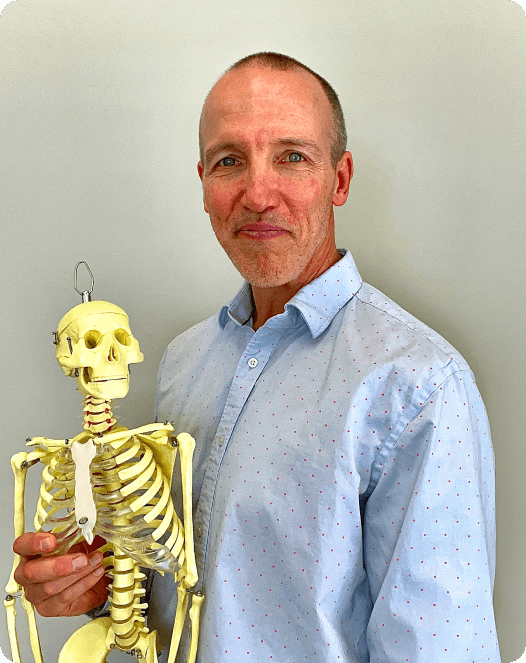
Rick Olderman, MSPT, is a leading physical therapist with over 25 years of expertise in chronic musculoskeletal pain and the creator of the Fixing You Method, a revolutionary system for solving pain at its root. A best-selling author of the Fixing You series and Solving the Pain Puzzle, Rick has helped thousands regain their lives through his innovative home programs and holistic approach to healing.

Meet Destiny - The host of The Chronic Illness Therapist Podcast and a licensed mental health therapist in the states of Georgia and Florida. Destiny offers traditional 50-minute therapy sessions as well as therapy intensives and monthly online workshops for the chronic illness community.
Destiny Davis, LPC CRC, is solely responsible for the content of this article. The views expressed herein may or may not necessarily reflect the opinions of Rick Olderman.